If you’ve ever been chatting online and suddenly received the message “asl?”, you’ve probably paused to figure out exactly what your conversation partner meant.
This short acronym has been part of internet culture since the early days of chatrooms, and it still pops up today across texting apps, social media, and even professional or academic settings.
People search for its meaning because it can carry very different implications depending on where it appears; sometimes it’s a harmless icebreaker, sometimes it’s a shortened way of adding emphasis to a sentence, and sometimes it refers to a completely unrelated formal language used by millions of people every day.
Next, walks through every common definition, explains where each one is used, and offers practical guidance on how to respond safely and appropriately no matter which meaning applies.
Meaning & Definition
At its most classic, this three-letter acronym stands for “Age, Sex, Location.” It emerged as a quick way for strangers meeting online to exchange basic identifying details without typing out three separate questions.
Someone entering a chatroom might simply type the acronym followed by a question mark, prompting the other person to reply with something like “17 F Canada” or “22 M UK.”
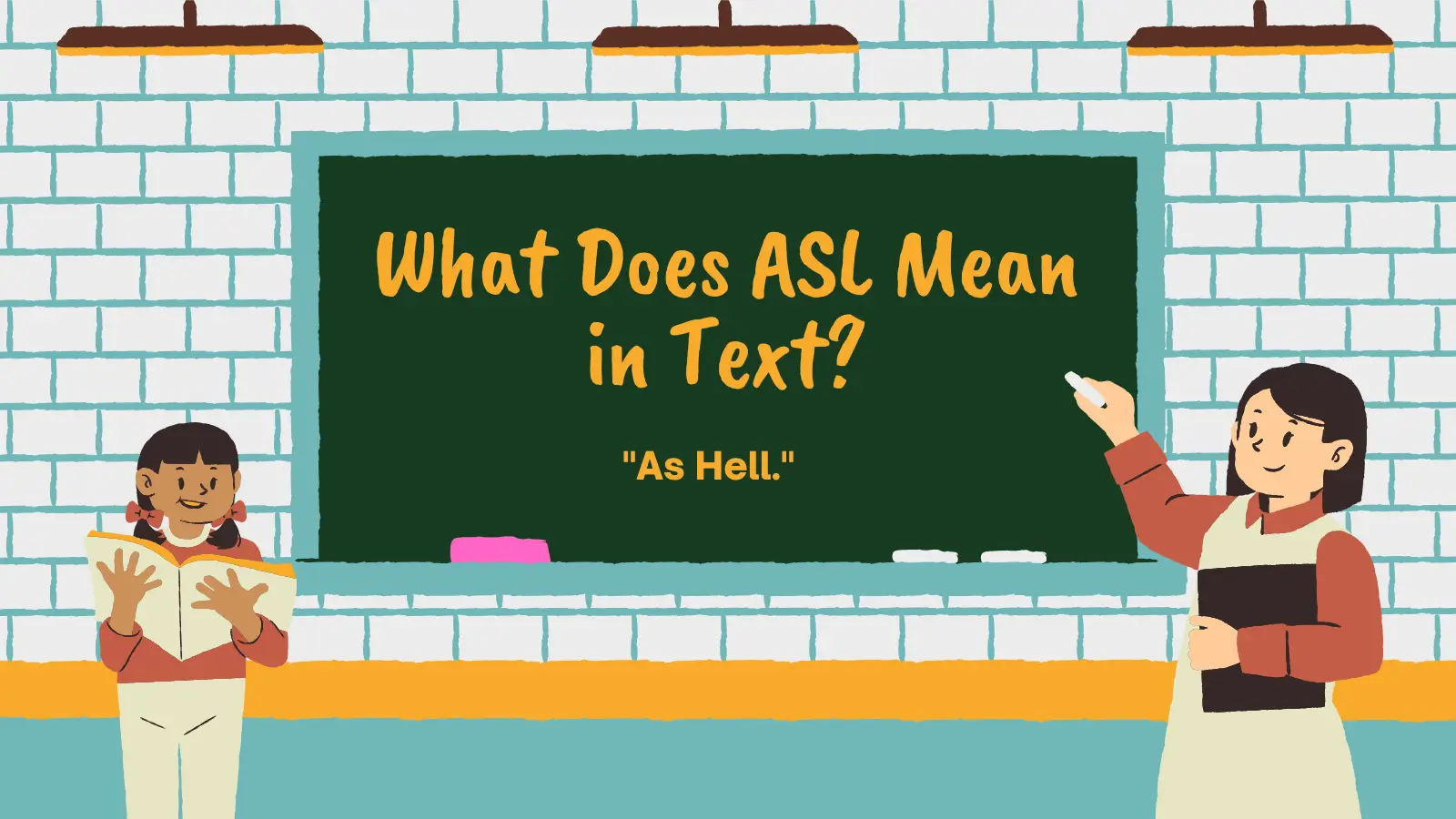
In more recent internet slang, especially among younger users on platforms like TikTok and Discord, the same letters have taken on a second, completely different meaning: “as hell.” In this usage, it functions as an intensifier, similar to saying “extremely” or “very.”
A sentence like “that movie was scary [acronym]” simply means the movie was extremely scary; no personal information is being requested at all.
A third, entirely unrelated meaning exists in formal and educational contexts: American Sign Language, the visual language used primarily by Deaf and people with hearing loss communities in the United States and parts of Canada.
This meaning shows up in classrooms, accessibility discussions, interpreter services, and educational content, and it has nothing to do with internet slang whatsoever.
Because these three meanings are so different from one another, the surrounding sentence is the only reliable way to know which one applies. A lowercase, casual usage tucked at the end of a sentence usually signals the intensifier.
A short, direct question at the start of a chat with a stranger usually signals the identity-related meaning. And any reference tied to sign language, Deaf culture, or communication accessibility clearly points to the formal language.
Origin
The origin of this acronym as an identity-related question traces back to the earliest days of internet chatrooms in the 1990s and early 2000s, on platforms like AOL Instant Messenger, mIRC, and various online forums.
Because these spaces were largely anonymous, people developed a shorthand way to quickly learn who they were talking to before continuing a conversation. Typing out “age, sex, location?” repeatedly was tedious, so the compressed version became a standard greeting in many online communities.
Over time, as social media and messaging apps evolved, the original meaning became somewhat outdated. Fewer people ask strangers directly for identifying details today, partly due to growing awareness around online safety and privacy.
Yet the acronym never fully disappeared; instead, a new generation repurposed it as a slang intensifier, likely influenced by other internet abbreviations that use “as hell” or similar phrases to add emphasis (much like how “af” became shorthand for “as f” in casual text).
Meanwhile, the meaning tied to sign language has existed independently for much longer, rooted in the establishment and recognition of American Sign Language as a distinct, complete language with its own grammar and structure.
This formal meaning predates the internet slang entirely and continues to be used in academic, medical, and accessibility-related writing without any connection to chatroom culture.
The coexistence of these three meanings is a good example of how acronyms evolve differently across communities: one term, three completely separate paths of development.
Usage in Different Contexts (Chat, Social Media, Professional Fields)
In casual chat and messaging apps, this acronym’s meaning depends heavily on tone and punctuation. A short, standalone message ending in a question mark strongly suggests someone is asking for identifying details.
A word tucked into the middle or end of a longer sentence, without any question mark, is almost always the slang intensifier.
On social media, particularly TikTok, Instagram, and Discord, the intensifier usage has become far more common than the original identity-related question. Comments like “this song hits different [acronym]” are meant to express strong feeling, not to request personal information.
In professional, academic, and educational fields, the acronym almost exclusively refers to the sign language.
It appears in course catalogs, accessibility policies, interpreter service descriptions, and disability-advocacy materials. Using the slang or identity-related meanings in a professional setting would be inappropriate and could create confusion or come across as unprofessional.
Recognizing which environment you’re in a stranger-filled chatroom, a casual social post, or a formal document is the clearest signal for interpreting the term correctly.
Meaning in Chat, WhatsApp, Instagram, TikTok
- General chat and chatrooms: This is the original home of the identity-related meaning. Anonymous chat platforms and online games still occasionally use it as an icebreaker question.
- WhatsApp: Less common here since conversations are typically between people who already know each other, though it can appear in new group chats or when connecting with an unfamiliar contact.
- Instagram: Occasionally seen in DMs from unfamiliar accounts, though it’s increasingly viewed as an outdated and somewhat suspicious opener.
- TikTok: This is where the modern intensifier meaning thrives. Comments and captions frequently use it to express strong emotion, humor, or emphasis, completely detached from the original identity-related question.
Across newer platforms, the intensifier usage has largely overtaken the older meaning, which now feels more nostalgic than current, but the identity-related use hasn’t disappeared entirely, particularly among strangers on anonymous or gaming-adjacent platforms.
Meaning in Physics, Medical, and Aircraft Terminology
Outside of chat and slang, this acronym occasionally surfaces in specialized fields, though none of these uses are widely standardized:
- Physics: There is no established, discipline-wide meaning for this acronym within physics. Any appearance in a physics context is typically a project-specific label rather than a recognized term, so it should be interpreted using the surrounding material rather than assumed.
- Medical field: In healthcare and accessibility contexts, it commonly refers to American Sign Language, particularly when discussing communication access for Deaf or partially deaf individuals, interpreter availability, or accommodations in clinical settings.
- Aviation and aircraft terminology: There isn’t a standardized aviation-specific meaning for this acronym. It occasionally appears in unrelated internal documentation, but it isn’t part of common aircraft or flight terminology the way acronyms like IFR or ATC are.
In short, outside of everyday chat and slang, the sign-language meaning is by far the most consistent and widely recognized definition across professional and educational fields.
Common Misconceptions
A frequent misconception is assuming this acronym always carries the same meaning no matter the platform. In reality, its interpretation has shifted significantly over the past two decades, and treating every instance as an identity request is often inaccurate today, especially on platforms popular with younger users.
Another common misunderstanding involves the tone of the identity-related meaning. Some assume it’s always harmless small talk.People have historically linked this version of the acronym to online safety concerns, especially when strangers use it to contact minors in chatrooms, gaming platforms, or social media.
Parents and guardians should recognize this meaning because it can serve as a warning sign when an unfamiliar person directs it at a child or teenager.
Many people also confuse the sign-language meaning with the slang versions. As a result, they sometimes assume that any casual online post using the acronym relates to Deaf culture or accessibility, even though most informal conversations use it with an entirely different meaning.
Finally, many assume the acronym is exclusively modern slang, when in fact its identity-related origins are over two decades old, making it one of the older surviving pieces of internet shorthand still in circulation today.
Similar Terms & Alternatives
Several related expressions travel alongside this acronym depending on which meaning is intended:
- AF (“as f”): A more explicit version of the intensifier meaning, used similarly to express emphasis.
- WYA (“where you at”): Sometimes used alongside the identity-related meaning when someone is specifically curious about location.
- DM (“direct message”): Often paired with the identity-related version, as in “DM me your [acronym].”
- HMU (“hit me up”): A casual invitation to connect, sometimes appearing near the identity-related usage in chat openers.
Each of these alternatives clarifies which version of the acronym is being used, especially when the acronym alone would otherwise be ambiguous.
How to Respond to It
If a stranger sends this acronym as a direct question in a chat, it’s worth pausing before responding. In casual, low-stakes environments among adults, some people simply answer briefly or redirect the conversation elsewhere.
However, this specific question, especially from someone unfamiliar, is a well-known signal that experts and safety advocates encourage people, particularly minors, to treat cautiously. Sharing personal identifying details like age and location with strangers online carries real privacy and safety risks, and it’s completely reasonable to ignore the message, change the subject, or end the conversation altogether.
If the term appears as the slang intensifier in a casual sentence, no response is really required beyond normal conversation; it’s simply an expressive way of agreeing or reacting, similar to responding to any other emphasis-driven slang.
The term appears in a professional or educational context, referring to the sign language; the appropriate response depends entirely on the situation. Confirming interpreter availability, discussing accessibility needs, or engaging with educational material about Deaf culture.
Differences from Similar Words
It’s easy to confuse this acronym with other short chat abbreviations, so a few clear distinctions help.
Unlike casual filler words such as “lol” or “omg,” which express reaction without requesting anything, the identity-related meaning is a direct, personal question aimed at gathering specific details about someone.
It also differs meaningfully from its own slang cousin. While the intensifier meaning shares the same letters, it functions grammatically as an adjective modifier rather than a question, and it carries none of the privacy implications of the original usage.
Compared to the sign-language meaning, the difference is even starker: one is a piece of internet shorthand tied to informal conversation, while the other is a fully developed, structured language with its own grammar, syntax, and cultural significance completely separate from texting culture.
Relevance in Online Conversations & Dating Apps
On dating apps and platforms where users are actively trying to get to know strangers, the identity-related meaning occasionally resurfaces, since asking about age, general background, and location can feel like a natural, if outdated, way to start a conversation.
Although most modern dating platforms already display this information directly on user profiles, making the abbreviated question largely unnecessary and, in some cases, a sign that someone hasn’t engaged with the profile at all.
In broader online conversations, the far more common usage today is the intensifier version, particularly in comment sections, captions, and casual messaging among younger users. It adds emotional emphasis without requesting anything personal, which is part of why it has become so widespread on platforms like TikTok.
No matter which platform you use, understanding the intended meaning helps you avoid awkward misunderstandings. When chatting with strangers or minors, recognizing the identity-related meaning also helps you stay safe and make informed decisions online.
Conclusion:
This small, three-letter acronym carries far more nuance than it first appears. Depending on where you encounter it, it might be a decades-old icebreaker asking for someone’s age, sex, and location; a modern slang intensifier meaning “as hell”; or a reference to American Sign Language in an educational or professional setting.
Context is always the deciding factor, and recognizing which meaning applies, especially in conversations involving strangers or younger users, helps ensure conversations stay safe, clear, and appropriate.
If you’re navigating a casual chat, scrolling through TikTok comments, or reading a professional document, understanding all three meanings makes this everyday acronym far less confusing.
Read More Posts:
- MK vs OK: What’s the Difference?
- PMO Meaning from a Gen Z Texting Perspective
- OPE Slang Meaning for Social Media Users