Scroll through Instagram comments, TikTok captions, or a group chat long enough, and eventually you’ll run into three letters that seem to pop up everywhere: IFB.
For anyone unfamiliar with internet shorthand, it can look like a typo or some kind of secret code. In reality, it’s a widely used piece of social media slang with a simple meaning, along with a handful of unrelated meanings in completely different industries.
People search for this term because context clues alone rarely explain it. The same three letters show up in a follower-growth strategy, a broadcast studio, a hospital chart, and a procurement document, and each time it means something different.
This guide breaks down every common meaning, shows how it’s used across platforms like WhatsApp, Instagram, and TikTok, compares it to similar abbreviations, and explains exactly how to respond when you see it.
Meaning & Definition
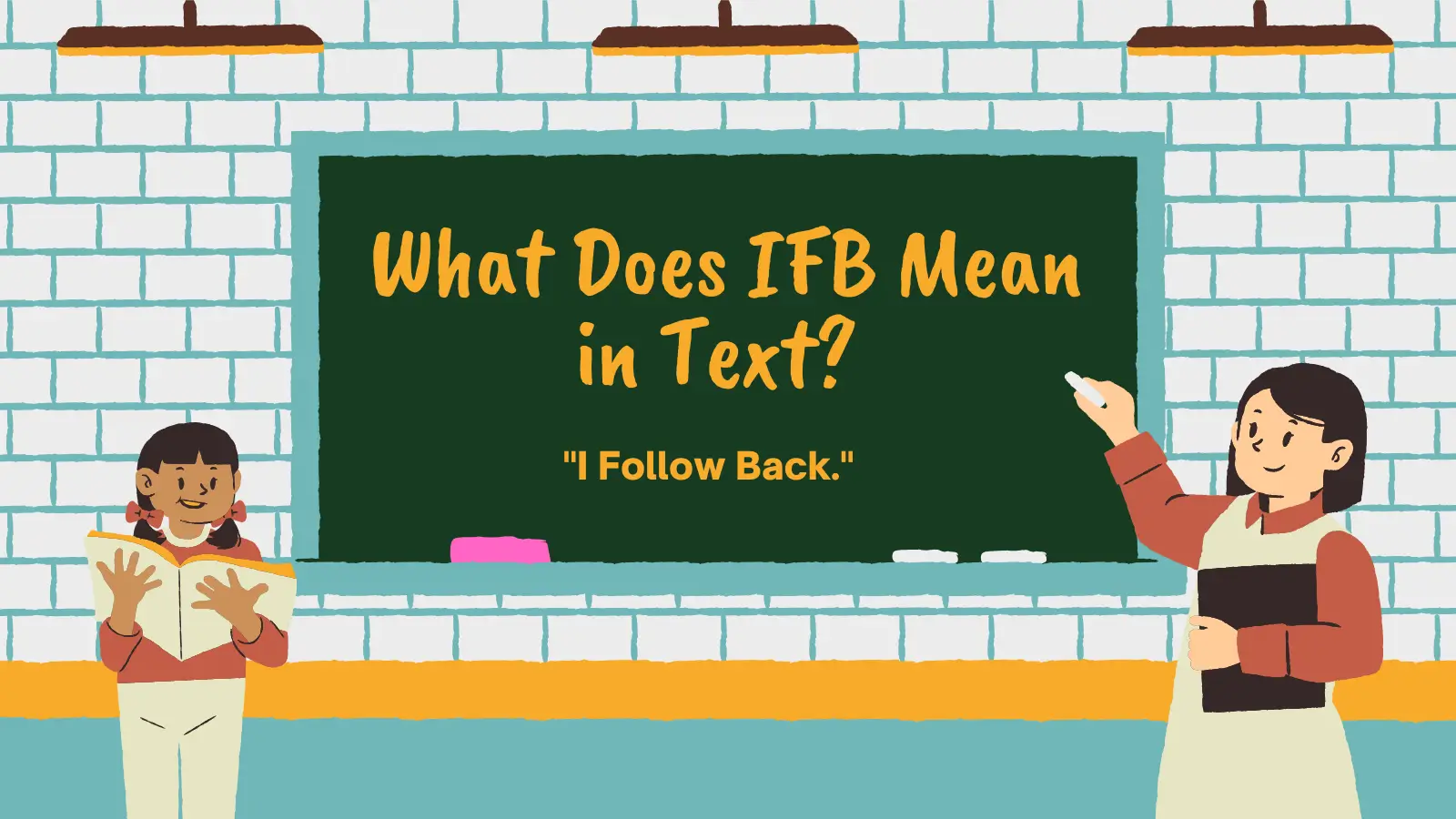
At its core, this acronym is short for “I Follow Back.” It’s used almost exclusively in social media bios, captions, and comments as a signal that the account owner will return the favor if someone follows them.
Think of it as a small, unspoken agreement between users: you follow me, I follow you back.
The phrase became shorthand because typing “I follow back” repeatedly in comment sections and bios is tedious, and internet culture tends to compress frequently used phrases into acronyms for speed and convenience.
The same logic gave us terms like FBF (follow back for follow) and L4L (like for like).
While “I Follow Back” is the dominant meaning in casual chat and social apps, the letters aren’t exclusive to that context. Depending on where you encounter them, they can also stand for:
- Interruptible Foldback > (or interrupted foldback) a broadcast and video production term for the earpiece system directors use to communicate with on-air talent.
- Invitation for Bid > a formal procurement document used in government and business contracting to solicit supplier bids.
- Intravascular Foreign Body > a medical term referring to an object lodged inside a blood vessel, often discussed in radiology and surgical literature.
Because the meaning shifts so dramatically by setting, the golden rule is simple: context decides which definition applies.
In a comment on someone’s Instagram post, it almost certainly means “I follow back.” In a hospital report, it means something entirely different.
Background
The rise of this acronym tracks closely with the growth of follower-based social platforms. As Instagram, Twitter, and later TikTok turned follower counts into a visible measure of popularity and influence, a subculture of “engagement pods” and follow-for-follow communities emerged.
Users began tagging posts and bios with phrases signaling their willingness to reciprocate follows, and shorthand naturally followed.
This kind of language isn’t unique; internet slang has always evolved to save keystrokes and fit character limits, especially on platforms like Twitter/X where space was historically restricted.
Terms like IFB, FBF, and L4L became part of a shared vocabulary among people trying to grow their online presence quickly, particularly small creators, aspiring influencers, and businesses trying to build an audience from scratch.
Interestingly, the broadcast-industry meaning predates the social media one by decades. Interruptible foldback systems have been standard equipment in television and radio production since the mid-20th century, long before anyone was following anyone back online.
The overlap in acronyms is coincidental, a byproduct of how many three-letter combinations get reused across unrelated industries once you consider how many fields exist.
Usage in Different Contexts (Chat, Social Media, Professional Fields)
In everyday texting and casual chat apps, this acronym almost always carries the social-follow meaning, especially when it appears alongside hashtags or growth-related language.
Someone might text a friend, “just IFB’d that new page,” meaning they followed an account expecting a follow back.
On social media platforms, it shows up in three main spots: user bios (often paired with emojis or other growth hashtags), comment sections under posts asking for engagement, and captions on posts specifically designed to attract new followers.
In professional and technical fields, the same letters take on entirely different weight. Broadcast and film production, it refers to real, physical equipment the earpiece feed a director uses to cue a news anchor or host during a live segment.
Government and corporate procurement, it labels a formal legal document soliciting competitive bids, often for construction, aviation contracts, or public services. In clinical and radiology settings, it describes a medical finding that may require imaging or surgical intervention.
Recognizing which “world” you’re in casual social media versus professional or technical writing is the fastest way to correctly interpret the term without confusion.
Meaning in Chat, WhatsApp, Instagram, TikTok
Across the platforms where this acronym is most common, the meaning stays consistent, though the tone and purpose shift slightly:
- WhatsApp and general texting: Less common here since WhatsApp isn’t a follower-based platform, but it can appear when friends discuss their Instagram or TikTok activity.
- Instagram: One of its most frequent homes. It appears in bios (sometimes written as “IFB” or combined with growth hashtags) and in comments where users ask each other to follow and reciprocate.
- TikTok: Used similarly to Instagram, often attached to hashtags on videos aimed at growing a following quickly. Creators use it to signal an openness to mutual follows as part of broader engagement strategies.
- Twitter/X: One of the earliest homes for this kind of shorthand, thanks to historical character limits that rewarded short, compressed language.
Across all of these platforms, the underlying intent is the same: build a mutual following relationship quickly and transparently.
Meaning in Physics, Medical, and Aircraft Terminology
Outside of slang, this acronym resurfaces in a few specialized fields, though its use is far narrower and less standardized than the social media meaning:
- Physics: There is no widely recognized, standardized use of this acronym within physics as a discipline. If it appears in a physics paper or lab notebook, it’s typically a project-specific or author-specific shorthand rather than an established term, so context from the surrounding material is essential.
- Medical field: In clinical and radiology contexts, it most commonly refers to an intravascular foreign body an object that has become lodged inside a blood vessel, sometimes as a complication of a medical procedure like catheter placement. Reports on this topic typically discuss retrieval techniques and outcomes for removing such objects safely.
- Aviation and aircraft-related industries: The acronym most often surfaces here as “Invitation for Bid,” a formal solicitation document used when government agencies or large organizations seek competitive bids for aircraft parts, maintenance contracts, or construction projects. It’s a procurement term rather than a piece of flight or engineering terminology.
The takeaway across all three fields is that none of them use this acronym anywhere near as often as social media does, but when they do, precision matters, since the wrong interpretation in a technical document could cause real confusion.
Common Misconceptions
One of the biggest misunderstandings is assuming the acronym always means the same thing regardless of setting. Because it’s so dominant on social media, people sometimes assume any use of it online refers to following back, which isn’t true in specialized forums, medical discussions, or procurement listings.
Another common mix-up is confusing it with visually or phonetically similar acronyms like FBI (obviously unrelated), IFC (In-Flight Connectivity), or F4F (Follow for Follow). While F4F and this term are related in spirit, both deal with mutual following; they aren’t identical.
F4F is typically a request (“follow me and I’ll follow you”), while this acronym is more of a statement or policy (“I already follow back, no need to ask”).
Some people also mistakenly believe that stating this in a bio guarantees a follow-back. In reality, it’s a stated intention, not a binding rule, and plenty of accounts using the phrase still don’t follow back everyone who follows them, especially spam or bot accounts.
Finally, many assume the term is a recent invention. In truth, similar follow-for-follow language has existed since the earliest days of social networking, evolving alongside each new platform.
Similar Terms & Alternatives
Several related acronyms travel in the same circles and are worth knowing for context:
- F4F (Follow for Follow): A direct request for mutual following, often more transactional in tone.
- L4L (Like for Like): Asks for reciprocal likes rather than follows.
- FBF (Follow Back for Follow): Similar in meaning, sometimes used interchangeably.
- TFTF (Thanks for the Follow): A polite acknowledgment after gaining a new follower.
- MFR (Mutual Follow Request): Less common, but used in some niche communities with the same underlying goal.
While these terms overlap in purpose, subtle differences in tone exist: some sound more like polite offers, others more like direct asks, and some function purely as thank-you notes.
How to Respond to It
If someone comments this acronym on your post or writes it in your DMs, the simplest response is to follow them if you’re interested, then send a quick acknowledgment like “done!” or “thanks, followed back!” There’s no obligation attached; it’s a casual social gesture, not a contract.
If you see it in someone’s bio and you’re deciding If to follow them, it simply signals that they’re likely to follow back if you do. It can be a helpful cue for people trying to build mutual connections, though it’s worth remembering that some accounts using this label are bots or low-quality pages trying to inflate their following.
In professional contexts, say, if this acronym shows up in a work email, a technical report, or a bid solicitation, the right response depends entirely on the field. For a procurement document, a proper response might involve submitting a formal bid by the stated deadline.
For a broadcast studio reference, it might mean checking in with a producer about equipment. Reading the surrounding text is essential before crafting any kind of reply.
Differences from Similar Words
It helps to draw a clear line between this acronym and its closest lookalikes. Unlike F4F, which is phrased as a request, this term is typically a passive statement of policy.
IFC (In-Flight Connectivity), which refers to airplane Wi-Fi and internet service, there’s no technology or hardware involved in the social media meaning at all.
Unlike IFR (Instrument Flight Rules), which governs how pilots fly under limited visibility, the social slang version has nothing to do with aviation safety, despite sharing two letters.
It’s also worth separating this acronym from its broadcast-industry cousin, interruptible foldback, which describes a literal communication device rather than a follow policy.
The two meanings never overlap in practice; nobody talks about following someone back using a director’s earpiece, and nobody wears headgear because they follow accounts back on Instagram. The shared letters are purely coincidental.
Relevance in Online Conversations & Dating Apps
Beyond straightforward follower growth, this kind of shorthand plays a small but interesting role in how people build online social capital.
On dating apps and social platforms that blend romantic and social networking (like Bumble’s friend-finding feature or casual TikTok interactions), similar follow-for-follow language sometimes appears when users are simply trying to expand their circle rather than pursue romance a reminder that not every interaction online carries dating intent.
In broader online conversations, using this kind of acronym signals familiarity with internet culture and can make an account seem more approachable to other users chasing growth.
It’s especially common among small creators, artists, and business accounts in their early stages, when every new follower meaningfully impacts visibility.
That said, it’s rarely, if ever, used in a directly romantic or flirtatious context. It belongs to the world of networking and audience-building rather than personal or romantic connection, which is one more reason understanding the platform and setting matters so much before reading too much into it.
Conclusion:
At the end of the day, this three-letter acronym is mostly about one thing: reciprocity on social media. “I Follow Back” is the meaning you’ll encounter nine times out of ten on Instagram, TikTok, or Twitter/X, especially in bios and comments from users trying to grow their following.
But the same letters carry entirely different weight in broadcast studios, medical reports, and procurement paperwork, which is why context is always the deciding factor.
If you’re a casual scroller trying to decode a comment or someone encountering the term in a professional document, knowing the full range of meanings and how to tell them apart makes navigating today’s mix of internet slang and technical jargon a whole lot easier.
Read More Posts:
- MK vs OK: What’s the Difference?
- Common Situations Where MT Is Used in Text
- OPE Slang Meaning for Social Media Users

Toni Morrison is a celebrated American novelist known for her powerful storytelling, rich characters, and lasting impact on literature. At GrammerNests.com, she shares insights that help readers appreciate language, writing, and literary expression.