The truth is that MK is one of the most common texting abbreviations used in everyday conversations.
People use it on WhatsApp, Snapchat, Instagram, Facebook Messenger, Discord, TikTok, gaming chats, and SMS. It helps people reply quickly without typing a full sentence.
Understanding internet slang like MK can help you avoid confusion and reply with confidence.
If you are chatting with friends, talking to classmates, texting coworkers, or playing online games, knowing what MK means makes conversations easier.
You will learn what MK means in text, where it came from, how people use it, when you should avoid using it, and how it compares with similar abbreviations like OK, K, and Alright.
You’ll also find real conversation examples, comparison tables, FAQs, and tips for using MK correctly.
What Does MK Mean in Text?
The most common meaning of MK in text is:
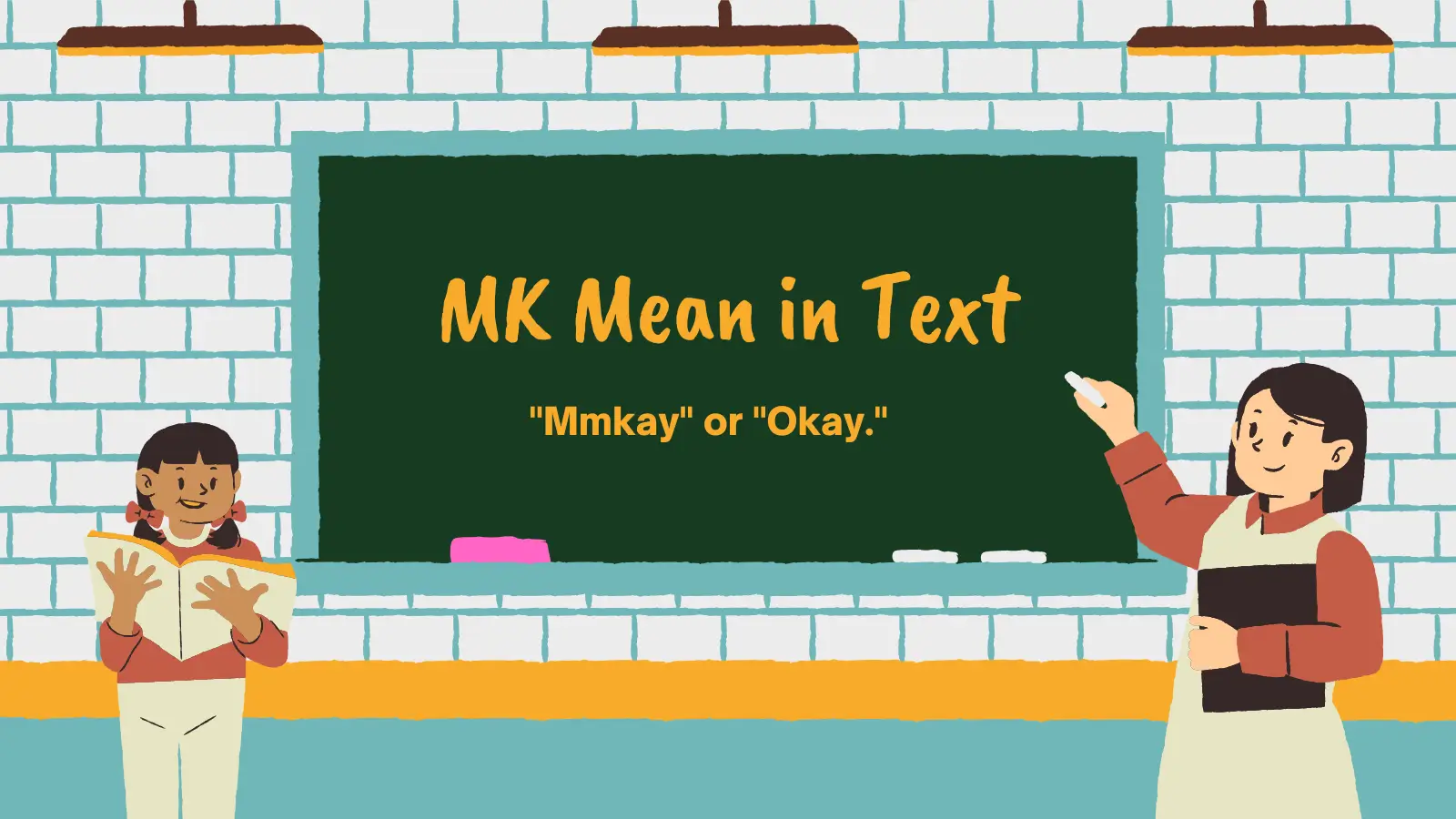
MK = “Mmkay” or “Okay.”
It is simply another way of saying:
- Okay
- Alright
- Got it
- I understand
- Sounds good
Many people use MK as a quick reply instead of typing the full word “okay.”
Sometimes it sounds more relaxed or casual than “OK.”
Example 1st
Friend: “Meet me at 7.”
You: “MK.”
Meaning: “Okay, I’ll be there.”
Example 2nd
Mom: “Don’t forget your homework.”
Child: “MK.”
Meaning: “I understand.”
Example 3rd
Coworker: “I’ll send the report later.”
You: “MK, thanks.”
Meaning: “Alright.”
Other Meanings of MK
Although “Okay” is the most popular meaning, MK can have other meanings depending on the conversation.
These include:
- Michael Kors (fashion brand)
- Mortal Kombat (video game)
- Mark (used as an abbreviation)
- Initials of a person’s name
- MK as a model number (cars, electronics, military equipment)
Always look at the conversation before deciding which meaning fits.
The Origin Of MK
The abbreviation MK became popular as texting grew in the early 2000s.
People wanted faster ways to reply using mobile phones with small keyboards. Instead of typing “okay,” they shortened it to:
- K
- OK
- Oki
- Mk
- Mmkay
The spelling “Mmkay” became especially popular through internet culture and television. Over time, people shortened it even further to simply MK.
Today, MK appears on almost every messaging platform.
It is commonly seen in:
- Instagram DMs
- Snapchat
- Facebook Messenger
- Discord
- Telegram
- iMessage
- SMS
- Gaming chats
Because online communication values speed, abbreviations like MK continue to grow in popularity.
Usage in Various Contexts
Text Messaging
MK usually means “Okay.”
Example
Alex: “I’ll call you tonight.”
Sam: “MK.”
Social Media
People reply to comments or messages with MK when they agree.
Example
Friend: “Let’s post tomorrow.”
You: “MK.”
Gaming
Gamers often use MK to confirm plans quickly.
Example
Player 1: “Defend the base.”
Player 2: “MK.”
School Chats
Students use MK while discussing homework.
Example
Student A: “The assignment is due Friday.”
Student B: “MK, thanks.”
Family Conversations
Parents and children often use MK.
Mom: “Dinner is ready.”
Son: “MK.”
Group Chats
MK is often used to show agreement.
Friend: “Movie at 8?”
Everyone: “MK.”
Common Misconceptions & Clarifications
Many people misunderstand MK.
Misconception 1st
MK always means “Mortal Kombat.”
Not true.
In most text messages, it simply means Okay.
Misconception 2nd
MK is rude.
Not necessarily.
It depends on the tone.
Compare these:
Friend: “Come over.”
You: “MK”
Friendly.
Friend: “Come over.”
You: “MK.”
This may sound cold.
Misconception 3rd
MK has a hidden meaning.
Usually, it does not.
Most people simply use it as a short version of “Okay.”
Similar Terms & Alternatives
Here are some common alternatives.
| Term | Meaning | Tone |
| MK | Okay | Casual |
| OK | Okay | Neutral |
| K | Okay | Very short |
| Alright | Agreement | Friendly |
| Sure | Agreement | Polite |
| Got it | Understood | Professional |
| Sounds good | Agreement | Friendly |
| Yep | Yes | Casual |
| Fine | Acceptance | Neutral |
How to Respond to MK
The best response depends on the conversation.
Casual
Friend: “MK.”
You: “Awesome!”
Friendly
Friend: “MK.”
You: “See you soon!”
Funny
Friend: “MK.”
You: “Mission accepted.”
Professional
Coworker: “MK.”
You: “Thank you for confirming.”
Privacy-Conscious
Unknown person: “MK.”
You: “Thanks.”
Keep replies simple if you don’t know the sender well.
Regional or Cultural Differences
MK is mostly used in English-speaking countries.
These include:
- United States
- Canada
- United Kingdom
- Australia
- New Zealand
However, because social media connects people worldwide, users from India, Pakistan, the Philippines, Nigeria, and many European countries also use MK while chatting in English.
Different languages have similar expressions.
Examples include:
- Spanish: Vale
- French: D’accord
- German: Okay
- Hindi: Theek Hai
- Urdu: Theek Hai
Young people often mix these words with MK in online conversations.
Comparison with Similar Terms
| Abbreviation | Meaning | Formal? | Common Use |
| MK | Okay | No | Texting |
| OK | Okay | Yes | Everywhere |
| K | Okay | No | Quick reply |
| KK | Okay, confirmed | Casual | Gaming |
| Alr | Alright | Casual | Social media |
| Bet | I agree | Casual | Youth slang |
| Yep | Yes | Casual | Daily chats |
| Roger | Message received | Semi-formal | Military, gaming |
The biggest difference is that MK feels relaxed, while OK works in both formal and informal situations.
Usage in Online Communities & Dating Apps
MK appears on many online platforms.
Tinder
Someone may send:
Person A: “Want coffee tomorrow?”
Person B: “MK.”
This usually means they agree.
Twitter (X)
Users reply with MK to acknowledge a post.
Discord
Gamers confirm plans.
Leader: “Attack together.”
Player: “MK.”
Snapchat
Friends often use MK after making plans.
MK is common in direct messages and story replies.
Tips
- Don’t overthink MK.
- Read the conversation.
- Look at emojis.
- Notice previous messages.
Context always matters.
Hidden or Offensive Meanings
Most of the time, MK is harmless.
However, tone changes everything.
Someone who replies only with:
“MK.”
may sound:
- Bored
- Annoyed
- Uninterested
Even though the word itself is not offensive.
Sometimes MK may represent:
- A person’s initials
- Michael Kors
- Mortal Kombat
Rarely, communities may create private meanings, but these are uncommon.
Always use surrounding messages to understand the intent.
Suitability for Professional Communication
MK is not recommended in formal emails or business communication.
Instead, use:
- Okay
- Certainly
- Understood
- I understand
- Thank you
- Confirmed
- Sounds good
Professional Example
Manager:
“Please submit the report today.”
Instead of:
“MK.”
Write:
“Understood. I’ll send it today.”
This creates a more professional impression.
FAQs:
What does MK mean in texting?
It usually means “Okay” or “Mmkay.”
Is MK rude?
No. It is usually friendly, but it may seem cold without emojis or extra words.
What does MK mean on Snapchat?
It usually means Okay or I understand.
What does MK mean in gaming?
Gamers use it to quickly confirm instructions or agree with teammates.
Can MK mean something else?
Yes. It can also refer to Michael Kors, Mortal Kombat, initials, or product model names.
Should I use MK in work emails?
No. Write Okay, Understood, or Confirmed instead.
Is MK the same as K?
They are similar, but MK often sounds slightly warmer than simply typing K.
Conclusion:
MK is a simple abbreviation that most often means “Okay” or “Mmkay.” It is widely used in texting, social media, gaming, and casual conversations because it saves time and keeps messages short.
While it is perfectly acceptable among friends and family, it is generally better to use full words like “Okay,” “Understood,” or “Confirmed” in professional communication.
Remember that the meaning of MK depends on the context, and in some cases, it may stand for something entirely different, such as Mortal Kombat or Michael Kors.
By paying attention to the conversation and tone, you can easily understand and use MK correctly in your daily online interactions.
Read More Posts:
- FWS Text Meaning with Real Examples 2026
- Examples of YKW in Text Messages 2026
- Complete Guide to WYF Meaning in Text (2026)

Toni Morrison is a celebrated American novelist known for her powerful storytelling, rich characters, and lasting impact on literature. At GrammerNests.com, she shares insights that help readers appreciate language, writing, and literary expression.