Since internet slang changes quickly, abbreviations like OPE can have different meanings depending on the situation.
Understanding the context helps you avoid confusion and respond naturally.
People often search for what OPE means in text because they see it on platforms like WhatsApp, Instagram, TikTok, Snapchat, Facebook, or even in gaming chats.
While OPE is commonly used as a casual reaction, it can also have technical meanings in fields such as medicine, physics, engineering, and aviation. Knowing these different definitions makes it easier to understand conversations both online and offline.
This explanation covers the meaning of OPE, where it came from, how people use it in texting, and what it means in specialized industries.
By the end, you’ll know exactly when someone is using OPE as internet slang and when it refers to something completely different.
Meaning & Definition of OPE
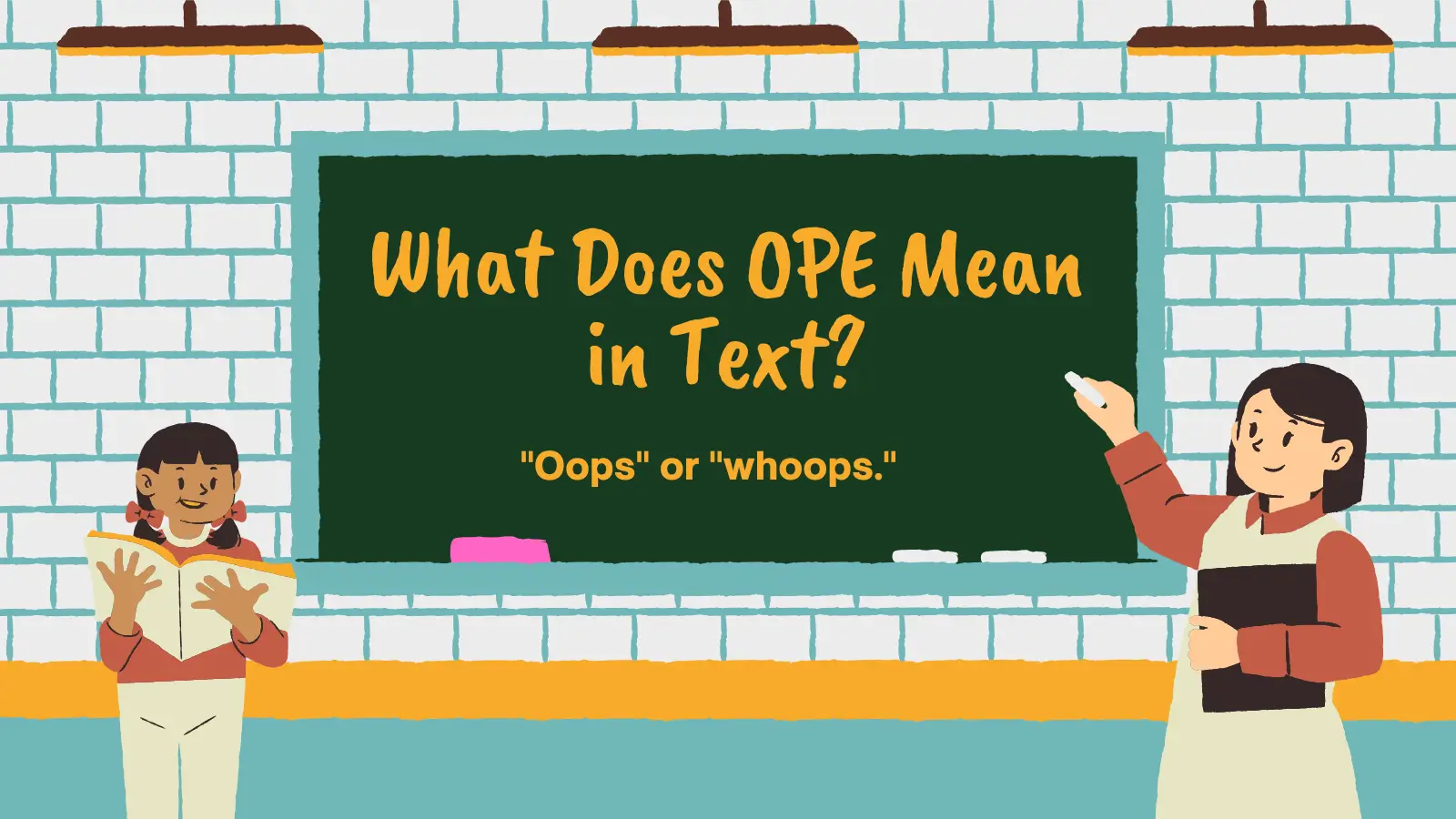
The most common meaning of OPE in text is a short expression people use when they make a small mistake, accidentally bump into something, interrupt someone, or experience a minor surprise. It is similar to saying:
- Oops!
- Oh!
- Whoops!
- My bad!
- Excuse me!
Instead of being a formal abbreviation, OPE is more like a natural sound people type to express an unexpected moment.
Examples
Friend: “You sent the message to the wrong group.”
You: “OPE! That wasn’t supposed to happen.”
Person A: “You almost dropped your phone.”
Person B: “OPE, caught it just in time!”
Someone walks into another person
“OPE, sorry about that.”
In everyday texting, OPE usually shows surprise without sounding dramatic. It makes conversations feel friendly and casual.
Background of OPE
Although OPE became popular online, many people have used the expression naturally in spoken conversations for years.
It is especially associated with parts of the Midwestern United States, where people often say “Ope!” after accidentally getting in someone’s way or making a tiny mistake.
As texting and social media grew, users began typing the same expression exactly as they would say it aloud. Memes helped spread OPE beyond its regional roots, making it recognizable worldwide.
Today, people use it in:
- Text messages
- Snapchat
- Instagram comments
- TikTok captions
- Facebook posts
- Reddit discussions
- Discord servers
- Gaming chats
Unlike many abbreviations that stand for several words, OPE mainly represents a spontaneous reaction rather than a phrase.
Because of internet culture, younger users often include it in humorous situations where something unexpected happens.
Usage in Different Contexts
The meaning of OPE changes depending on where it appears.
Casual Text Messages
Friends commonly use OPE after making a small mistake.
Example:
“OPE, forgot to reply yesterday.”
Social Media
Users add OPE to funny videos or unexpected moments.
Example:
“OPE that ending wasn’t what I expected.”
Gaming
Gamers use OPE after losing a match or making an accidental move.
Example:
“OPE, pressed the wrong button.”
Workplace Chats
Although less common, coworkers may use OPE in informal conversations.
Example:
“OPE, attached the wrong document.”
Professional emails usually avoid slang like OPE because formal language is more appropriate.
Everyday Conversation
People also type OPE to make written messages sound more natural and friendly.
Instead of saying:
“I accidentally forgot.”
Someone might write:
“OPE, I forgot.”
It creates a relaxed tone without sounding overly serious.
What Does OPE Mean in Chat, WhatsApp, Instagram, and TikTok?
Each platform uses OPE in slightly different ways.
Chat
In normal texting, OPE usually means:
- Oops
- Small mistake
- Minor surprise
Example:
“OPE, wrong person.”
Friends often use OPE after sending something incorrectly.
Example:
“OPE, wrong photo.”
It appears in comments reacting to funny or awkward moments.
Example:
“OPE 😂 Didn’t expect that.”
TikTok
Creators and viewers frequently write OPE under videos showing unexpected events.
Example:
“OPE that escalated quickly.”
The word often adds humor rather than serious emotion.
Snapchat
People use OPE while sharing quick reactions.
Example:
“OPE forgot streaks.”
Across these platforms, OPE usually keeps conversations lighthearted.
Meaning in Physics, Medical, and Aircraft Terminology
Outside internet slang, OPE can represent completely different technical meanings.
Physics
In scientific discussions, OPE may refer to specific technical terms depending on the research field. Since abbreviations vary between disciplines, the exact meaning depends on the document or study being discussed.
Examples include references in optics, particle research, or engineering-related calculations.
Medical
Healthcare professionals sometimes use OPE as an abbreviation inside hospitals, research papers, or patient documentation.
The exact meaning varies by department, hospital, or specialty. Medical abbreviations are often specific to an organization, so healthcare workers rely on context rather than assuming one universal definition.
Aircraft and Aviation
In aviation, OPE may appear in operational manuals, maintenance documents, or technical procedures.
Depending on the organization, it can relate to operational processes, engineering terms, or equipment references.
Unlike texting, aviation abbreviations follow official documentation and should always be interpreted according to the relevant manual.
Common Misconceptions
Many people misunderstand OPE because they assume every internet abbreviation stands for multiple words.
Here are some common misconceptions:
OPE Always Means an Acronym
Not true.
Most of the time, it is simply a typed reaction similar to “Oops.”
OPE Is Rude
No.
It is generally friendly and informal.
OPE Has Only One Meaning
Incorrect.
Technical industries may use OPE differently from social media users.
Everyone Uses OPE
While increasingly common online, many people have never used it in everyday texting.
Understanding the conversation helps determine the intended meaning.
Similar Terms & Alternatives
Several expressions have similar meanings to OPE.
- Oops
- Whoops
- Uh-oh
- Oh no
- My bad
- Sorry
- Oof
- LOL (in humorous situations)
- Haha
- OMG (for surprise)
Each carries a slightly different emotion.
For example:
“Oops” sounds apologetic.
“Oof” often expresses sympathy or discomfort.
“OPE” feels casual, light, and conversational.
How to Respond to OPE
Most responses depend on the situation.
If Someone Made a Small Mistake
“No worries.”
“It happens.”
“You’re good.”
“No problem.”
If They Are Joking
“Haha!”
“That’s funny.”
“I’ve done that too.”
If It Was an Accident
“Don’t worry about it.”
Because OPE usually refers to minor situations, responses are generally relaxed and friendly.
Differences Between OPE and Similar Words
Understanding the differences helps avoid confusion.
| Word | Meaning | Typical Use |
| OPE | Small surprise or mistake | Casual texting |
| Oops | Apology for a mistake | Everyday conversation |
| Oof | Pain, sympathy, awkwardness | Social media |
| OMG | Shock or excitement | Chat and social platforms |
| Uh-oh | Something bad may happen | Spoken and written English |
| My bad | Taking responsibility | Informal conversations |
Although these expressions overlap, each creates a slightly different tone.
OPE often feels softer and more playful than “Oops.”
Relevance in Online Conversations & Dating Apps
Dating apps and online messaging encourage short, natural responses. OPE fits perfectly because it sounds human and relaxed.
Someone might write:
“OPE, didn’t realize we matched yesterday.”
Or:
“OPE, forgot to answer your question.”
Using OPE can make conversations feel less formal and more approachable.
However, avoid using it too frequently. Repeating internet slang in every message can make conversations appear forced.
In dating conversations, authenticity matters more than trendy expressions. If OPE fits naturally, it can add personality without distracting from the discussion.
The same applies to online communities, gaming servers, and social networking platforms, where quick reactions often make conversations more engaging.
Conclusion:
Understanding what does OPE means in text is easier once you recognize that context matters. In everyday texting, OPE is usually a simple reaction similar to “Oops,” expressing a minor mistake, surprise, or awkward moment.
It helps conversations feel friendly, natural, and conversational across messaging apps and social media platforms. Outside casual communication, OPE may represent technical abbreviations in medicine, physics, engineering, or aviation, where its meaning depends entirely on the field being discussed.
Although you encounter OPE, consider who is using it and where it appears. Doing so ensures you interpret the message correctly and respond appropriately, If you’re chatting with friends, commenting on social media, or reading professional documents.
Read More Posts:
- Examples of YKW in Text Messages 2026
- Common Situations Where MT Is Used in Text
- MK vs OK: What’s the Difference?