Scroll through Instagram comments or a group chat, and you’ll eventually spot two letters that seem to mean something different every time: LB. In one comment, it looks like a social media favor.
In another message, it might reference a family member, a weight measurement, or even a piece of technical jargon from an unrelated field. Because the same short abbreviation gets recycled across so many contexts, it’s easy to see why people pause and search for a clear explanation.
Next deeply breaks down every common meaning of the term, from its modern social media usage to its much older role as a unit of measurement, and explains how to tell them apart depending on where you encounter it: if that’s a casual DM, a fitness conversation, or a technical document.
Meaning & Definition
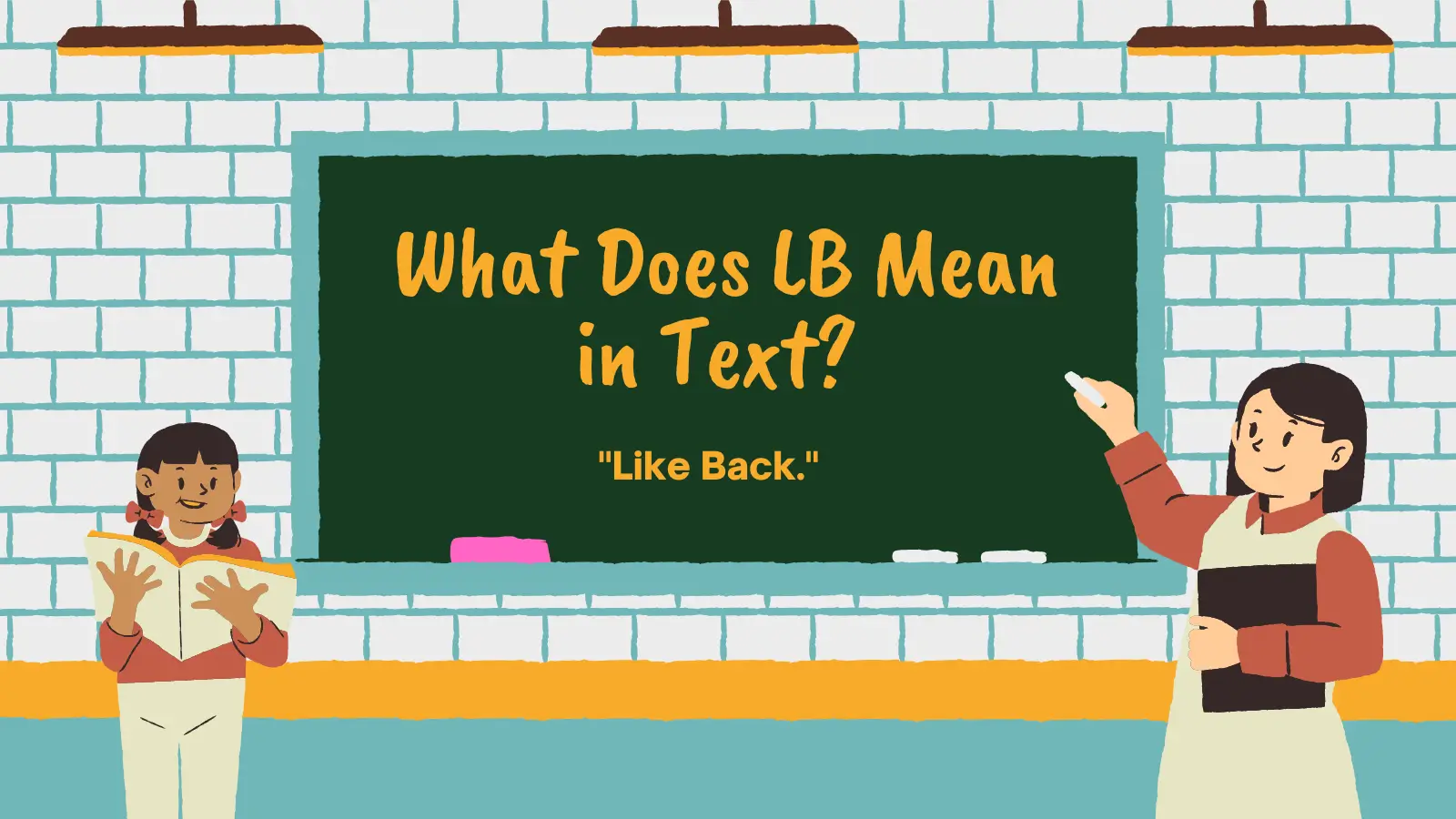
The most common meaning of this abbreviation in casual online conversation is “Like Back.” It’s used almost exclusively on social media, typically in comment sections, where someone likes another user’s post and expects the favor to be returned.
A comment like “cute pic, [abbreviation]?” is simply a quick request for mutual engagement: you liked mine, now like me back.
In personal texting between friends or family, the same two letters sometimes stand for “little brother,” used casually when referencing a younger sibling in conversation.
Outside of slang entirely, this abbreviation has a much older and far more established meaning: pound, the unit of weight used in the imperial and U.S. customary measurement systems.
This usage dates back centuries, originating from the Latin word “libra,” meaning scale or balance, the same root that gives us the symbol for the zodiac sign Libra and the £ symbol used for British currency.
A less common but still recognized meaning is “low battery,” occasionally used in gaming or messaging contexts when someone’s device is about to die.
Because these meanings range from playful slang to a formal, centuries-old measurement term, context is everything.
A casual comment on an Instagram photo almost certainly means the social engagement request, while a sentence like “I lost five [abbreviation] this month” is unmistakably about weight.
Background
The measurement meaning is by far the oldest of the bunch, tracing back to Ancient Rome, where the term “libra pondo” described a Roman unit of weight.
Over time, the abbreviated form stuck as English-speaking countries adopted the imperial system, and it remains the standard shorthand for pounds today in cooking, shipping, fitness, and everyday conversation across the United States and other countries that still use imperial units.
The social media meaning, by contrast, is a product of the last decade or so. As platforms like Instagram and Twitter turned likes and followers into visible markers of popularity, communities built around mutual engagement emerged, sometimes called “like for like” or “follow for follow” circles.
Within these spaces, users needed a fast way to signal reciprocity, and shortening “like back” into two letters fit naturally alongside other engagement-focused slang from the same era.
The “little brother” meaning likely developed simply as a natural byproduct of texting culture, where families and friend groups often abbreviate common phrases to save time, similar to how “bro” or “sis” became casual stand-ins for siblings.
Interestingly, all of these meanings can coexist without much confusion in daily life, because the settings in which each one appears rarely overlap.
Nobody discusses a recipe’s ingredient weight in an Instagram comment thread, and nobody requests a mutual like from their family group chat.
Usage in Different Contexts (Chat, Social Media, Professional Fields)
In casual chat between friends or family, the meaning depends heavily on relationship and topic. If the conversation involves a younger sibling, the abbreviation likely means “little brother.” If the conversation is about groceries, cooking, or body weight, it almost certainly refers to the measurement.
On social media, particularly in comment sections and direct messages tied to content creation or account growth, the engagement-related meaning dominates. It’s especially common among users trying to build a following or boost visibility on their posts.
In professional and technical fields, including shipping, manufacturing, fitness coaching, nutrition, medicine, and logistics, the measurement meaning is essentially universal. Packages are labeled by weight in this unit, nutrition labels list ingredient amounts using it, and technical specifications for machinery or vehicles routinely reference it as well.
Recognizing the setting is the fastest way to correctly interpret which meaning applies, since the professional and measurement-related usage rarely overlaps with the casual social media meaning.
Meaning in Chat, WhatsApp, Instagram, TikTok
- General texting and WhatsApp: More likely to reference “little brother” in family or friend conversations, though the measurement meaning appears often too, especially in practical conversations about shopping, cooking, or fitness goals.
- Instagram: This is the primary home of the “like back” meaning, frequently appearing in comments on posts, especially from accounts focused on growing their following.
- TikTok: Used similarly to Instagram, often in comment sections where users build small engagement circles to boost visibility on their content.
- Snapchat: Less common, but occasionally used in the same social engagement sense seen on Instagram and TikTok.
Across all of these platforms, the deciding factor is almost always the topic of conversation; engagement-focused chatter points to the social media meaning, while family or practical conversations point elsewhere.
Meaning in Physics, Medical, and Aircraft Terminology
Away from casual texting, this abbreviation maintains a much more consistent identity, almost always referring to the unit of weight:
- Physics: In physics and engineering contexts, particularly in countries still using imperial units, this abbreviation represents pounds as a unit of weight or force, used in calculations involving mass, gravity, and mechanical loads.
- Medical field: Healthcare providers commonly record patient weight using this abbreviation, especially in the United States, where imperial units remain standard in most clinical charts, prescriptions, and dosage calculations tied to body weight.
- Aviation and aircraft terminology: In aviation, this abbreviation is a standard unit used throughout technical documentation, referring to aircraft weight, cargo weight, fuel weight, and various structural or performance specifications.
- Pilots, engineers, and dispatchers rely on precise weight figures in this unit to calculate everything from fuel requirements to maximum takeoff weight.
Unlike the identity-related confusion seen with some other internet acronyms, this term’s technical meaning stays remarkably consistent across specialized fields; it’s a weight measurement if you’re reading a nutrition label, a medical chart, or an aircraft manifest.
Common Misconceptions
One common misconception is assuming the social media meaning is the only modern usage, when in fact the measurement meaning remains far more widespread overall; it’s simply less visible in casual chat because it comes up constantly in everyday life without anyone stopping to think about it as “internet slang.”
Another misunderstanding involves assuming this abbreviation is interchangeable with similar-looking ones. People sometimes confuse it with “follow back,” despite the two referring to entirely different actions; one is about liking a specific post, the other is about following an account.
Some also mistakenly believe the social media meaning obligates a response. In reality, it’s a casual, informal request with no binding expectation, similar to the more established “I follow back” custom seen elsewhere on social platforms.
Finally, people occasionally assume the abbreviation is purely modern slang, unaware that its most common real-world meaning the unit of weight has existed for centuries and appears far more often in daily conversation, packaging, and professional writing than any internet-born definition.
Similar Terms & Alternatives
A handful of related terms appear alongside this abbreviation depending on the intended meaning:
- FB (“Follow Back”): Used similarly to request mutual following rather than a like.
- L4L (“Like for Like”): A more explicit version of the same social media engagement request.
- IFB (“I Follow Back”): A statement of policy rather than a direct request, often seen in social media bios.
- Lbs: The plural form of the measurement meaning, used when referring to more than one pound.
- Kg: The metric equivalent of the measurement meaning, common outside the United States.
Each of these alternatives helps clarify intent; engagement-related terms cluster around social platforms, while measurement-related terms cluster around weight, shipping, and nutrition.
How to Respond to It
If someone comments this abbreviation on your social media post, the simplest response is to visit their profile and like a recent post if you’re comfortable doing so, or simply acknowledge the comment with a quick reply.
There’s no obligation attached; it’s a casual, low-stakes social gesture rather than a formal request.
If a family member or friend uses it to reference a younger sibling, no special response is needed beyond normal conversation, since it functions purely as a nickname rather than a question.
If the term appears in a professional, medical, or technical context referring to weight, the appropriate response depends on the situation entirely, confirming a shipment’s weight, recording a patient’s measurement, or calculating a load specification, for example.
Differences from Similar Words
It helps to draw clear lines between this abbreviation and other short chat terms. Unlike “FB” (follow back), which concerns account-level following, this term specifically concerns liking individual posts, making the two easy to confuse but functionally different.
It also differs meaningfully from its family-related meaning. While the social media version functions as an active request, the “little brother” version is simply a noun used to reference a person, with no engagement or reciprocity implied at all.
Compared to its technical meaning, the difference is even more pronounced: the measurement version is a formal, standardized unit recognized in scientific and professional writing worldwide, while the slang versions are informal, platform-specific, and carry no standardized definition outside casual conversation.
Relevance in Online Conversations & Dating Apps
On platforms where user engagement drives visibility, the social media meaning plays a small but real role in how people build an online presence. Requesting mutual likes is a low-effort way for creators, influencers, and casual users alike to boost engagement on their posts, particularly in the early stages of growing an account.
On dating apps, this specific abbreviation is far less common than other engagement-related shorthand, since liking profiles typically works differently than liking social media posts.
That said, similar reciprocity-driven language sometimes appears when users cross-promote their social media accounts within a dating profile, encouraging matches to check out and engage with their other platforms.
In broader online conversations, understanding this term’s context-dependent nature helps prevent confusion; a lighthearted request for a returned like carries a completely different tone than a clinical note about someone’s weight, even though both rely on the same two letters.
Conclusion:
Few abbreviations carry as much range as this one. On social media, it’s a friendly, low-pressure request for a returned like. In family texting, it might simply mean “little brother.”
And in medicine, aviation, physics, and everyday measurement, it represents a unit of weight with centuries of established use behind it. Because the meaning shifts so dramatically depending on the setting, paying attention to context remains the best way to interpret it correctly every time.
If you’re scrolling through comments, chatting with family, or reading a technical document, knowing all of these possibilities makes this simple two-letter term much easier to understand.
Read More Posts:
- What Is WYD in Chat? Definition & Examples
- FWS Text Meaning with Real Examples 2026
- Examples of YKW in Text Messages 2026

Emily Dickinson is one of America’s most influential poets, recognized for her unique style and thought-provoking poetry. Through GrammerNests.com, she contributes valuable perspectives on language, creativity, and the beauty of written expression.