English can be confusing when two spellings look different but mean exactly the same thing. Spelt or spelled is a common example. If you have ever written She spelt my name wrong and wondered whether it should be She spelled my name wrong, you are not alone.
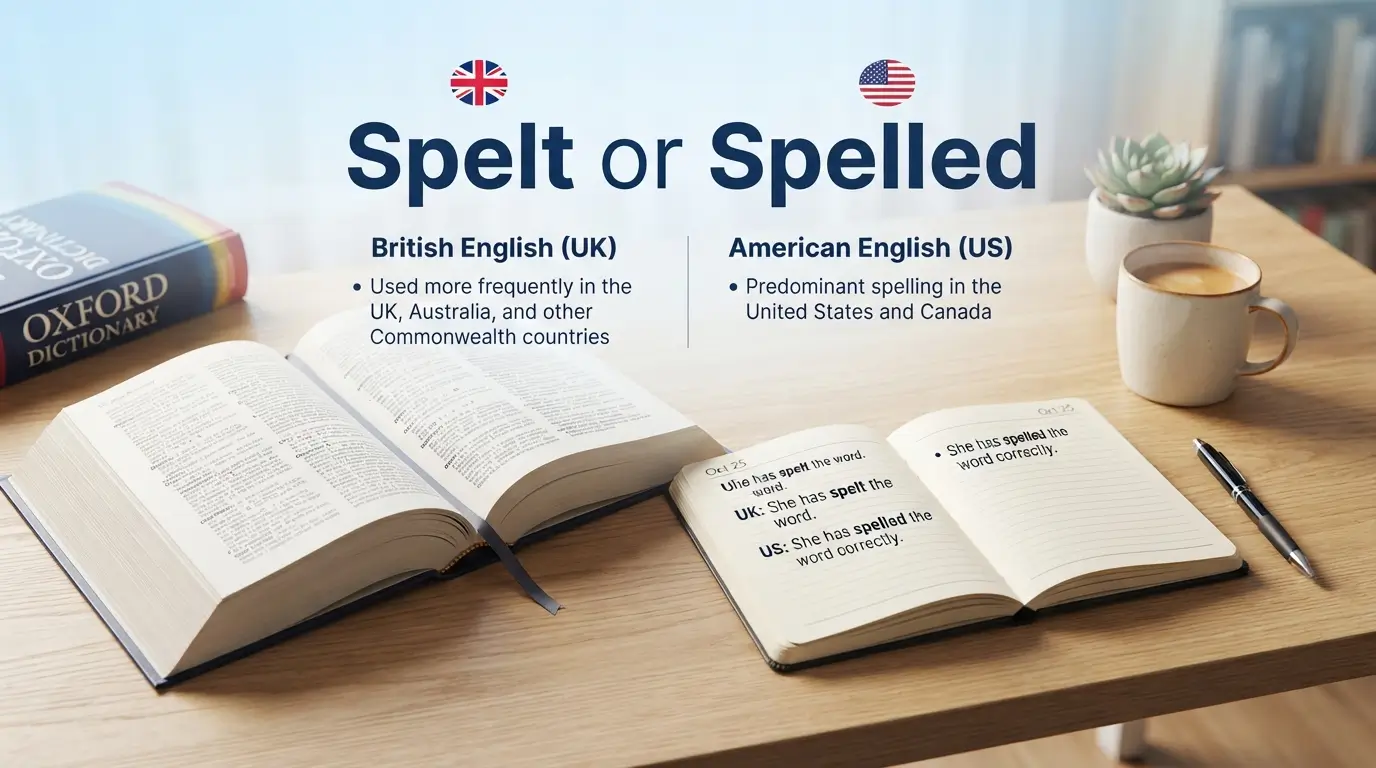
Both spelt and spelled can be correct when they are the past tense or past participle of the verb spell. The main difference is regional. American English normally uses spelled, while British English accepts both spelt and spelled.
This difference can matter in school work, emails, websites, academic writing, and professional documents. It can also be confusing for people who read both British and American English online.
In this guide, you will learn when to use spelt or spelled, where the two forms came from, how US and UK English differ, and which form is safest for your audience.
Spelt or Spelled – Quick Answer
Spelt and spelled are both forms of the past tense and past participle of spell.
- American English: spelled is the standard form.
- British English: spelt and spelled are both used.
- Australian English: spelt is commonly used.
- Canadian English: Both forms can be found, with regional and style differences.
For example:
She spelled my name correctly.
In British English, you can also write:
She spelt my name correctly.
The meaning does not change.
| Form | Example |
| Spelt | She spelt the word correctly. |
| Spelled | She spelled the word correctly. |
So, if you are writing for an American audience, spelled is the safest choice. If you are using British English, spelt is perfectly natural, although spelled is also correct.
The Origin of Spelt or Spelled
The difference comes from the history of English verbs.
The verb spell has been used in English for centuries. Modern dictionaries list both spelled and spelt as past forms. Collins, for example, gives both forms and notes that American English uses spelled, while British English uses either form.
English has many verbs with two past tense patterns. One form ends in ed, while another uses a shorter t ending.
Examples include:
- learn learned / learnt
- burn burned / burnt
- dream dreamed / dreamt
- smell smelled / smelt
- spell spelled / spelt
These forms developed through different patterns in the history of English.
Over time, American English generally moved toward the regular ed form for many verbs. British English kept more of the shorter forms in common use. This is why spelled became the normal American form, while British English kept spelt alongside spelled.
There is also an important point about spelt. The word can have another meaning: spelt is also the name of an ancient type of wheat. That meaning is completely different from the past tense of spell.
For example:
Spelt is an ancient grain.
This is different from:
She spelt my name correctly.
Context usually makes the meaning clear.
British English vs American English Spelling
The main difference is simple.
American English strongly prefers spelled. British English accepts both spelt and spelled. Cambridge Dictionary lists spelled as the past form and spelt as an additional UK form.
American English
In the United States, use spelled in normal writing.
Examples:
- He spelled my name incorrectly.
- She spelled the word correctly.
- The teacher spelled the instructions out clearly.
- I have spelled the word three times.
British English
In British English, both forms are acceptable.
Examples:
- He spelt my name incorrectly.
- He spelled my name incorrectly.
- She spelt the word correctly.
- She spelled the word correctly.
Comparison Table
| Feature | British English | American English |
| Present form | spell | spell |
| Past form | spelt / spelled | spelled |
| Past participle | spelt / spelled | spelled |
| Common choice | spelt | spelled |
| Meaning | Same | Same |
| ing form | spelling | spelling |
The important point is that spelt is not simply a misspelling of spelled. It is an established form of the verb in British English.
Which Spelling Should You Use?
The best choice depends on your audience.
If You Write for Americans
Use spelled.
For example:
The student spelled the word correctly.
This is the standard choice in American English.
If You Write for British Readers
You can use either spelt or spelled.
For example:
The student spelt the word correctly.
or:
The student spelled the word correctly.
Both are acceptable in British English.
If You Write for a Global Audience
Spelled is often the clearest choice because it is standard in American English and also accepted in British English.
However, consistency matters more than switching between forms randomly.
If your website uses American English, stay with spelled. If it follows British English, spelt can fit naturally.
Common Mistakes with Spelt or Spelled
Mistake 1: Thinking spelt is always wrong
This is incorrect.
Spelt is a valid past form of spell, especially in British English.
Correct:
She spelt the word correctly.
Mistake 2: Thinking spelled is only American
This is also incorrect.
British English uses spelled too. Cambridge and Collins both recognize it.
Mistake 3: Mixing styles without reason
A writer may use British English throughout an article but suddenly switch to American spelling.
For example:
She spelt the word correctly.
The student spelled the next word.
This is not grammatically wrong, but consistent style is usually better.
Mistake 4: Confusing spelt with the grain
Remember that spelt can also mean an ancient grain.
Spelt is used in some types of bread.
Here, spelt is a noun, not the past tense of spell.
Mistake 5: Using spelled and spelt as different tenses
They are not different tenses.
Both can function as the past tense or past participle of spell.
| Incorrect idea | Correct explanation |
| Spelt is present tense | No |
| Spelled is present tense | No |
| Spelt is always wrong | No |
| Spelled is only American | No |
| Spelt and spelled can have the same meaning | Yes |
Spelt or Spelled in Everyday Examples
The two forms appear in many types of writing.
In Emails
American English:
I noticed that my name was spelled incorrectly in the email.
British English:
I noticed that my name was spelt incorrectly in the email.
In News
American style:
The reporter said the name was spelled incorrectly in the original article.
British style:
The reporter said the name was spelt incorrectly in the original article.
On Social Media
You may see either form:
I finally spelled it correctly!
or:
I finally spelt it correctly!
The choice usually reflects the writer’s variety of English.
In Formal Writing
American:
The term was spelled incorrectly in the report.
British:
The term was spelt incorrectly in the report.
Both sentences communicate the same idea.
In School Writing
If your school follows American English, use spelled.
If your school follows British English, spelt and spelled may both be accepted.
When in doubt, check your teacher’s preferred style guide.
Spelt or Spelled – Google Trends & Usage Data
Search interest in spelt or spelled is driven largely by the difference between English varieties. People often search the phrase when they see one form online and want to know whether it is correct.
Current dictionary guidance supports the main regional pattern: spelled is standard in American English, while British English accepts both spelt and spelled.
Exact Google Trends numbers can change depending on the country, date range, search term, and search type selected. Therefore, it is better not to treat one Trends graph as a permanent measure of worldwide usage.
In broad terms:
- United States: spelled is the expected form.
- United Kingdom: spelt and spelled are both used.
- Australia: spelt is commonly found.
- Ireland: both forms are commonly used.
- International English: both forms may appear, depending on the writer’s preferred English variety.
Searches for this keyword are especially useful for students, bloggers, editors, teachers, and people writing for an international audience.
The important lesson is that search popularity does not decide whether a word is grammatically correct. Dictionary usage and regional English conventions provide better guidance.
Spelt vs Spelled Comparison Table
| Word | US English | UK English | Meaning |
| spelt | Less common | Common | Past form of spell |
| spelled | Standard | Common | Past form of spell |
| spell | Yes | Yes | Present form |
| spelling | Yes | Yes | ing form |
Both spelt and spelled can mean formed a word by putting letters in the correct order.
FAQs
Is spelt or spelled correct?
Both can be correct. Spelled is standard in American English, while British English uses both spelt and spelled.
Do Americans use spelt ?
Americans normally use spelled as the past tense and past participle of spell. Spelt is not the usual American choice.
Do British people say spelt ?
Yes. Spelt is a common British English form. British English also accepts spelled.
Is spelt a real word?
Yes. It is a valid past form of spell. It is also the name of an ancient grain, depending on the context.
Is spelled wrong in British English?
No. Spelled is also used and accepted in British English.
Which is better for American English: spelt or spelled?
Use spelled. It is the standard American English form.
Which should I use on an international website?
Spelled is a practical choice for a broad audience because it is standard in American English and accepted in British English. The most important thing is to use one English style consistently.
Conclusion
The choice between spelt or spelled is mainly a question of English variety, not meaning. Both forms come from the verb spell, and both can describe the act of writing or saying the letters of a word in the correct order.
For American English, spelled is the standard choice. For British English, both spelt and spelled are accepted, with spelt being a common option. Other English speaking countries may also use either form depending on local habits and style.
If you are writing for a US audience, choose spelled. If you are writing in British English, you can use spelt or spelled. For a global website, spelled can be a simple and widely understood choice.
The key is consistency. Once you choose your English style, keep your spelling choices consistent throughout your article, website, school assignment, or professional document.
Discover More Post
- Past or Passed: Which One Should You Use?
- Carmel or Caramel: Which Spelling Is Correct?
- Lose or Loose: What’s the Difference?

Toni Morrison is a celebrated American novelist known for her powerful storytelling, rich characters, and lasting impact on literature. At GrammerNests.com, she shares insights that help readers appreciate language, writing, and literary expression.








3 thoughts on “Spelt or Spelled: Which Is Correct? US vs UK English Guide”