The phrase “whether or not” appears everywhere in English, from everyday conversations and emails to news reports, academic writing, and formal documents. Yet many learners still ask a simple question: Is “whether or not” correct, or should I use only “whether”?
The short answer is that “whether or not” is completely correct. It is used when talking about two possibilities, especially when the result is the same regardless of which possibility is true. For example, “We will go whether or not it rains” means that the rain will not change the plan.
People also search for “whether or not” because they confuse it with “weather,” “wether,” “if,” or simply “whether.” Others want to know when “or not” is necessary and when it can be left out.
This guide explains the meaning, history, spelling, grammar, common mistakes, and everyday use of whether or not. You will also learn how the phrase works in American and British English and how to choose the best form for professional writing.
Whether or Not
“Whether or not” is correct English. It means “if something is true or not” or “regardless of whether something happens.”
Examples
- I don’t know whether or not she will come.
- We will continue whether or not they agree.
- He must decide whether or not to apply.
- Whether or not it rains, the event will continue.
There is an important difference between whether and whether or not.
Whether is often enough when you are talking about uncertainty:
I don’t know whether he is coming.
But whether or not is useful when you want to stress that both possibilities are included:
We will leave whether or not he comes.
Cambridge Dictionary explains that whether or not can express an opposite alternative and can also mean that something does not matter or will not change the result.
Merriam-Webster gives similar meanings, including “if it is or was true that” and “without being stopped or affected by something specified.”
Quick comparison
| Form | Meaning | Example |
| whether | if one possibility is true | I wonder whether he knows. |
| whether or not | if it is true or not | I wonder whether or not he knows. |
| if | introduces a condition or possibility | I don’t know if he knows. |
| weather | conditions in the atmosphere | The weather is cold. |
| wether | a castrated male sheep | The farmer owns a wether. |
The Origin of Whether or Not
The word whether has a very old history. It comes from Old English forms such as hwæðer and hweðer, meaning roughly “which of two” or “which one.” Its deeper roots can be traced to Proto-Germanic and an older Indo-European question-word base.
Over time, whether developed into the modern English word used to introduce alternatives, uncertainty, and indirect questions.
The phrase “whether or not” has also been used for centuries. Etymological records date the phrase to around the 1650s.
The basic idea has remained stable:
whether A or not A
This structure presents two possibilities:
- A happens.
- A does not happen.
For example:
I don’t know whether she will attend.
This expresses uncertainty.
I don’t know whether or not she will attend.
This makes both possibilities more explicit.
And:
We will attend whether or not she comes.
Here, the meaning changes slightly. The speaker is saying that her decision will not affect their decision.
Why does “whether” look different from “weather”?
This is a common spelling problem.
Whether is related to alternatives and uncertainty.
Weather refers to rain, wind, temperature, storms, and other atmospheric conditions.
They sound similar in many varieties of English, but they have different meanings and histories.
Another uncommon word is wether, which refers to a castrated male sheep. Cambridge specifically warns learners not to confuse whether with “weather,” “wheter,” “wheather,” or “wether.”
British English vs American English Spelling
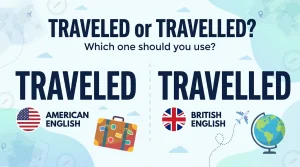
There is no British-versus-American spelling difference for whether or not.
Both British English and American English use:
whether or not
The spelling is the same.
What can differ is style, punctuation, vocabulary, and preferences in particular sentences. But the core spelling of whether remains unchanged.
Comparison table
| Feature | British English | American English |
| Correct spelling | whether | whether |
| Full phrase | whether or not | whether or not |
| Short form | whether | whether |
| Common alternative | if | if |
| Wrong spelling | wheather | wheather |
| Wrong spelling | wheter | wheter |
| Weather word | weather | weather |
| Sheep-related word | wether | wether |
Examples in both varieties
British English:
I don’t know whether or not she will attend.
American English:
I don’t know whether or not she will attend.
Both are correct.
Unlike words such as colour/color, centre/center, or travelling/traveling, the word whether does not normally change spelling between the two wide varieties of English.
Which Spelling Should You Use?
The answer is simple: always spell it “whether.”
Your audience does not change the spelling.
For American English
Use:
whether
Example:
We need to decide whether or not to continue.
For British English
Use:
whether
Example:
We need to decide whether or not to continue.
For Commonwealth English
Countries such as Canada, Australia, and New Zealand also use whether.
Example:
The team must decide whether or not the project is ready.
For global English
If your writing is intended for an international audience, whether is the safest choice.
The bigger decision is not spelling. It is deciding between:
- whether
- whether or not
- if
A useful rule is:
Use “whether” for alternatives or uncertainty. Use “whether or not” when you want to emphasize that both outcomes are possible or that the result will not change.
For example:
I don’t know whether he will call.
But:
I will finish the work whether or not he calls.
Common Mistakes with Whether or Not
Writing “weather or not”
Incorrect:
I don’t know weather or not she is coming.
Correct:
I don’t know whether or not she is coming.
“Weather” relates to atmospheric conditions.
Writing “wheter”
Incorrect:
I am unsure wheter he agrees.
Correct:
I am unsure whether he agrees.
Writing “wheather”
Incorrect:
We must decide wheather to stay.
Correct:
We must decide whether to stay.
Using “either” instead of “whether”
Incorrect:
I don’t know either he will come.
Correct:
I don’t know whether he will come.
In indirect questions, whether is the correct word.
Using “if” before a to-infinitive
In standard English, use whether, not if, before a to-infinitive:
Correct:
I don’t know whether to stay.
Not standard:
I don’t know if to stay.
Cambridge identifies this as a common error.
Removing “whether” completely
Incorrect:
I want to know he will come or not.
Correct:
I want to know whether he will come or not.
An indirect question normally needs whether or if in this structure.
Assuming “or not” is always necessary.
Sometimes whether alone is enough:
I don’t know whether she is ready.
You can also say:
I don’t know whether or not she is ready.
Both can be correct. The longer version gives more emphasis to the two possible outcomes.
Whether or Not in Everyday Examples
The phrase is common in many types of writing.
In emails
Professional:
Please let me know whether or not you can attend the meeting.
More concise:
Please let me know whether you can attend the meeting.
Both can work. The second is often cleaner when the context is already clear.
In news writing
News articles often use whether or not when discussing uncertainty, decisions, investigations, or competing outcomes.
For example:
Officials are reviewing whether or not the policy should continue.
The phrase is useful because it clearly presents two possible outcomes.
In social media
People often use the phrase in casual statements:
I’m going whether or not anyone joins me.
Whether or not you agree, this is worth discussing.
We have to keep moving forward whether or not things go as planned.
In formal writing
The phrase is also suitable for academic and professional writing:
The study examines whether or not the proposed method improves accuracy.
However, formal writers may sometimes prefer the shorter whether, when or not adds no useful meaning:
The study examines whether the proposed method improves accuracy.
The shorter version is often more direct.
In everyday speech
You may hear:
I don’t know whether or not he’ll come.
We’ll do it whether or not they approve.
She hasn’t decided whether or not to apply.
The phrase is natural and widely understood.
Whether or Not – Search Trends & Usage Data
Search interest in “whether or not” is best understood as a language-learning and grammar query rather than a spelling variant with a major British-American split.
Google Trends can show relative search interest over time and by country, but it does not provide an absolute number of searches. Therefore, a Trends graph should be treated as a relative measure rather than a precise search-volume count.
For SEO, the phrase has strong informational intent. People searching “whether or not” commonly want answers to questions such as:
- Is whether or not correct?
- What does whether or not mean?
- Is whether or not grammatically correct?
- Should I use whether or if?
- What is the difference between whether and whether or not?
- Is whether or not one word?
- Is whether or not British or American?
The phrase also appears naturally in current English-language publishing. Dictionary.com, for example, shows recent examples from major news publications using whether or not in 2026.
Country and audience context
Because whether or not is standard English, it appears across major English-speaking regions, including:
- United States
- United Kingdom
- Canada
- Australia
- New Zealand
- Ireland
- Singapore
- Other regions where English is widely used
The main difference is not spelling. Instead, search behavior may reflect local education systems, English-learning needs, and the preference for British or American style.
Search-intent comparison
| Search phrase | Likely intent |
| whether or not | Meaning and grammar |
| whether or not meaning | Informational |
| whether or not grammar | Grammar help |
| whether vs if | Grammar comparison |
| whether or not correct | Proofreading |
| whether or weather | Spelling |
| whether or not examples | Learning and writing |
| Is whether or not one word | Spelling question |
This makes whether or not a useful keyword for grammar websites, English-learning resources, writing guides, and educational content.
Whether or Not Variations Compared Side by Side
| Variation | Correct? | Meaning/Use | Example |
| whether or not | Yes | Two possible outcomes | We will go whether or not it rains. |
| whether | Yes | Uncertainty or alternatives | I don’t know whether he will come. |
| whether or | Yes | Two or more choices | Choose whether to stay or leave. |
| if | Yes, in many contexts | Conditional or uncertain situation | I don’t know if he will come. |
| weather or not | No | Spelling error | ❌ |
| whether or not | No | Spelling error | ❌ |
| wheather or not | No | Spelling error | ❌ |
| wether or not | Usually no | “Wether” means a castrated male sheep | ❌ for this meaning |
The easiest rule
If you are talking about rain, sunshine, temperature, or storms, use:
weather
If you are talking about a choice, possibility, or uncertainty, use:
whether
If you mean both possibilities do not change the result, use:
whether or not
FAQs:
Is “whether or not” grammatically correct?
Yes. Whether or not is a standard and widely accepted English phrase. It can express uncertainty or show that something remains true regardless of which outcome occurs.
Is “whether or not” one word?
No. Whether or not is three separate words.
The correct spelling is:
whether or not
Do not write:
whetherornot
What is the difference between “whether” and “whether or not”?
Whether can express uncertainty:
I don’t know whether she is coming.
Whether or not can make the two possible outcomes clearer:
I don’t know whether or not she is coming.
It can also mean that the result will remain the same:
We will go whether or not she comes.
Is “whether or not” better than “if”?
Not always. Both can work in many sentences.
I don’t know whether he is ready.
I don’t know if he is ready.
Both are natural.
However, whether is preferred before a to-infinitive:
I don’t know whether to go.
Is “weather or not” correct?
No, not when you mean whether or not.
Weather refers to atmospheric conditions:
The weather is beautiful today.
Whether introduces alternatives or uncertainty:
I don’t know whether he will come.
Can a sentence start with “whether or not”?
Yes.
Whether or not you agree, we need to make a decision.
This is grammatically correct. Cambridge specifically notes that whether or not can occur at the beginning or end of a clause when it means that something does not matter or will not affect the outcome.
Should I always use “or not” after “whether”?
No. Sometimes whether alone is more concise.
I don’t know whether she is coming.
But when the meaning is “regardless of whether”, keeping or not is often important:
We will continue whether or not she agrees.
The choice depends on the meaning and sentence structure.
Conclusion:
“Whether or not” is correct, standard English. It is used to discuss two possible outcomes, express uncertainty, or show that something will happen regardless of what happens next.
The spelling is the same in British and American English. There is no accepted regional spelling such as “wheather” or “wheter.” The most common spelling mistake happens because whether sounds similar to weather.
For everyday writing, remember three simple points. First, use whether when you are discussing alternatives or uncertainty. Second, use whether or not when you want to make both possibilities clear or show that the outcome will not change. Third, use weather only when you mean atmospheric conditions.
If you are writing for a global audience, whether is always the safe spelling. Good writing is not only about following rules; it is also about choosing the clearest form for your meaning. In most cases, whether or not is natural, correct, and easy to understand.
Read More Posts:
- CV Meaning in Jobs and Careers
- How People Use ISH in Daily Conversations (2026)
- How People Use YM in Conversations

Emily Dickinson is one of America’s most influential poets, recognized for her unique style and thought-provoking poetry. Through GrammerNests.com, she contributes valuable perspectives on language, creativity, and the beauty of written expression.