One extra “l” can make a simple English word look wrong even when it is completely correct. Should you write travelling or traveling? The answer depends on the type of English you are using.
Both spellings have the same meaning. They describe the act of going from one place to another, whether for work, study, vacation, or adventure.
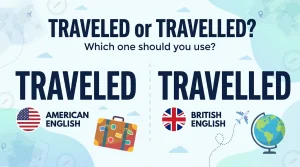
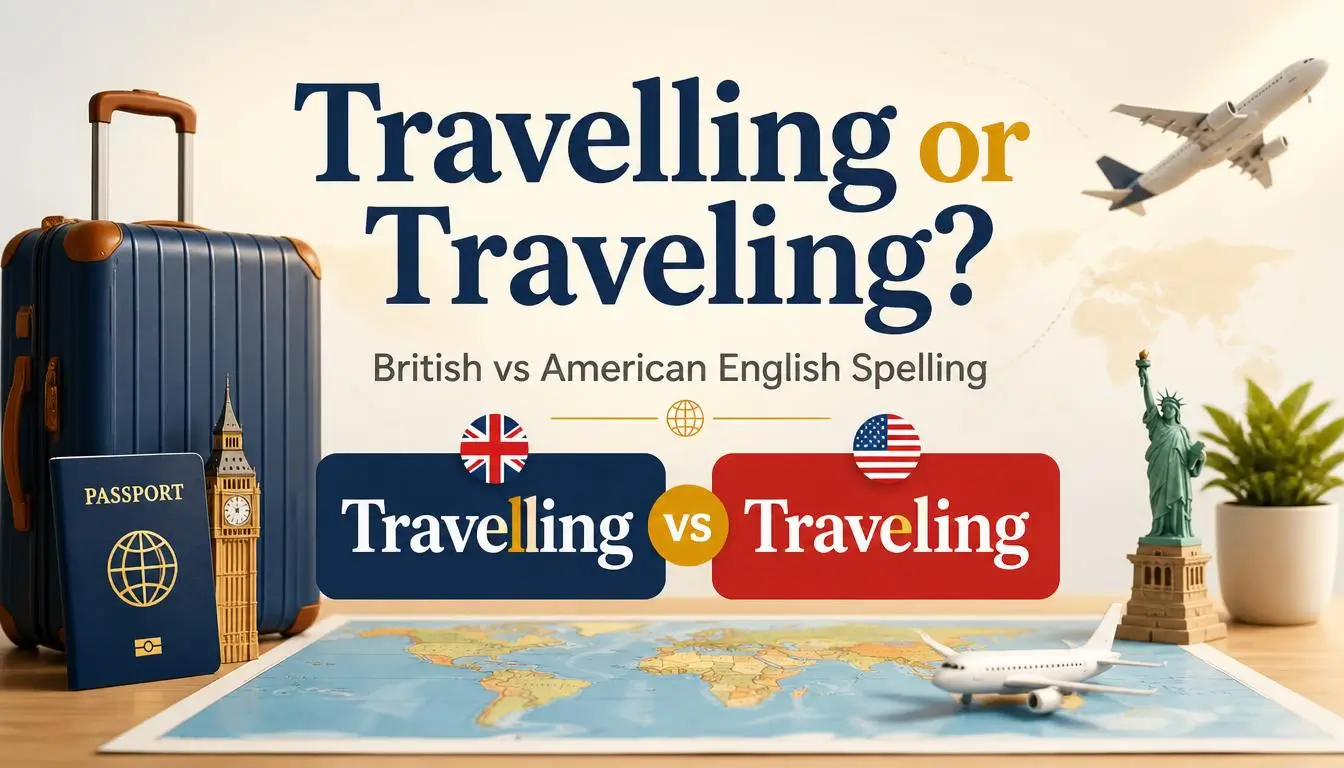
The main difference is regional spelling. Traveling is the standard form in American English, while travelling is the standard form in British English and is also widely used in other varieties influenced by British English.
People often search for this keyword because spell-checkers, schools, websites, and style guides may use different English standards. This can make writers wonder whether one spelling is incorrect.
The good news is simple: both are correct. The important thing is to know your audience and stay consistent.
This guide deeply explains the difference, the history behind it, common mistakes, real-life examples, and which spelling you should use.
Travelling or Traveling
Traveling and travelling are both correct.
- Traveling = standard American English.
- Travelling = standard British English.
- Both have the same meaning.
- Both are pronounced the same way.
- The difference is spelling, not grammar.
Examples
American English:
I am traveling to New York next week.
British English:
I am travelling to London next week.
Another example:
US: She enjoys traveling by train.
UK: She enjoys travelling by train.
Neither sentence changes the meaning.
Quick Memory Trick
Think:
US English > traveling > one L
UK English > travelling > two Ls
The same difference appears in related words:
- traveled / travelled
- traveler / traveller
- canceled / cancelled
- labeled / labelled
- modeling / modelling
The History of Travelling or Traveling
The word travel has a long history. It entered Middle English from forms related to Old French travail, meaning work, trouble, or hardship. Over time, the word developed the sense of making a journey.
The spelling difference came later as English developed different regional standards.
British English kept the traditional double-L form in words such as:
- travelling
- travelled
- traveller
American English increasingly favored simplified spellings. American dictionary maker Noah Webster played an important role in promoting spelling reforms in the United States. His approach helped establish forms such as traveling, traveled, and traveler.
This does not mean Americans simply removed every double letter. English spelling has many rules and exceptions. The important point is that American and British English developed different conventions.
So, travelling is not an older “correct” version while traveling is a mistake. They are regional variants that became standard in different forms of English.
British English vs American English Spelling
The main difference is the number of L’s.
British English generally doubles the final l when forming words such as travelling, travelled, and traveller. American English normally uses one l in these forms.
| Meaning/Form | American English | British English |
| Present participle | traveling | travelling |
| Past tense | traveled | travelled |
| Person | traveler | traveller |
| Example | I am traveling. | I am travelling. |
| Main spelling | One L | Two Ls |
More Examples
| American English | British English |
| traveling | travelling |
| traveled | travelled |
| traveler | traveller |
| canceled | cancelled |
| labeled | labelled |
| modeling | modelling |
The exact rules can be more complex than simply “American English removes an L.” Consonant doubling depends on the word, suffix, stress, and spelling tradition. However, for travel, the regional difference is easy to remember.
Which Spelling Should You Use?
Your audience should decide.
Use “Traveling” for American English
Choose traveling when writing for:
- United States readers.
- US schools and universities.
- American businesses.
- American newspapers and websites.
- Content following a US English style guide.
Example:
I am traveling across the United States this summer.
Use “Travelling” for British English
Choose travelling when writing for:
- United Kingdom readers
- British schools and universities
- UK businesses
- Publications using British English
- Audiences that follow British spelling conventions
Example:
I am travelling across Europe this summer.
What About International Writing?
If your website has a global audience, either spelling can work. However, consistency matters more than choosing one “perfect” version.
The rest of your content uses British spellings such as colour, favourite, and centre; use travelling.
If you use American forms such as color, favorite, and center, use traveling.
For professional writing, do not switch between the two styles without a reason.
Common Mistakes with Travelling or Traveling
Mistake 1st: Thinking One Spelling Is Always Wrong
Some writers believe travelling is incorrect because their spell-checker marks it as unusual.
That is not true.
Correction: Both spellings are correct in their appropriate English varieties.
Mistake 2nd: Mixing Both Spellings
Avoid writing:
She is traveling to London while her brother is travelling to Paris.
If the article follows American English, use traveling throughout. If it follows British English, use travelling throughout.
Mistake 3rd: Forgetting Related Words
The same regional pattern appears in:
- traveling / travelling
- traveled / travelled
- traveler / traveller
Do not use traveling and then switch to traveller unless there is a specific reason.
Mistake 4th: Assuming Pronunciation Changes
The extra l does not create a different pronunciation.
Traveling and travelling are pronounced the same way.
Mistake 5th: Changing the Meaning
The spelling does not change the meaning.
Both mean going from one place to another.
Travelling or Traveling in Everyday Examples
The correct spelling depends on the English style being used.
In Emails
American English:
Hi Sarah,
I will be traveling to Chicago next week for the meeting.
British English:
Hi Sarah,
I will be travelling to Manchester next week for the meeting.
In News Writing
US style:
Thousands of people are traveling during the holiday season.
UK style:
Thousands of people are travelling during the holiday season.
On Social Media
Both are acceptable:
Traveling with friends makes every trip better.
or:
Travelling with friends makes every trip better.
Choose the form that matches your usual English style.
In Formal Writing
American:
The researchers were traveling to several locations to collect data.
British:
The researchers were travelling to several locations to collect data.
Academic and professional writers should follow the style guide required by their school, employer, publisher, or journal.
Travelling or Traveling – Trends & Usage Data
Google Trends can help show how people search for different spellings. However, it is important to understand what the tool measures.
Google Trends uses a relative popularity scale from 0 to 100, rather than showing the exact number of searches. A higher value means a term has received more search interest compared with its own highest point during the selected time and location.
For traveling vs. travelling, usage generally follows regional English patterns:
- Traveling is strongly associated with the United States.
- Travelling is widely associated with the United Kingdom and other countries that use British English conventions.
- Both forms appear internationally because English is used across many countries.
- Search interest can also change based on whether users are searching for grammar help, travel content, or general language information.
Major English-language references confirm the same regional pattern: traveling dominates US usage, while travelling is preferred in British English and many other varieties.
For SEO, this means you should not assume that one spelling is universally better. Your target audience matters. A US-focused grammar site may naturally target traveling, while a UK-focused site may target travelling.
Comparison Table: Keyword Variations
| Variation | Standard Region | Example |
| traveling | American English | I am traveling abroad. |
| travelling | British English | I am travelling abroad. |
| traveled | American English | We traveled by train. |
| travelled | British English | We travelled by train. |
| traveler | American English | She is a frequent traveler. |
| traveller | British English | She is a frequent traveller. |
FAQs:
Is traveling or travelling correct?
Both are correct. Traveling is the standard American English spelling, while travelling is the standard British English spelling.
Is traveling American or British?
Traveling with one L is the standard American English form.
Is travelling British English?
Yes. Travelling with two Ls is the standard British English spelling.
Is traveling spelled with one L or two?
In American English, it is spelled traveling with one L. In British English, it is spelled travelling with two Ls.
Which is correct: traveler or traveller?
Both are correct. Traveler is standard in American English, while traveller is standard in British English.
Is “travelled” British or American?
Travelled with two Ls is the standard British form. American English normally uses traveled with one L.
Can I use traveling and travelling in the same article?
You can, but it is usually better not to. Choose one English variety and use it consistently throughout your article, unless you are specifically discussing the spelling difference.
Conclusion:
The choice between travelling and traveling is simple once you know the regional rule. Both words have the same meaning, pronunciation, and grammatical function. The difference is mainly a matter of English spelling conventions.
Use traveling when writing in American English. Use travelling when writing in British English. The same pattern usually applies to related words, including traveled/travelled and traveler/traveller.
For professional, academic, and SEO writing, consistency is the key. Do not change spelling randomly because a spell-checker uses a different regional dictionary. Instead, decide which audience you are writing for and follow that style from beginning to end.
If your readers are mainly in the United States, traveling is the safest choice. If they are mainly in the UK or use British English, choose travelling. For a global audience, either can work as long as your spelling remains consistent.
In short, neither spelling is wrong. Your audience determines the best choice.
Read More Posts:
- Comma Before or After But? Examples Guide 2026
- Whose or Who’s? The Simple Guide to Using Them Correctly
- Use to or Used to: British vs American English Guide 2026