If you have seen the phrase “English or Spanish?” online, in a conversation, or on TikTok, you may wonder what it really means. Is someone simply asking which language you prefer, or is there another meaning behind the question?
The answer depends on the context. In normal conversation, “English or Spanish?” is a simple language-choice question. For example, someone may ask, “Do you want the instructions in English or Spanish?”
But on social media, especially TikTok, the phrase became linked to a viral prank and meme trend that became popular in 2024.
People also search for “English or Spanish” because they want to know which language to use, how the phrase should be written, what it means in Spanish, or why it suddenly became popular online.
This guide explains all of these meanings in simple terms. You will learn the difference between English and Spanish, their origins, common mistakes, everyday examples, and the online meaning of this phrase.
English or Spanish – Quick Answer
“English or Spanish?” is normally a question asking someone to choose between the English language and the Spanish language.
For example:
- “Would you like the menu in English or Spanish?”
- “Should I explain this in English or Spanish?”
- “Do you speak English or Spanish?”
In Spanish, “English or Spanish?” can be translated as:
“¿Inglés o español?”
SpanishDict gives “Do you prefer English or Spanish?” as “¿Prefieres inglés o español?”.
However, the phrase has another popular meaning online. On TikTok and other social platforms, “English or Spanish?” became associated with a viral prank in which a person asks the question and then tells the other person to stay still. The trend grew rapidly through videos and memes in 2024.
So, the meaning depends on where you see it:
| Context | Meaning |
| Normal conversation | Choosing a language |
| School | Choosing the language for an answer |
| Work | Choosing a language for communication |
| Travel | Asking which language someone speaks |
| TikTok/memes | A viral prank or meme reference |
The Evolution of English or Spanish
The phrase “English or Spanish” combines the names of two major languages.
Where Did English Come From?
English developed in England from the languages brought by Germanic-speaking groups, especially the Angles, Saxons, and Jutes. Over time, English changed through contact with Norse, French, Latin, and other languages.
Today, English is spoken in the United Kingdom, the United States, and many other countries. Cambridge Dictionary defines English as a language spoken in the UK, the US, and many other countries.
Where Did Spanish Come From?
Spanish is a Romance language that developed from varieties of spoken Latin used in the Iberian Peninsula.
It later spread widely through Spain’s historical expansion and became a major language across Latin America and other parts of the world.
Spanish is known as español or castellano in different contexts.
Why Do People Say “English or Spanish”?
The phrase is natural because English and Spanish are two widely used languages. Someone may ask the question when they need to know which language another person understands.
For example:
“Welcome! Do you prefer English or Spanish?”
The phrase later gained a separate internet meaning. In 2024, TikTok creator Alfonso Pinpon became associated with prank videos using a question about English or Spanish. Other creators copied and edited the format, helping it become a viral meme.
British English vs American English Spelling
There is an important point to understand: “English or Spanish” is not a British English vs American English spelling issue.
English and Spanish are two different languages. British English and American English are two wide varieties of English.
The spelling of the phrase itself does not normally change:
- British English: English or Spanish
- American English: English or Spanish
The main spelling differences appear in other English words.
| Word | American English | British English |
| color | color | colour |
| center | center | centre |
| organize | organize | organise |
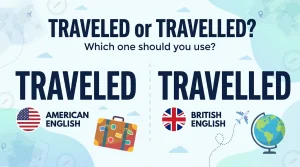
| traveled | traveled | travelled |
| favorite | favorite | favourite |
| theater | theater | theatre |
Spanish does not use these British-American spelling pairs.
English vs Spanish Spelling
English spelling can sometimes be difficult because pronunciation and spelling do not always match.
Spanish spelling is generally more predictable. However, Spanish has its own rules, accents, punctuation, and regional vocabulary.
For example:
- English: language
- Spanish: idioma
- English: English
- Spanish: inglés
- English: Spanish
- Spanish: español
Remember that English and Spanish should be capitalized when they refer to the names of languages in English writing.
Which Spelling Should You Use?
If you are writing the phrase “English or Spanish?”, there is no US or UK spelling choice to make. Use:
English or Spanish?
The important decision is the language you want to use after that question.
For a US Audience
English is often the best choice for a general US audience. Spanish may be better when your readers or customers are Spanish-speaking.
For bilingual content, you can offer both:
“Choose English or Spanish.”
For a UK Audience
Use standard British English when your main audience is in the UK. If your audience speaks Spanish, provide a Spanish version when useful.
For a Global Audience
A multilingual approach can work well. Use clear English for international communication and provide Spanish translations when your audience includes Spanish speakers.
The best choice depends on your readers, location, industry, and purpose.
Simple Rule
Do not choose English or Spanish simply because one language is “better.” Choose the language your audience understands best.
Common Mistakes with English or Spanish
Because the keyword can refer to both languages and a social media trend, several mistakes are common.
Mistake 1st: Treating It as a Spelling Choice
❌ “Which spelling is correct, English or Spanish?”
✅ “Which language should I use, English or Spanish?”
English and Spanish are languages, not alternative spellings of the same word.
Mistake 2nd: Forgetting Capital Letters
In English, language names are capitalized:
❌ “Do you speak english or spanish?”
✅ “Do you speak English or Spanish?”
Mistake 3rd: Confusing Translation With Language Choice
If someone asks:
“English or Spanish?”
They may simply want to know which language you prefer.
A natural response is:
“English, please.”
Or:
“Spanish, please.”
Mistake 4th: Assuming the TikTok Meaning
Not every person who says “English or Spanish?” is referring to the meme.
In a classroom, office, hotel, or translation setting, it may be a completely normal question.
Mistake 5th: Using the Meme in a Formal Situation
The viral meaning is informal. Avoid using the meme version in professional emails, academic writing, or serious business communication.
English or Spanish in Everyday Examples
The phrase appears in many different situations.
In Emails
A customer service representative might write:
“Please let us know If you prefer English or Spanish.”
This is clear and professional.
In News
A news report might say:
“The interview was available in English or Spanish.”
Here, the phrase simply identifies language options.
On Social Media
A creator might post:
“English or Spanish?”
On TikTok, this may refer to the viral meme rather than a genuine language question.
The phrase became widely recognizable because users copied the original prank format and created their own versions.
In School
A teacher might ask:
“Would you like to answer in English or Spanish?”
This is a genuine language-choice question.
In Travel
A hotel employee could ask:
“Do you speak English or Spanish?”
This helps the employee choose the best language for communication.
In Formal Writing
A business may write:
“The report is available in English and Spanish.”
Notice the difference between or and and:
- English or Spanish = choose one
- English and Spanish = both are available or used
English or Spanish – Google Trends & Usage Data
Search interest in “English or Spanish” is influenced by two main types of searches: normal language-related searches and the viral social media trend.
The phrase has long been useful in ordinary communication because people need to choose between English and Spanish. Translation resources also show the phrase in practical language-learning examples.
However, online interest changed significantly after the TikTok trend became popular in 2024. Know Your Meme records the original prank video in February 2024 and notes that the broader “English or Spanish?” meme became popular in May 2024.
Where Is the Phrase Most Relevant?
| Search context | Likely reason for searching |
| United States | Language choice, bilingual communication, meme. |
| Mexico | Spanish-English communication and social media. |
| Spain | Language comparison and internet culture. |
| Latin America | Spanish-English communication and meme content. |
| Global | Translation, language learning, and viral trends. |
Google Trends can show relative search interest by country and over time, but it does not mean that the phrase has one fixed worldwide search volume. Interest can change based on social media activity, news, and cultural trends.
For SEO, this means an article targeting “English or Spanish” should address both meanings: the normal language question and the viral internet phrase.
English or Spanish – Comparison Table
| Variation | Meaning | Best Context |
| English or Spanish | Choose between two languages | General question |
| Spanish or English | Same choice, reversed order | Conversation |
| English and Spanish | Both languages | Bilingual content |
| English vs Spanish | Comparing the languages | Education or research |
| Do you speak English or Spanish? | Asking about language ability | Conversation |
| Do you prefer English or Spanish? | Asking about language preference | Services and communication |
| ¿Inglés o español? | Spanish version of the question | Spanish conversation |
| English or Spanish TikTok | Viral meme/trend | Social media searches |
English or Spanish: Which Is Better?
There is no universal winner.
English can be useful for international business, technology, education, travel, and communication across many countries.
Spanish is especially useful for communicating with Spanish-speaking communities across Spain, Latin America, and elsewhere.
Your goal should decide your choice.
If you are writing a website for an international audience, English may provide broad reach. If your target audience is Spanish-speaking, Spanish content can create a much stronger connection.
For bilingual websites, using both languages can be the best solution.
Is “English or Spanish?” Correct Grammar?
Yes.
“English or Spanish?” is grammatically natural as a short question.
It is an elliptical question, meaning some words are understood from context.
For example:
“Do you want to speak English or Spanish?”
can be shortened to:
“English or Spanish?”
Both can be correct. The shorter version is common in conversation.
FAQs:
What does “English or Spanish?” mean?
It usually means that someone is asking you to choose between English and Spanish as the language for communication. Online, it can also refer to the viral TikTok meme.
Is “English or Spanish?” a meme?
Yes. The phrase became associated with a viral TikTok prank in 2024. The trend spread through videos, edits, and memes.
What is “English or Spanish?” in Spanish?
The basic translation is “¿Inglés o español?”. For “Do you prefer English or Spanish?”, a natural translation is “¿Prefieres inglés o español?”.
Should English and Spanish be capitalized?
Yes. In English writing, names of languages are capitalized.
Correct:
“Do you speak English or Spanish?”
Is “English or Spanish” British or American English?
It works in both British and American English. There is no spelling difference in this phrase.
What is the difference between “English or Spanish” and “English and Spanish”?
“English or Spanish” gives a choice between two languages. “English and Spanish” means both languages are involved or available.
Why did “English or Spanish?” become popular online?
The phrase became popular because of a 2024 TikTok prank format associated with creator Alfonso Pinpon. Other users copied the format, turning the question into a recognizable meme.
Conclusion:
“English or Spanish?” is a simple phrase with two important meanings. In everyday communication, it usually asks someone to choose between the English and Spanish languages.
You may hear it at school, work, hotels, customer service desks, or during travel. In this meaning, the phrase is straightforward: choose the language you understand or prefer.
Online, however, the phrase gained a second life as a viral TikTok meme. The trend became widely popular in 2024 after prank videos used the question as the opening to a freeze-style joke.
There is also no British-versus-American spelling issue with “English or Spanish.” The phrase is spelled the same in both wide varieties of English.
For professional writing, use the phrase in its normal language-choice sense. For social media, understand the context before assuming it refers to the meme. Most importantly, choose English or Spanish based on your audience, purpose, and communication needs.
Read More Posts:
- MBN Meaning in Text From a Guy or Girl 2026
- What Does OTR Mean From a Guy or Girl In Texting 2026
- WDP Meaning From a Guy or Girl: What Does It Mean?