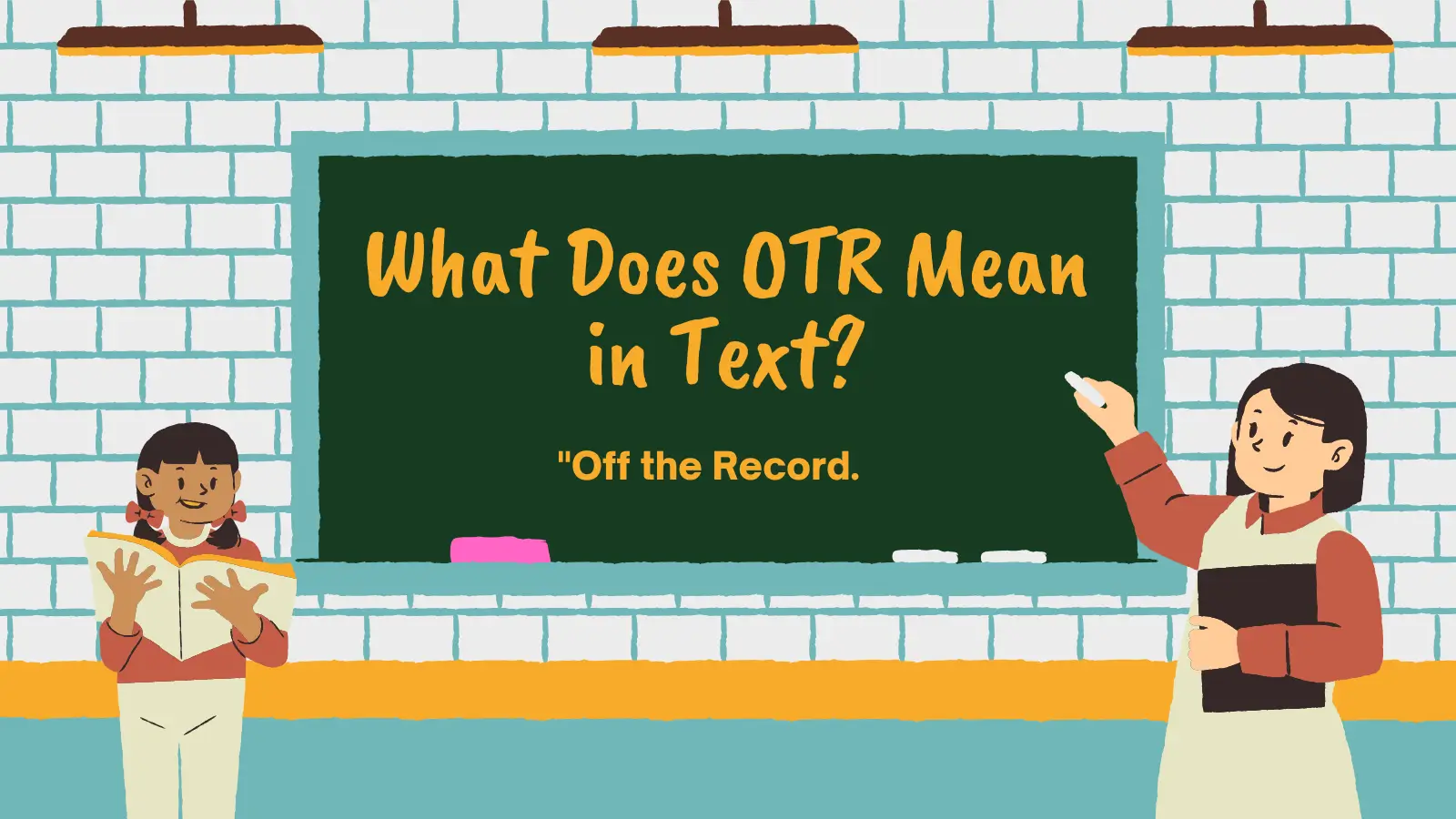
Seeing OTR in a text can leave you wondering what those three letters really mean. Texting slang is often short, flexible, and highly dependent on context, so the meaning of OTR can change from one conversation to another.
In most casual text messages and online chats, OTR means “Off the Record.” It usually suggests that the information being shared is private, unofficial, or not intended to be repeated.
For example, someone might say “OTR, I heard the news already” when they want to share something discreetly.
OTR can also have different meanings in specific settings. In trucking, it commonly means “Over the Road,” while online communities may use it for phrases such as “Off the Rails.” The surrounding words, topic, and platform often provide important clues.
Understanding the context makes it much easier to identify the intended meaning of OTR and respond appropriately.
What Does OTR Mean in Text?
The most common meaning of OTR in texting is Off the Record.
When someone says a message is “off the record,” they’re asking you to treat the information as confidential or informal. It doesn’t necessarily mean it’s a secret, but it usually means the person doesn’t want their words shared with others.
For example:
- “OTR, I’m thinking about leaving my job.”
- “Can I tell you something OTR?”
- “This stays between us, OTR.”
In these situations, OTR signals that the conversation is based on trust.
Why Do People Use OTR in Messages?
People use OTR because it’s a quick way to signal privacy without typing a long explanation.
Common reasons include:
- Sharing personal news before it’s public.
- Discussing workplace situations confidentially.
- Giving honest opinions.
- Talking about relationships.
- Asking for advice privately.
- Sharing rumors that haven’t been confirmed.
Using OTR helps set expectations that the information shouldn’t be repeated elsewhere.
The Most Common Meaning: Off the Record
The phrase Off the Record has been used for decades, especially in journalism.
Originally, it referred to information that reporters could hear but were not allowed to publish or quote publicly.
Today, the phrase has expanded beyond journalism and is commonly used in:
- Text messages
- Social media DMs
- Workplace chats
- Group conversations
- Online communities
Instead of writing the full phrase, many people simply type OTR.
Example:
Friend: “OTR, I already accepted another job.”
This tells you the information is shared privately.
Examples of OTR in Everyday Texting
Here are realistic examples showing how OTR is used.
Example 1st
Person A: Can I tell you something OTR?
Person B: Sure.
Example 2nd
Person A: OTR, I don’t think the meeting went well.
Example 3rd
Person A: Keep this OTR until tomorrow.
Example 4th
Person A: OTR, I’m planning to move next month.
Example 5th
Person A: This is totally OTR, but I think they’re getting engaged.
Each example shows that OTR introduces information the sender prefers to keep private.
Other Meanings of OTR
Although Off the Record is the meaning you’ll encounter most often in texting, OTR has several other recognized definitions.
Over the Road
In the trucking industry, OTR stands for Over the Road.
It describes long-distance trucking routes that cross states or regions.
Example:
“I’m applying for an OTR driving job.”
Here, the conversation has nothing to do with private messages.
Off the Rails
Some online communities use OTR informally to mean Off the Rails, describing something that has become chaotic or completely off-topic.
Example:
“The chat went OTR after midnight.”
This usage is much less common than “Off the Record.”
Off-the-Record Messaging
Certain secure messaging tools have historically used OTR to refer to Off-the-Record Messaging, an encryption protocol designed to provide private conversations.
Example:
“This app supports OTR encryption.”
This meaning appears mostly in technology discussions.
Comparison Table of OTR Meanings
| Meaning | Common Context | Example |
| Off the Record | Texting, messaging | “OTR, don’t tell anyone.” |
| Over the Road | Trucking | “He’s an OTR driver.” |
| Off-the-Record Messaging | Technology | “The chat uses OTR encryption.” |
| Off the Rails | Online slang | “That discussion went OTR.” |
The surrounding conversation almost always reveals which meaning is intended.
How to Tell Which Meaning Someone Means
Context is everything.
Ask yourself:
What is the conversation about?
If you’re chatting with friends, Off the Record is probably correct.
If someone is discussing freight transportation, it’s likely Over the Road.
Who sent the message?
A coworker may use OTR differently than a truck driver or a cybersecurity professional.
What words appear nearby?
Look for clues.
Examples:
- “Driver” → Over the Road
- “Private” → Off the Record
- “Encryption” → Off-the-Record Messaging
- “Conversation” → Off the Record
Nearby words usually make the meaning obvious.
Is OTR Popular on Social Media?
Yes.
You’ll occasionally see OTR on platforms such as:
- Snapchat
- Facebook Messenger
- Discord
- X (formerly Twitter)
- Signal
- Telegram
People often use it before sharing opinions or personal information they don’t want widely repeated.
Unlike abbreviations such as LOL or BRB, OTR is less common but still widely recognized.
Is OTR the Same as “Private”?
Not exactly.
Although they’re related, they aren’t identical.
Private simply means information isn’t public.
OTR specifically suggests that the information is shared unofficially and shouldn’t be repeated without permission.
Someone might say:
“This is private.”
Or:
“This is OTR.”
The second version carries a stronger expectation of confidentiality.
Can OTR Be Used at Work?
Yes, but carefully.
Employees sometimes use OTR when discussing:
- Career plans
- Office politics
- Feedback
- Future projects
- Sensitive conversations
However, using OTR in a workplace message doesn’t create any legal protection. It simply expresses that the sender hopes the information stays confidential.
If information must remain legally confidential, formal policies or agreements- not abbreviations- provide that protection.
OTR in Online Gaming
Gamers occasionally use OTR with different meanings depending on the community.
Some groups may use it casually for conversations that have gone off-topic or off the rails.
Others may never use the abbreviation at all.
Unlike gaming abbreviations such as GG, AFK, or OP, OTR is not considered standard gaming slang.
OTR in Technology and Secure Messaging
In cybersecurity, Off-the-Record Messaging refers to a communication protocol created to improve the privacy of instant messaging.
The protocol was designed to offer features such as:
- End-to-end encryption
- Authentication
- Forward secrecy
- Message deniability
Although newer encryption systems have become more common, you’ll still encounter references to OTR in discussions about secure messaging.
This technical meaning is separate from the everyday texting abbreviation.
Common Mistakes About OTR
Many people misunderstand OTR.
Here are some common misconceptions.
It always means one thing.
False.
OTR has multiple accepted meanings depending on the topic.
It makes conversations legally confidential.
False.
Typing OTR does not create legal confidentiality.
Everyone knows what OTR means.
Not necessarily.
Some people may never have encountered the abbreviation.
It only belongs in journalism.
False.
While it originated there, OTR is now widely used in everyday conversations.
Similar Text Abbreviations
If you’re learning texting slang, you’ll probably encounter these abbreviations alongside OTR.
| Abbreviation | Meaning |
| IMO | In My Opinion |
| IMHO | In My Humble Opinion |
| TBH | To Be Honest |
| FYI | For Your Information |
| BRB | Be Right Back |
| BTW | By the Way |
| IDC | I Don’t Care |
| IDK | I Don’t Know |
| TMI | Too Much Information |
| ICYMI | In Case You Missed It |
Learning these abbreviations makes online conversations easier to understand.
When Should You Use OTR?
You can use OTR when you want to indicate that your message isn’t intended for public sharing.
Appropriate situations include:
- Asking someone to keep information confidential.
- Sharing an honest opinion.
- Talking about personal matters.
- Giving informal feedback.
- Discussing plans before they’re announced.
Avoid using OTR if you genuinely require legal confidentiality or formal privacy protections.
Tips for Understanding Text Abbreviations
When you come across unfamiliar abbreviations:
- Read the surrounding messages.
- Consider who sent the text.
- Think about the topic being discussed.
- Look for repeated clues.
- Ask the sender if you’re unsure.
Context almost always provides the correct interpretation.
FAQs:
What does OTR usually mean in texting?
In most text conversations, OTR means Off the Record. It tells the reader that the information is being shared privately or unofficially and shouldn’t be repeated without permission.
Is OTR always about privacy?
No. Although privacy is the most common meaning, OTR can also stand for Over the Road in trucking or Off-the-Record Messaging in technology, depending on the conversation.
Is OTR the same as confidential?
Not exactly. OTR expresses an expectation of discretion, but it doesn’t create a legal or contractual obligation to keep information secret.
Can OTR have different meanings on different apps?
Yes. The abbreviation itself doesn’t change across apps, but the meaning depends on the conversation. The same OTR message could refer to private information in a chat or trucking terminology in a work discussion.
Should you use OTR in professional conversations?
You can use it when discussing something informally, but don’t rely on it for sensitive business information. If confidentiality is required, use official communication policies or agreements instead.
What should you do if you don’t understand OTR?
The safest approach is to ask the sender what they mean. Since OTR has several recognized definitions, a quick clarification prevents misunderstandings.
Conclusion:
The answer to “what does OTR mean in text” depends on the context, but the most common definition is Off the Record.
In everyday messaging, it signals that someone is sharing information privately and expects it to stay between the people involved. Outside texting, OTR can also mean Over the Road in the trucking industry or Off-the-Record Messaging in cybersecurity discussions.
Whenever you encounter OTR, pay attention to the surrounding conversation rather than assuming a single meaning.
A few nearby words usually reveal the intended definition. Understanding abbreviations like OTR helps you interpret online conversations more accurately, avoid confusion, and communicate with greater confidence across texting apps, social media, and professional settings.
Read More Posts:
- CV Meaning in Jobs and Careers
- How People Use ISH in Daily Conversations (2026)
- FW Meaning in Gen Z and Internet Slang

Emily Dickinson is one of America’s most influential poets, recognized for her unique style and thought-provoking poetry. Through GrammerNests.com, she contributes valuable perspectives on language, creativity, and the beauty of written expression.