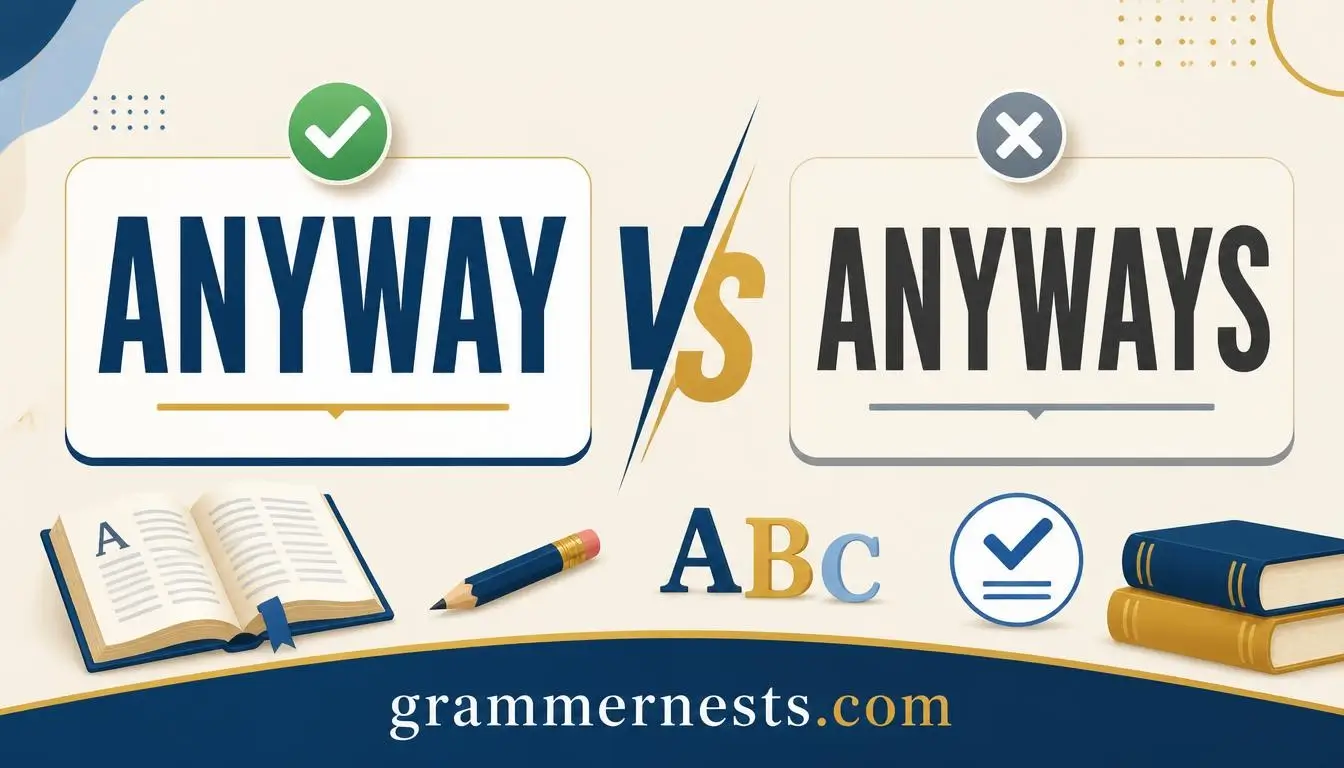
Choosing between anyway or anyways can be confusing because both words appear in everyday conversations, text messages, emails, and online posts.
They look similar and express almost the same idea, but they differ in formality and acceptance in standard English. Both words can mean “in any case,” “despite that,” or “regardless.”
Yet, anyway is the preferred form in formal and professional writing, while anyways is more common in casual speech and informal conversations. This difference matters when writing emails, school assignments, business messages, or articles.
Many English speakers use both forms without noticing the difference, but choosing the right word can make your writing clearer and more polished.
American and British English also follow similar usage patterns, so the choice is not mainly about regional spelling. Understanding their meanings, origins, and everyday uses will help you choose the most suitable word in any situation.
Anyway or Anyways – Quick Answer
Anyway is the standard and preferred spelling in both American and British English. Anyways is also a real English word, but it is more informal and is often used in casual speech and conversation.
Here is the simple difference:
- Anyway: The standard form used in formal and informal writing.
- Anyways: An informal variation that is common in casual conversations, especially in some varieties of American English.
Examples:
- I was tired, but I finished my homework anyway.
- Anyway, let’s talk about something else.
- Anyways, I’ll call you tomorrow.
The first two examples use anyway in standard English. The third uses anyways in a casual conversational style.
If you are writing an essay, business email, school assignment, report, or professional document, choose anyway. It is the safest option for almost every situation.
Remember this easy rule: Use anyway when you want standard English, and use anyways only when a relaxed, conversational tone is appropriate.
The Origin of Anyway and Anyways
The word anyway developed from the combination of two older English words: any and way. Together, they express the idea of doing something by any method or in any situation.
Over time, the meaning changed. People began using anyway to mean “in any case,” “regardless,” or “despite what happened before.”
For example:
- It was raining, but we went outside anyway.
- Anyway, I have another question.
- I did not like the movie, but I watched it anyway.
The word anyways developed as an informal variation of anyway. The extra s became part of everyday speech and regional language use. Although some people consider it incorrect, dictionaries recognize it as a word, usually with a label indicating informal usage.
The two forms have similar meanings, but they do not have exactly the same place in standard writing.
Why Does Anyways Have an Extra S?
The extra s in anyways is not needed to make the word plural. It is simply part of an alternative form that developed through spoken English.
English has several words with similar informal variations. Some become common in conversation even when another form remains preferred in formal writing.
For example, people may say anyways naturally when speaking with friends. However, editors and teachers usually prefer anyway in polished writing.
This difference is mainly about style and usage, not a major change in meaning.
British English vs American English Spelling
Both American and British English use anyway as the standard form. The spelling does not change between these two varieties of English.
However, anyways is also heard in both varieties, particularly in informal conversation. Its frequency and acceptance can depend on region, speaker, and context.
In American English, anyways is familiar in casual speech and informal online communication. In British English, it is also understood, but anyway remains the more conventional choice in standard writing.
Comparison Table: British vs American English
| Feature | American English | British English |
| Standard spelling | Anyway | Anyway |
| Informal variation | Anyways | Anyways |
| Formal writing | Anyway | Anyway |
| Casual conversation | Both forms | Both forms |
| Professional emails | Anyway | Anyway |
| Academic writing | Anyway | Anyway |
Examples in American English
- I have to leave anyway.
- Anyway, what were you saying?
- Anyways, I’ll see you later.
Examples in British English
- We were going to walk anyway.
- Anyway, let’s get started.
- Anyways, I’ll speak to you tomorrow.
The examples show that both forms can appear in conversation. However, anyway is the more suitable choice when writing for a British or American audience.
The key point is that this is not a British-versus-American spelling difference. It is a difference in formality and standard usage.
Which Spelling Should You Use?
Choosing between anyway and anyways depends mainly on your audience and the type of writing.
Since both words communicate a similar meaning, you should consider whether your writing needs to sound professional, neutral, or relaxed.
1. For American English
If you are writing for an American audience, use anyway in most situations.
Americans commonly use anyways in casual conversations, text messages, and social media posts. However, anyway is more appropriate for professional communication.
Examples:
- Anyway, I will send the report tomorrow.
- We were late, but we went anyway.
2. For British English
British English also prefers anyway in standard writing.
You may hear anyways in everyday conversations, but it is generally less suitable for formal documents, schoolwork, and professional emails.
Examples:
- Anyway, we should get back to work.
- I was not feeling well, but I went anyway.
3. For Commonwealth English
In countries such as Canada, Australia, and New Zealand, anyway is also the safest standard choice.
People may use anyways in informal speech, but it is not necessary in professional or academic writing.
4. Global English
If you write for an international audience, choose anyway.
It is widely understood, accepted in standard English, and suitable for almost every type of communication.
Whether you are writing a blog post, business proposal, university assignment, or online article, anyway will help you maintain a clear and professional tone.
Best advice: When you are unsure, use anyway. You will rarely need to replace it with anyways.
Anyway vs Anyways – Comparison Table
Although anyway and anyways have similar meanings, they differ in tone and standard usage. The following table highlights their main differences.
| Feature | Anyway | Anyways |
| Meaning | In any case; regardless | In any case; regardless |
| Word type | Adverb | Adverb |
| Standard English | Yes | Informal variation |
| Formal writing | Preferred | Generally avoided |
| Casual conversation | Common | Common in some regions |
| American English | Standard | Informal |
| British English | Standard | Informal |
| Professional emails | Recommended | Not recommended |
| Academic writing | Preferred | Usually avoided |
| Extra letter | No extra S | Ends with S |
Remember: Both words are understood, but anyway is the better choice for formal, academic, and professional writing.
FAQs:
Is Anyway or Anyways Correct?
Both anyway and anyways are recognized English words. However, anyway is the standard form and is preferred in formal writing. Anyways is mainly used in informal conversations.
Is Anyways Grammatically Incorrect?
No, anyways is not completely incorrect. It is an informal variation of anyway. Many English speakers use it in everyday conversations, but it is generally avoided in professional and academic writing.
Do Americans Say Anyway or Anyways?
Americans use both words. Anyway is the standard form used in writing and speech, while anyways is common in casual conversations, text messages, and social media posts.
Do British People Say Anyways?
Yes, British English speakers may use anyways in informal conversations. However, anyway is more widely accepted in standard British English and is the preferred choice in formal writing.
Should I Use Anyway or Anyways in an Email?
You should use anyway in professional emails. It is the standard form and creates a clear, polished tone.
For example:
“Anyway, I will send you the updated document by tomorrow.”
Avoid using anyways in formal business communication unless you are intentionally using a very casual tone.
Conclusion:
Understanding the difference between anyway or anyways can help you make better choices in everyday and professional writing. Both words have similar meanings, such as “in any case,” “regardless,” and “despite that.”
However, they differ in their level of formality and standard usage.
Anyway is the preferred form in both American and British English. It works well in academic assignments, business emails, articles, reports, and everyday conversations.
On the other hand, anyways is an informal variation that appears more often in casual speech, text messages, and social media.
Remember that the difference is not related to British or American spelling rules. Both varieties recognize the two forms, but anyway remains the safer choice for standard English. If you are ever unsure which word to use, choose anyway. It is simple, widely accepted, and suitable for almost every writing situation.
Read More Posts:
- Awhile or A While: When to Use Each Expression 2026guide
- Fiancé or Fiancée: Understanding the Gender Difference
- Follow Up or Follow-Up: Verb, Noun, and Adjective




1 thought on “Is It Anyway or Anyways? A Simple Grammar Guide 2026”