Have you ever wondered whether to write aid or aide? These two words sound the same, but they mean different things.
This can make spelling tricky, especially when you are writing an email, a school assignment, or a work report.
Aid and aide are both correct English words. However, you cannot use them in the same way.
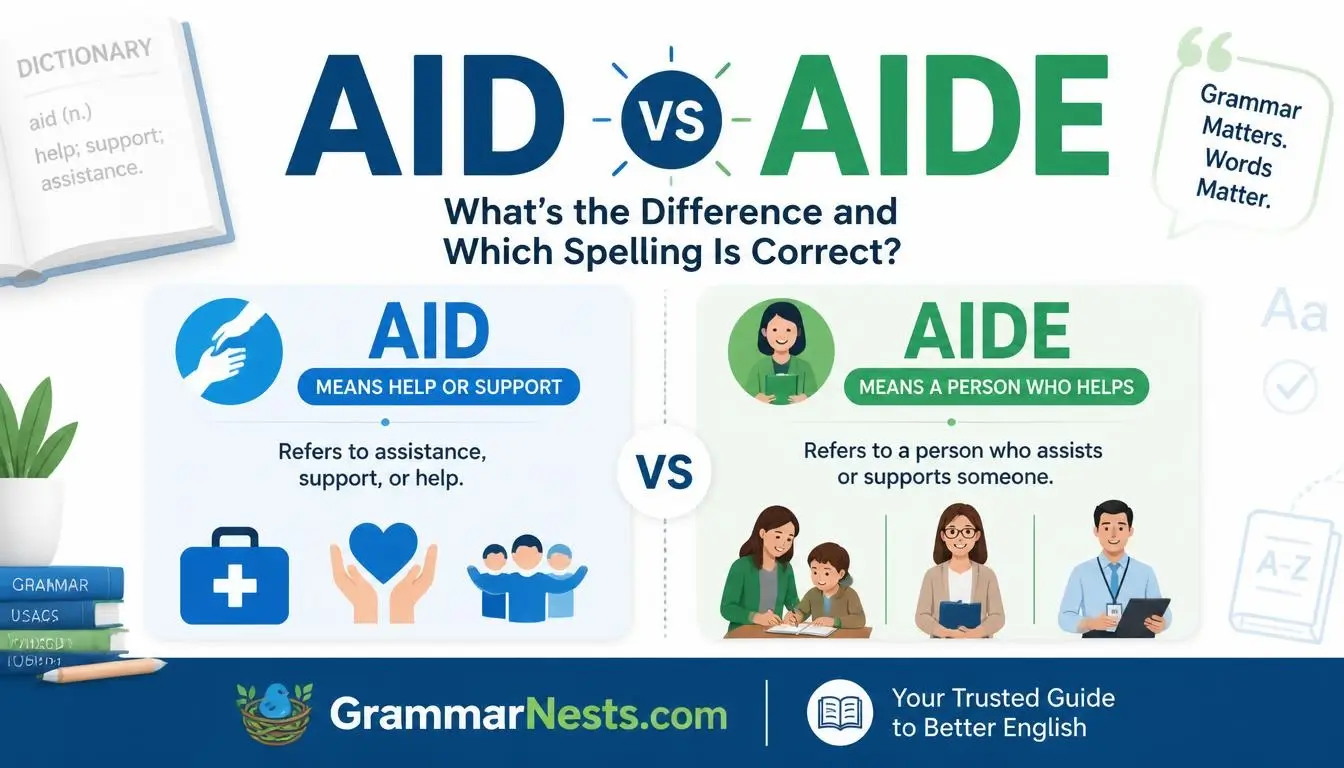
Aid usually means help, support, or assistance. It can work as both a noun and a verb. Aide, on the other hand, means a person who helps someone, such as a teacher’s aide or a personal aide.
Many people search for “aid or aide” because they want to know which spelling fits their sentence.
The good news is that the difference is easy to learn. Once you understand what each word means, you can choose the right spelling with confidence.
In this guide, you will learn their meanings, origins, spelling differences, common mistakes, and everyday uses.
Aid or Aide – Quick Answer
Both aid and aide are correct spellings, but they have different meanings.
- Aid: Means help, support, or assistance. It can be a noun or a verb.
- Aide: Means a person who provides help or support. It is a noun.
Here are some simple examples:
| Word | Meaning | Example |
| Aid | Help or support | The family needs financial aid. |
| Aid | To help someone | Volunteers aid people after the storm. |
| Aide | A person who helps | The teacher’s aide helped the students. |
Easy trick to remember:
Use aid when you mean help. Use aide when you mean a person who gives help.
For example:
- The school provides financial aid.
- The school aide helps children in class.
Both sentences are correct because each word has a different meaning.
The History of Aid or Aide
The words aid and aide have a shared history. Both are linked to the idea of helping someone.
History of Aid
The word aid comes from Old French aide, meaning help or assistance. It is linked to the Latin word adjutare, which means to help or assist.
English adopted the word during the Middle English period. Over time, it became a common word for support, help, and assistance.
Today, people use aid in many situations, such as:
- Financial aid
- Medical aid
- First aid
- Foreign aid
- Emergency aid
It can also work as a verb.
For example:
- The doctor will aid the patient.
- Food supplies aid families in need.
History of Aide
The word aide also comes from French. It developed as a spelling used for a person who assists.
In English, it became common for describing someone who helps another person with work or duties.
For example:
- A teacher’s aide helps in a classroom.
- A personal aide supports someone with daily tasks.
- A military aide assists a senior officer.
The final letter “e” helps separate the word from aid when referring to a person.
British English vs American English Spelling
There is no major spelling difference between British and American English for these two words.
Both varieties use aid for help or assistance and aide for a person who provides help.
The meanings stay the same in both countries.
| Word | American English | British English | Meaning |
| Aid | Aid | Aid | Help or support |
| Aide | Aide | Aide | A person who helps |
| First aid | First aid | First aid | Emergency medical help |
| Teacher’s aide | Teacher’s aide | Teaching assistant | A person who helps a teacher |
| Financial aid | Financial aid | Financial assistance | Money given to help |
American English Examples
American writers use aid and aide in these ways:
- Students can apply for financial aid.
- The teacher’s aide prepared the classroom.
- The government sent aid to the affected area.
British English Examples
British writers also use the same spelling rules:
- The charity provided aid to poor families.
- The classroom assistant helped the teacher.
- The medical team offered first aid.
One difference is the job title. In the United States, teacher’s aide is common. In the United Kingdom, teaching assistant is more common.
However, this does not change the spelling or meaning of aid and aide.
Which Spelling Should You Use?
The correct choice depends on what you want to say, not where your readers live.
Use Aid When You Mean Help
Choose aid when you talk about support, assistance, or helping someone.
Examples:
- The charity provides aid to children.
- The government offers financial aid.
- Nurses aid patients during recovery.
- The organization needs more aid.
You can use aid as both a noun and a verb.
Use Aide When You Mean a Person
Choose aide when you are talking about someone whose job is to help another person.
Examples:
- The president’s aide answered the questions.
- A teacher’s aide helped the young students.
- The nurse’s aide checked the patient’s room.
Advice for Different Audiences
| Audience | Recommended Usage |
| United States | Use aid for help and aide for a helper. |
| United Kingdom | Follow the same spelling rules. |
| Canada | Use aid for assistance and aide for a person. |
| Australia | Use the same distinction. |
| Global English | Use the standard meanings of both words. |
If you write for an international audience, these rules will help you avoid confusion.
Common Mistakes with Aid or Aide
Even though these words have different meanings, many writers mix them up. Their similar pronunciation makes spelling mistakes easy.
Here are some common errors and their corrections.
1st. Using Aide for Financial Help
Incorrect: The student received financial aide.
Correct: The student received financial aid.
Why? Financial aid means money or support. It does not refer to a person.
2nd. Using Aid for a Person
Incorrect: The teacher’s aid helped the children.
Correct: The teacher’s aide helped the children.
Why? A teacher’s aide is a person who helps in a classroom.
3rd. Confusing First Aid with First Aide
Incorrect: She completed a first aide course.
Correct: She completed a first aid course.
Why? First aid means basic medical help given to an injured or sick person.
4th. Using Aide as a Verb
Incorrect: Volunteers aide families after the disaster.
Correct: Volunteers aid families after the disaster.
Why? Aid can work as a verb. Aide is a noun that refers to a person.
5th. Mixing Up Their Meanings in Formal Writing
Incorrect: The president’s aid attended the meeting.
Correct: The president’s aide attended the meeting.
Why? The sentence refers to a person who works for the president.
Remember: If you can replace the word with “help,” use aid. If you mean a person who helps, use aide.
Aid or Aide in Everyday Examples
Both words appear in daily conversations, emails, news reports, and formal documents.
Understanding their use will help you write more clearly.
1. In Emails
People use aid when asking for help or support. They use aide when referring to a person.
Examples:
- Thank you for your aid with this project.
- Please contact the manager’s aide for more information.
- We need financial aid to complete the project.
2. In News Reports
News writers use aid when reporting on help given to people or communities.
Examples:
- The government announced new financial aid for families.
- Emergency aid reached the affected area.
- A senior aide spoke to reporters after the meeting.
3. On Social Media
Both words can appear in social media posts.
Examples:
- Many families need aid after the flood.
- The senator’s aide shared an update online.
- Thank you to everyone who offered aid.
4. In Formal Writing
In professional documents, both words have clear uses.
Examples:
- The organization provides aid to low-income families.
- The research team received financial aid.
- The director’s aide arranged the meeting.
- The program aims to aid local communities.
5. In Education
Schools and colleges use both words.
Examples:
- Students can apply for financial aid.
- The teacher’s aide helped the children with reading.
- The school provides extra aid to students who need support.
Aid or Aide – Trends & Usage Data
The words aid and aide are both used in English-speaking countries. However, their search patterns and usage depend on context.
Aid is a common word in education, healthcare, government, charities, and emergency services. People search for phrases such as:
- Financial aid
- First aid
- Foreign aid
- Emergency aid
- Medical aid
Aide appears more often in searches related to jobs and people who assist.
Common search phrases include:
- Teacher’s aide
- Nurse’s aide
- Personal aide
- Presidential aide
- Administrative aide
Popularity by Country
| Country | Common Uses of Aid | Common Uses of Aide |
| United States | Financial aid, first aid, foreign aid | Teacher’s aide, presidential aide. |
| United Kingdom | Medical aid, foreign aid | Personal aide, government aide. |
| Canada | Student aid, emergency aid | Teacher’s aide, personal aide. |
| Australia | Financial aid, medical aid | Personal aide, government aide. |
| India | Financial aid, medical aid | Personal aide, office aide. |
Which Word Is More Popular?
The word aid has broader everyday use because it can describe both help and the act of helping.
The word aide has a more specific meaning. It usually appears when people discuss jobs, assistants, and support staff.
Google Trends can help compare interest in these terms over time and across countries. However, search interest does not show the exact number of times people use a word in writing.
For accurate keyword research, compare related phrases such as “financial aid” and “teacher’s aide” instead of looking only at the two words separately.
Aid vs Aide: Comparison Table
Here is a quick comparison to help you remember the difference.
| Feature | Aid | Aide |
| Part of speech | Noun and verb | Noun |
| Main meaning | Help or support | A person who helps |
| Refers to a person? | No | Yes |
| Can describe assistance? | Yes | No |
| Can work as a verb? | Yes | No |
| Example | Financial aid | Teacher’s aide |
| Pronunciation | /eɪd/ | /eɪd/ |
| British spelling | Aid | Aide |
| American spelling | Aid | Aide |
Both words sound the same, but their meanings are different.
FAQs:
Is it Aid or Aide?
Both spellings are correct. Aid means help or assistance, while aide means a person who provides help.
Example: The student received financial aid from the school. The teacher’s aide helped the students.
Is a Teacher’s Aid or Aide Correct?
Teacher’s aide is correct when you mean a person who helps a teacher.
For example:
The teacher’s aide helped the children complete their homework.
The word aid would mean help or support, not the person.
Is It Financial Aid or Financial Aide?
The correct phrase is financial aid.
It means money or support given to someone to help with education or other expenses.
Example: She applied for financial aid to pay for college.
Are Aid and Aide Pronounced the Same?
Yes. Both words have the same pronunciation: /eɪd/.
They are homophones. This means they sound alike but have different meanings and spellings.
Can Aid Be Used as a Verb?
Yes. Aid can work as both a noun and a verb.
Examples:
- The organization provides aid to families.
- Volunteers aid people during emergencies.
In both cases, the word relates to help or assistance.
Is Aide Used in British English?
Yes. British English also uses aide to describe a person who helps someone.
For example: The minister’s aide attended the meeting.
However, some job titles differ. British English commonly uses teaching assistant instead of teacher’s aide.
What Is the Difference Between an Aid and an Aide?
An aid is help, support, or assistance. An aide is a person who gives that help.
For example, a school may provide financial aid to students, while a teacher’s aide helps students in the classroom.
Conclusion:
Choosing between aid and aide is simple once you understand their meanings. Both words are correct, and both have the same pronunciation. However, they are not interchangeable.
Use aid when you mean help, support, or assistance. It can work as a noun or a verb. Common examples include financial aid, first aid, medical aid, and foreign aid.
Use aide when you mean a person who helps someone. Common examples include a teacher’s aide, personal aide, and presidential aide.
These spelling rules are the same in American and British English. The main difference is that some job titles may vary by country.
Before choosing a word, think about what you are describing. Are you talking about help, or are you talking about a person who gives help? This simple question will help you select the right spelling every time.
With these examples and tips, you can use aid and aide correctly in emails, schoolwork, professional documents, and everyday writing.
Read More Posts:
- Time Flies or Time Flys: Meaning & Grammar Guide
- Thier or Their: Learn the Right Way to Spell It In 2026
- Vender or Vendor: Best Simple Guide to Correct Usage