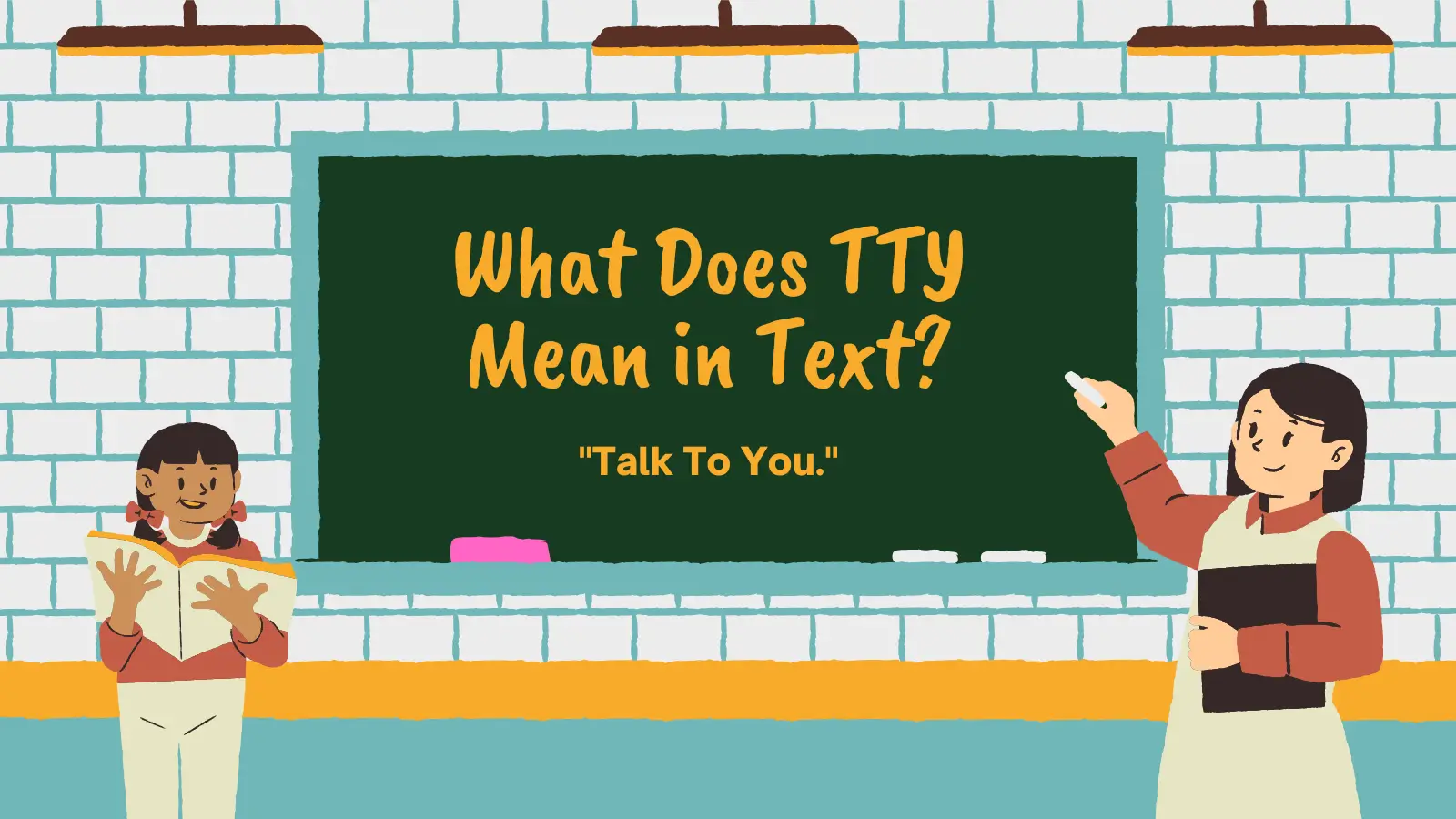
In today’s fast digital world, short forms and abbreviations are everywhere. One of these common abbreviations is “TTY”, often seen in texting, chats, gaming, and social media conversations.
If you’ve ever received a message like TTYL or just TTY, you might have paused and wondered what it actually means.
Simply put, TTY is a shorthand used to save time while texting, but its meaning can change depending on the context.
In casual conversations, it usually means “Talk To You”, while in technical or professional settings it can refer to “Teletypewriter.”
Understanding abbreviations like TTY is important because digital communication relies heavily on short forms. Misunderstanding them can lead to confusion or missed meaning in conversations.
In this article, we will explore what does TTY mean in text, its definition, history, usage in different contexts, misconceptions, and even how to respond when someone uses it.
By the end, you’ll clearly understand how and when to use it correctly in everyday communication.
Definition & Meaning
The abbreviation TTY has more than one meaning, but in texting culture, it is mostly used informally.
TTY as “Talk To You”
In most casual digital conversations, TTY stands for “Talk To You.” It is often used as part of longer phrases like:
- TTYL = Talk To You Later
- TTYS = Talk To You Soon
- TTY = Talk To You
It is used when someone is ending a conversation but wants to stay friendly and informal.
Example:
- A: “I have to go now, tty!”
- B: “Okay, bye!”
TTY in Technical Context (Teletypewriter)
In a more formal or technical sense, TTY stands for Teletypewriter.
This is a communication device used by people who are deaf or hard of hearing. It allows typed communication over telephone lines.
This meaning is commonly used in:
- Accessibility services.
- Telecommunications systems.
- Emergency communication systems.
Example:
- “Please call the TTY number for hearing-impaired support.”
Key Point
- In texting → Talk To You
- In technology → Teletypewriter system
Understanding context is the key to interpreting TTY correctly.
Background & History
The term TTY originally comes from the world of telecommunications, not texting.
Early Origins
The Teletypewriter (TTY) was invented in the early 20th century as a machine that allowed typed messages to be sent over long distances using telephone lines.
Before modern smartphones, this was a revolutionary communication method.
It became especially important for the deaf community, allowing real-time communication through text instead of voice.
Evolution Over Time
As technology advanced:
- TTY machines evolved into digital relay systems.
- Computers replaced mechanical devices.
- Internet chat and texting replaced physical TTY devices.
Shift to Texting Culture
Later, in the early 2000s, with the rise of SMS and instant messaging, people started creating short forms like:
- BRB (Be Right Back)
- LOL (Laugh Out Loud)
- TTY (Talk To You)
Over time, the texting meaning became more common among younger users, while the original meaning stayed in technical fields.
Today, TTY has two parallel identities one historical/technical and one informal/social.
Usage in Various Contexts
TTY is used differently depending on the situation.
Text Messaging
In texting, TTY is a casual way to end a conversation.
Example:
- A: “I need to sleep now, tty!”
- B: “Good night!”
Social Media
On platforms like Instagram, Snapchat, or Facebook, users use TTY to keep messages short.
Example:
- “Busy rn, tty later 👋”
Gaming Chats
Gamers use TTY to quickly exit conversations.
Example:
- Player 1: “Match over, good game!”
- Player 2: “Yeah, tty next round!”
Professional Communication
In professional settings, TTY is rarely used in texting form. Instead, its technical meaning is used.
Example:
- “Contact support via TTY service for accessibility assistance.”
Voice or Informal Chat
Sometimes people type it quickly as shorthand for “talk to you later” or “talk to you.”
Example:
- Gotta go, tty soon!
Common Misconceptions & Clarifications
Many people misunderstand TTY because it has multiple meanings.
Misconception 1: TTY means “Text To You”
❌ Incorrect
Some users think it means “Text To You,” but this is not standard usage.
✔ Correct meaning: “Talk To You” or Teletypewriter
Misconception 2: TTY is always slang
Not true. In technology and accessibility services, it is a serious communication system.
Misconception 3: TTY is outdated
While the device is older, TTY systems are still used today for accessibility services.
Misconception 4: TTY is rude
Some think it sounds abrupt, but it is not rude it’s just shorthand.
Similar Terms & Alternatives
Here are some similar texting abbreviations:
| Term | Meaning | Usage |
| TTYL | Talk To You Later | Ending conversation |
| TTYS | Talk To You Soon | Friendly goodbye |
| BRB | Be Right Back | Temporary leave |
| GTG | Got To Go | Leaving quickly |
| CU | See You | Casual goodbye |
These all serve the same purpose: fast communication.
How to Respond to This Term
When someone says “TTY,” your response depends on tone.
Casual Response
- “Okay tty later!”
- “Bye, talk soon!”
Friendly/Funny Response
- “Don’t miss me too much 😂 tty!”
- “Alright, tty legend!”
Professional Response
- “Alright, speak with you later.”
- “Thank you, talk soon.”
Short Acknowledgment
- “Okay.”
- “Sure.”
Polite Exit
- “Take care, tty later.”
Regional or Cultural Differences
TTY is mostly used in English-speaking digital communication. However:
- In South Asia (including Pakistan and India), users often mix it with local slang.
- In Western countries, it is more tied to accessibility systems and formal use.
- In gaming communities worldwide, it is widely understood.
Non-English speakers may not always recognize it unless they are active in online chatting.
Comparison with Similar Terms
| Abbreviation | Meaning | Tone | Context |
| TTY | Talk To You | Casual | Chat/SMS |
| TTYL | Talk To You Later | Casual | Goodbye |
| BRB | Be Right Back | Temporary | Chat |
| GTG | Got To Go | Quick exit | Chat |
| Bye | Goodbye | Neutral | Any context |
TTY is shorter and less formal than most alternatives.
Usage in Online Communities & Dating Apps
On platforms like Tinder, Instagram, and Discord:
- Used to end chats politely.
- Shows friendliness without a full goodbye.
- Keeps conversation light.
Example (Dating App):
- “Had fun talking to you, tty 😊”
Example (Discord):
- “Logging off, tty guys!”
It helps maintain a casual tone without sounding rude or distant.
Hidden or Offensive Meanings
Good news: TTY has no offensive meaning.
However, context matters:
- In texting, it is harmless slang
- In technical fields, it is a serious accessibility term
If used incorrectly in a professional accessibility context, it may cause confusion, but it is not offensive.
Tone is important. For example:
- Friendly chat → OK
- Medical/accessibility service → Use carefully
Suitability for Professional Communication
In professional settings, TTY should be avoided in its slang form.
Not Recommended:
- “TTY later boss”
Better Alternatives:
- “Talk to you later”
- “Speak with you soon”
- “I will follow up later”
Exception:
When referring to accessibility:
- “Please provide a TTY contact number.”
So, TTY is only professional when used in its technical meaning.
FAQs:
What does TTY mean in texting?
It means Talk To You, usually used when ending a chat.
Is TTY the same as TTYL?
No. TTYL means Talk To You Later, while TTY is shorter.
Is TTY still used today?
Yes, both in texting slang and accessibility systems.
Is TTY rude?
No, it is not rude. It is just a short form.
Can I use TTY in professional emails?
No, use full words like “talk to you later.”
What is TTY in technology?
It means Teletypewriter, used for hearing-impaired communication.
Where is TTY most commonly used?
In texting, social media, gaming, and accessibility services.
Conclusion:
TTY is a simple yet versatile abbreviation that plays an important role in digital communication.
In casual texting, it usually means “Talk To You,” helping people end conversations quickly and naturally.
In technical and accessibility contexts, it refers to a Teletypewriter system, which has historically supported communication for people with hearing impairments.
Understanding the context is essential because the meaning of TTY changes depending on where and how it is used. While it is common in chats, social media, and gaming, it is less suitable for formal communication unless used in its technical sense.
As digital language continues to evolve, abbreviations like TTY will remain part of everyday conversation, making communication faster, simpler, and more efficient.