In today’s digital world, even small words can carry big meanings. One of the most common examples is “hmm”.
You may see it in a text message, a social media comment, or even in a gaming chat and wonder what the person really means.
At first glance, “hmm” looks simple and harmless, but its meaning is not always clear. Sometimes it shows thinking.
Other times, it can show doubt, confusion, curiosity, or even hidden emotions like disagreement or hesitation. Because it is so short, people often misunderstand it.
This makes it important to understand what “hmm” means in text conversations. In daily communication, tone is often missing, so small expressions like this carry emotional weight. A single “hmm” can completely change the direction of a chat.
In this guide, we will explore the meaning of “hmm,” its history, how it is used in different situations, hidden meanings, and how you should respond when someone sends it to you.
Definition & Meaning of “Hmm” in Text
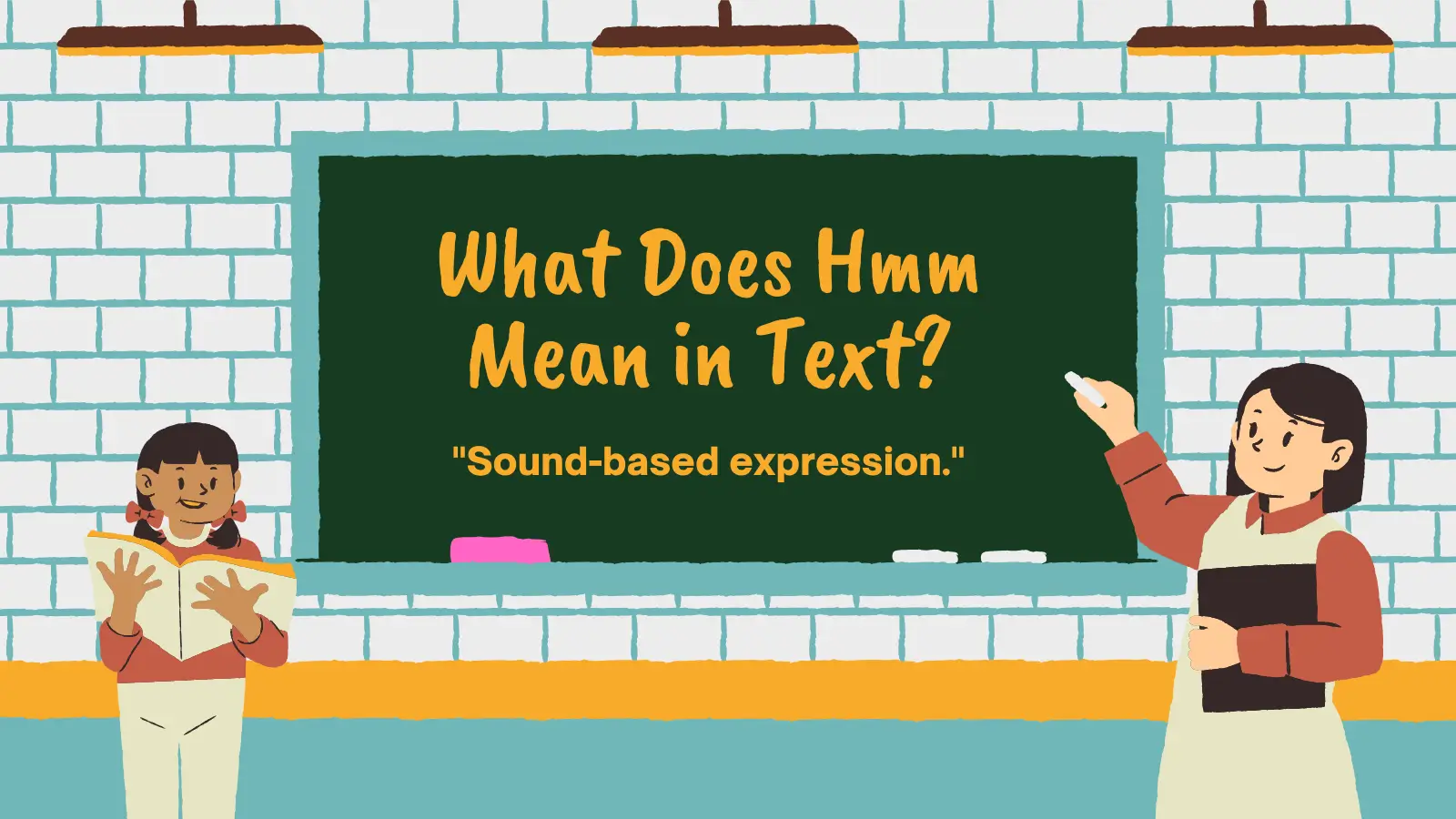
The word “hmm” is not an acronym. It does not stand for any full phrase. Instead, it is a sound-based expression that represents thinking or hesitation.
When people say or type “hmm,” they are usually:
- Thinking about something.
- Unsure about a situation.
- Processing information.
- Showing curiosity.
- Delaying a response.
- Expressing mild doubt.
Core Meaning
At its core, “hmm” means: “I am thinking or I am not fully sure yet.”
But its meaning changes depending on context.
Example 1st: Thinking Before Responding
Ayesha: Should we go shopping tomorrow?
Sara: Hmm let me check my schedule.
👉 Here, “hmm” means she needs time to think.
Example 2nd: Uncertainty
Ali: I think this plan will work perfectly.
Usman: Hmm I’m not sure about that.
👉 This shows doubt or disagreement.
Example 3rd: Curiosity
Friend 1: I have a surprise for you.
Friend 2: Hmm? What is it?
👉 This shows curiosity and interest.
Example 4th: Emotional Pause
Girl: I think we should stop talking for a while.
Boy: Hmm
👉 This can show disappointment or emotional processing.
Background & History of “Hmm”
The expression “hmm” is much older than texting or smartphones. It comes from natural human behavior.
Long before digital communication, people used sounds like “hmm” while thinking in real conversations. It is a natural vocal pause that helps people process thoughts.
In Spoken Language
In everyday speech, people say:
- “Hmm ” while thinking
- “Hmm?” when confused
- “Hmm!” when surprised
Writers began using it in books and scripts to show a character’s emotions without explaining too much.
Transition to Digital Communication
With the rise of:
- SMS texting
- Chat rooms
- Online gaming
- Social media platforms
People started typing “hmm” exactly as they say it in real life.
It became popular because:
- It is short and fast
- It expresses emotion without long sentences
- Everyone understands it globally
- It works in almost every context
Evolution Over Time
Over the years, “hmm” evolved into different styles:
- Hmm
- Hmmm
- Hmm
- Hmmmm
- Hmm?
Each variation expresses a slightly different emotion, especially in modern texting culture.
For example:
- Hmm → neutral thinking
- Hmm → deeper thought or hesitation
- Hmm? → confusion or curiosity
- Hmmm → stronger emotion or longer thinking
Usage in Various Contexts
The meaning of “hmm” changes depending on where and how it is used.
In Text Messaging
This is the most common usage.
Example:
John: Want to go out tonight?
Emma: Hmm maybe.
👉 Shows uncertainty or consideration.
On Social Media
On platforms like Instagram, TikTok, Facebook, and X (Twitter), “hmm” is used in comments.
Example:
Post: “I’m moving to another country tomorrow.”
Comment: “Hmm that’s a big step.”
👉 Shows reflection or concern.
In Gaming Chats
Gamers use “hmm” to plan or react quickly.
Example:
Player 1st: Attack now or wait?
Player 2nd: Hmm wait for backup.
👉 Shows strategy thinking.
In Professional Chats
In workplace chats, “hmm” is used carefully.
Example:
Manager: Can we finish this by Friday?
Employee: Hmm, I’ll check the timeline.
👉 Polite hesitation.
In Romantic Conversations
In dating or romantic chats, “hmm” can be very sensitive.
Example:
Partner: Do you still love me?
Reply: Hmm
👉 Could mean doubt or emotional distance depending on tone.
Common Misconceptions & Clarifications
Many people misunderstand “hmm” in text messages.
Misconception 1st: It Always Means Negative
❌ Wrong
✔ Truth: It can be positive, neutral, or negative.
Misconception 2nd: It Shows Ignorance
❌ Wrong
✔ Truth: It often shows thinking, not ignorance.
Misconception 3rd: It Has One Fixed Meaning
❌ Wrong
✔ Truth: Meaning depends fully on context.
Misinterpretation Risk
Because text lacks tone, “hmm” can sometimes feel:
- Cold
- Distant
- Confused
- Suspicious
But the sender may simply be thinking.
Similar Terms & Alternatives
There are several expressions similar to “hmm.”
| Term | Meaning |
| Hmm | Thinking or unsure |
| Uh | Confusion or hesitation |
| Um | Thinking pause |
| Oh | Surprise or realization |
| Huh | Confusion |
| Well | Thinking or hesitation |
All of these serve as emotional pauses in conversation.
How to Respond to “Hmm”
Your response depends on the tone.
Casual Response
Friend: Hmm not sure.
You: Take your time 😊
Funny Response
Friend: Hmm
You: That “hmm” sounds suspicious 😂
Professional Response
Colleague: Hmm, I need to review this.
You: Sure, let me know your thoughts.
Reassuring Response
Partner: Hmm
You: Everything okay? I’m here if you want to talk.
Regional or Cultural Differences
The use of “hmm” is global, but interpretation can vary.
- In Western chats: mostly neutral thinking.
- In South Asian chats: sometimes seen as hesitation or emotional distance.
- In gaming culture: quick strategic pause.
- In formal English: usually avoided alone.
However, across all cultures, it still represents thinking or hesitation.
Comparison with Similar Expressions
| Expression | Meaning | Emotion Level |
| Hmm | Thinking | Neutral |
| Hmm | Deep thought | Mild emotion |
| Huh | Confusion | Strong |
| Um | Hesitation | Neutral |
| Well | Delay or thought | Neutral |
Usage in Online Communities & Dating Apps
On platforms like Tinder, Bumble, Discord, and Reddit, “hmm” is very common.
In Dating Apps
User: Want to meet tonight?
Reply: Hmm maybe.
👉 Often signals hesitation or uncertainty.
In Online Communities
People use it when reacting to opinions.
Post: “This game is overrated.”
Comment: Hmm, I disagree.
Hidden or Offensive Meanings
Generally, “hmm” is not offensive.
However, tone matters:
- “Hmm ” can feel passive-aggressive
- “Hmm?” can sound suspicious
- Short “hmm” can feel cold in arguments
So while it is not offensive by itself, it can feel emotionally loaded depending on context.
Suitability for Professional Communication
In professional settings:
- ❌ Not recommended alone
- ✔ Acceptable with full sentences
Better Alternatives:
Instead of “Hmm,” use:
- Let me think about it.
- I’ll review and get back to you.
- I need more information.
This keeps communication clear and professional.
FAQs:
What does “hmm” mean in chat?
It usually means thinking, hesitation, or uncertainty.
Is “hmm” rude?
Not usually, but tone can make it feel distant.
What does “hmm ” mean?
It shows deeper thinking or emotional pause.
Why do people use “hmm” in texting?
Because it is a quick way to show thinking or reaction.
Does “hmm” mean yes or no?
Neither. It usually means “I’m not sure yet.”
Is “hmm” flirty?
Sometimes, depending on context and tone.
Conclusion:
The expression “hmm” may look small, but it carries many meanings in digital communication.
It can show thinking, hesitation, curiosity, doubt, or emotional processing. The true meaning always depends on context, tone, and the relationship between people.
In most cases, “hmm” is not negative. It is simply a natural pause in conversation, just like thinking out loud.
However, because texting lacks voice tone, it can sometimes be misunderstood.
Understanding “hmm” helps you respond better and avoid confusion in chats, social media, gaming, and even professional conversations.
Next time someone sends you “hmm,” don’t rush look at the context first.

Toni Morrison is a celebrated American novelist known for her powerful storytelling, rich characters, and lasting impact on literature. At GrammerNests.com, she shares insights that help readers appreciate language, writing, and literary expression.