In today’s digital world, short forms and slang dominate almost every online conversation.
From texting to TikTok comments, people use fast and simplified language to communicate quickly.
One confusing slang term that often appears in chats is “ion” in text, which many users don’t fully understand at first glance.
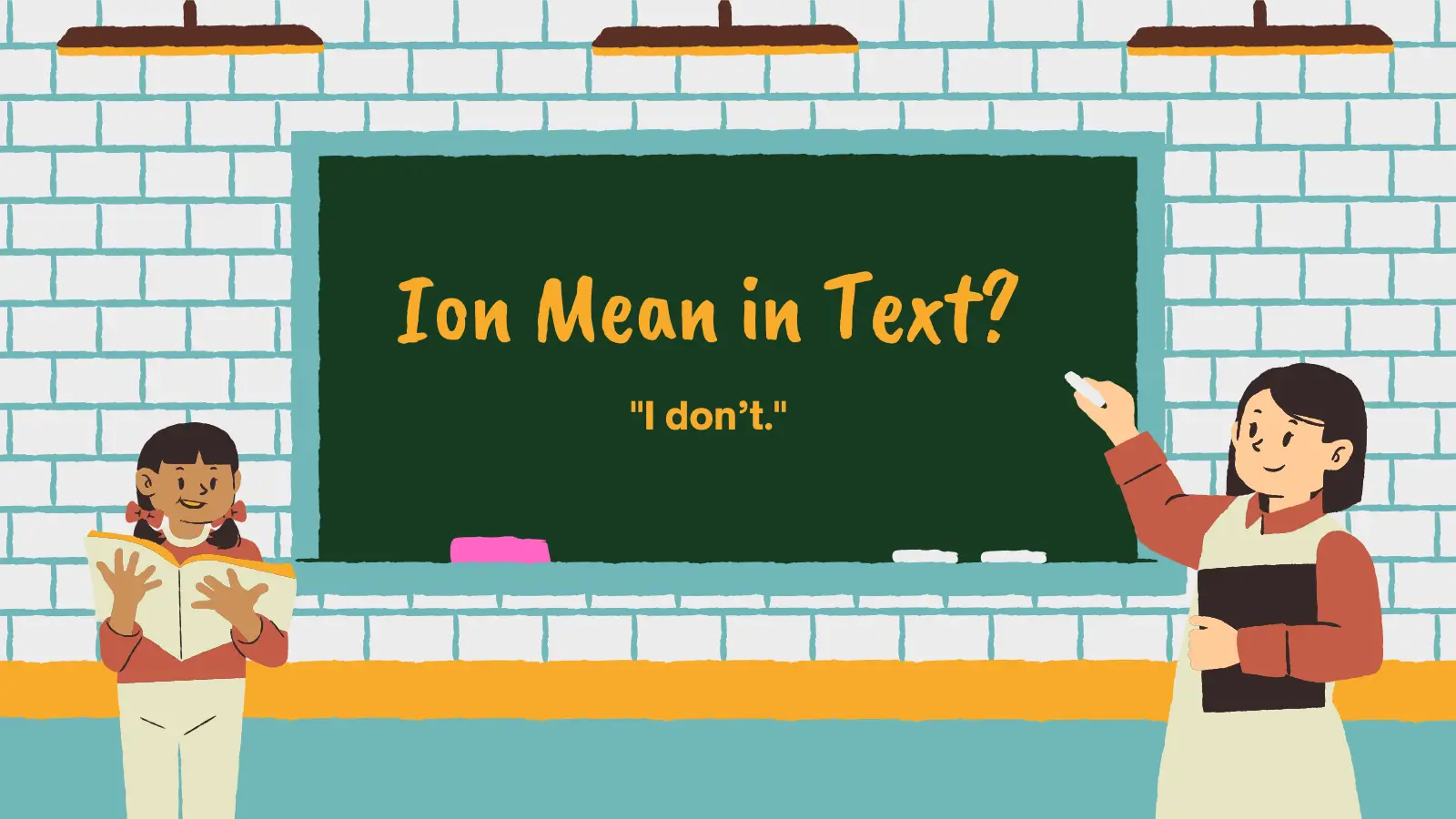
At first sight, “ion” might look like a scientific word related to chemistry. However, in online slang, it has nothing to do with science. Instead, it is a shortened and informal way of saying “I don’t.”
You will often see it in sentences like “ion know,” “ion care,” or “ion think so.” This slang is especially popular in social media platforms, gaming chats, and casual texting between friends.
Understanding ion meaning in text is important because it helps you correctly interpret messages and avoid confusion in conversations.
In this article, we will explore its meaning, origin, usage, examples, cultural impact, misconceptions, and more.
Definition & Meaning
The slang term “ion” in texting is a casual contraction of the phrase “I don’t.”
It is not a formal English word. Instead, it is derived from spoken language patterns where words are shortened for faster communication.
Basic meaning:
- ion = I don’t
Common translations:
- ion know → I don’t know
- ion care → I don’t care
- ion like that → I don’t like that
- ion think so → I don’t think so
Why it is used
People use “ion” mainly for:
- Faster typing.
- Casual tone in chats.
- Expressing relaxed or emotional speech.
- Social media trends.
Real-life examples
Example 1st:
A: “Are you going to school today?”
B: “Ion think so.”
Example 2nd:
A: “Do you want pizza?”
B: “Ion really feel like it.”
Dialogue example
Friend 1: “Why didn’t you reply last night?”
Friend 2: “Ion see your message, my bad.”
This shows how “ion” replaces “I don’t” in everyday casual communication.
In short, “ion” is just slang shorthand for “I don’t,” used mainly in informal digital conversations.
Background & History
The origin of “ion” as slang comes from natural speech patterns, especially in informal English dialects. It is not a newly created internet word but rather an evolution of spoken language that became popular online.
Linguistic roots
In casual speech, people often shorten “I don’t” into smoother sounds like:
- I dunno
- I dono
- I’unno
- Eventually becoming ion know
This transformation is influenced by how people naturally speak quickly, especially in urban slang communities.
Rise through internet culture
The popularity of “ion” grew rapidly during the rise of:
- Twitter (now X)
- TikTok short videos
- Vine (earlier short video platform)
- Instagram captions and comments
As short-form content became popular, users started writing exactly how they speak. This led to slang like “ion” becoming mainstream.
Influence of music and pop culture
Hip-hop and rap music also played a big role in spreading this slang. Lyrics and interviews often used casual speech patterns, making terms like “ion” widely recognizable among younger audiences.
Today’s usage
Now, “ion” is globally used in:
- Social media posts.
- Gaming chats. (Fortnite, Roblox, Call of Duty)
- Meme culture.
- Casual texting.
It has become part of modern internet language evolution.
Usage in Various Contexts
The meaning of ion in text changes slightly depending on where it is used, but it always stays informal.
Text messaging
Used in private conversations with friends.
Example:
A: “You coming tonight?”
B: “Ion think so.”
Social media comments
Used in reactions or opinions.
Example:
Comment: “This movie is amazing!”
Reply: “Ion agree 😭”
Gaming chats
Used during fast-paced communication.
Example:
Player 1: “Rush B!”
Player 2: “Ion ready yet bro”
Casual speech style in text
Example:
A: “Did you finish your homework?”
B: “Ion even start it yet.”
Dialogue example
Friend 1: “Why you acting different today?”
Friend 2: “Ion know, just tired I guess.”
Key point
“ion” is always:
- Informal
- Fast-paced
- Emotionally expressive
- Not suitable for formal writing
Common Misconceptions & Clarifications
Many people misunderstand the term ion meaning in text.
Misconception 1st: It is related to science
❌ Wrong: It refers to atoms or chemistry
✔ Correct: It is slang for “I don’t”
Misconception 2nd: It is proper English grammar
❌ Wrong: It can be used in formal writing
✔ Correct: It is slang only
Misconception 3rd: It is always rude
❌ Wrong: It is offensive
✔ Correct: It depends on tone and situation
Misconception 4th: It has only one meaning
❌ Wrong: It is always negative
✔ Correct: It can express confusion, denial, or lack of interest
Clarification
- “ion” is internet slang
- It is based on pronunciation
- It should not be used in professional communication
- Context decides tone and meaning
Similar Terms & Alternatives
Here are similar slang expressions to “ion”:
| Slang | Meaning | Usage |
| ion | I don’t | casual texting |
| idk | I don’t know | very common |
| dunno | don’t know | spoken slang |
| nah | no | casual rejection |
| not really | slightly formal | neutral tone |
Example comparison
- Ion know → very informal
- I don’t know → neutral
- I am not sure → formal
How to Respond to This Term
Your response depends on tone and relationship.
Casual response
“Same lol”
“Fair enough”
Funny response
“You always ion know anything 😂”
Supportive response
“Alright, take your time.”
Professional response
“I understand, thank you for letting me know.”
Dialogue example
A: “Ion feel like going out today”
B: “No worries, we can go another time.”
Regional or Cultural Differences
The slang “ion” is widely used in English-speaking internet communities.
Common regions:
- United States (especially urban slang culture)
- United Kingdom youth communities
- Global TikTok and Instagram users
Cultural influence
It comes heavily from:
- Spoken dialects (especially AAVE influence)
- Hip-hop culture
- Internet meme language
Global adoption
Even non-native English speakers use “ion” because:
- Social media exposure.
- Gaming communication.
- Short video trends.
However, in formal English-speaking countries, it may still confuse readers unfamiliar with slang.
Comparison with Similar Terms
| Expression | Formality | Meaning | Context |
| ion | very informal | I don’t | texting |
| idk | informal | I don’t know | universal |
| don’t | neutral | full negation | general |
| nah | informal | no | casual speech |
Usage in Online Communities & Dating Apps
On platforms like:
- Tinder
- Twitter (X)
- Discord
- TikTok
“ion” is used to sound:
- Casual
- real
- unfiltered
Example (dating app)
A: “What do you do for fun?”
B: “Ion do much, just chill mostly 😅”
Example (gaming)
Player: “Why didn’t you join?”
Reply: “Ion see the invite”
Key insight
It helps create a relaxed personality, but overuse may appear unpolished in serious conversations.
Hidden or Offensive Meanings
The term “ion” itself is not offensive.
However:
- It can sound dismissive depending on tone.
- “Ion care” may feel rude in arguments.
- Misuse in serious discussions can cause misunderstanding.
Example:
“Ion care what you think” → may sound aggressive
“I don’t care what you think” → clearer but still strong tone
Suitability for Professional Communication
❌ Not suitable for:
- Emails
- Work chats
- Academic writing
- Business communication
Better alternatives:
- I don’t
- I do not
- I am not
Example:
❌ “Ion have the file”
✔ “I do not have the file”
Using proper grammar ensures clarity and professionalism.
FAQs:
What does ion mean in text?
It means “I don’t.”
Is ion a real word?
Yes in science, but slang meaning is different.
Can I use ion in formal writing?
No, it is informal slang.
Where is ion used most?
On TikTok, Snapchat, gaming chats, and social media.
Is ion rude?
Not always, depends on tone.
What does ion care mean?
It means “I don’t care.”
Why do people use ion instead of I don’t?
For faster typing and a casual tone.
Conclusion:
The slang “ion” in text is a widely used internet abbreviation meaning “I don’t.” It is popular across social media platforms, messaging apps, and gaming communities.
Although it may look unusual at first, it is simply a fast and casual way of speaking in digital communication.
Understanding ion meaning of “ion” in text helps you interpret conversations more clearly and stay updated with modern online slang.
Instead, it should always be used in informal situations only, as it is not appropriate for professional or academic writing.
In short, “ion” is a reflection of how language evolves in the digital age fast, simple, and expressive. Knowing such slang terms helps you communicate better in online spaces and understand younger internet culture more easily.

Emily Dickinson is one of America’s most influential poets, recognized for her unique style and thought-provoking poetry. Through GrammerNests.com, she contributes valuable perspectives on language, creativity, and the beauty of written expression.