If you spend time texting friends, using social media, playing online games, or browsing internet communities, you have probably seen the abbreviation OTP.
It is one of those internet terms that can mean different things depending on where and how it is used.
Because of this, many people become confused when they first encounter it in a message, comment, or online discussion.
In casual conversations and fandom communities, OTP often stands for One True Pairing, which refers to a person’s favorite romantic couple.
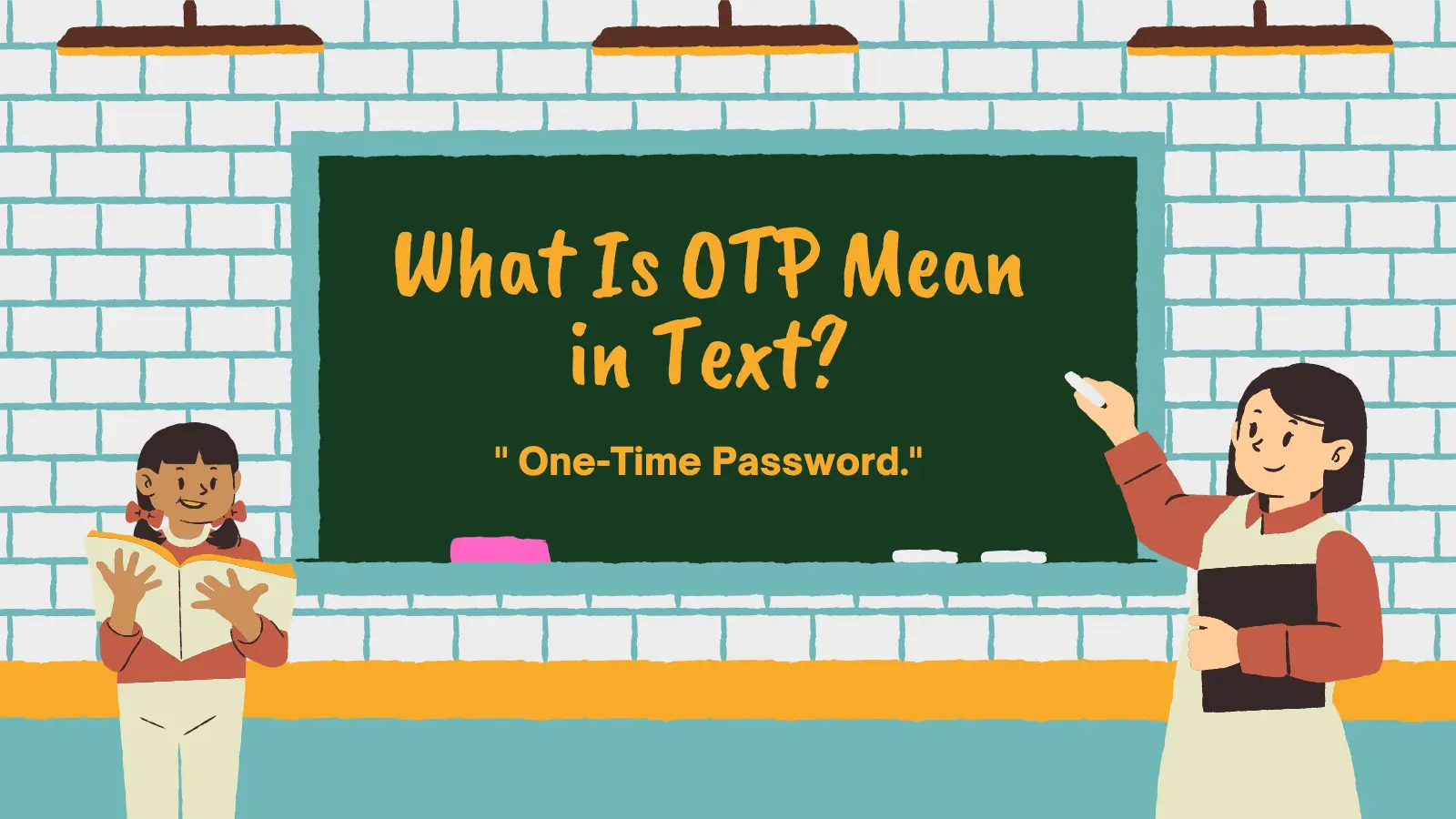
However, in technology, banking, and online security, OTP usually means One-Time Password, a temporary code used to verify a user’s identity.
The popularity of texting, social media platforms, streaming services, and online banking has made OTP a common term across many industries and communities.
Understanding what OTP means can help you communicate more effectively, avoid misunderstandings, and stay safe online.
In this guide, we will explore the meaning of OTP, its history, how it is used in different situations, common misconceptions, similar terms, professional usage, and much more.
Definition & Meaning
The abbreviation OTP has two primary meanings. The intended meaning depends entirely on the context of the conversation.
OTP Meaning: One True Pairing
In internet culture, especially within fandom communities, OTP stands for One True Pairing. This term describes a person’s favorite romantic relationship between two characters, celebrities, or even real people.
Fans often become emotionally invested in certain relationships and strongly believe that two individuals belong together. That special couple becomes their OTP.
Examples
Emma: “Who is your OTP from that series?”
Sophia: “Definitely Noah and Olivia. Their chemistry is amazing.”
Jake: “Do you have an OTP in that anime?”
Ryan: “Yes, I love Ken and Maya together.”
In these examples, OTP refers to a favorite romantic pairing.
Why Fans Use OTP
People use OTP because it helps express their support for a specific relationship. It can be a relationship that is officially part of a story or one that fans imagine themselves.
Many fans create artwork, videos, fan fiction, and social media posts dedicated to their OTP.
OTP Meaning: One-Time Password
In cybersecurity and technology, OTP stands for One-Time Password.
This is a temporary code generated for a single login session or transaction. It helps protect user accounts from unauthorized access.
Examples
Bank Message:
“Your OTP is 735194. Do not share this code with anyone.”
Website Login:
“Enter the OTP sent to your email address.”
User:
“I received the OTP and completed verification.”
Unlike traditional passwords, OTPs expire after a short period and can only be used once.
Why One-Time Passwords Matter
OTP verification helps:
- Prevent unauthorized access
- Improve account security
- Reduce fraud
- Support two-factor authentication
- Protect online transactions
This security meaning is extremely common in banking, finance, healthcare, and corporate systems.
Why Context Is Important
Because OTP has two popular meanings, context determines which interpretation is correct.
Example
Friend: “They are my OTP.”
Meaning: Favorite romantic couple.
Example
Bank: “Enter your OTP.”
Meaning: One-Time Password.
Looking at the surrounding conversation usually makes the meaning obvious.
Background & History
The story of OTP is interesting because its two meanings developed independently.
Origins of One True Pairing
The fandom meaning of OTP began appearing in online communities during the late 1990s and early 2000s.
At that time, fans gathered on internet forums to discuss television shows, movies, books, comics, and anime. Many discussions focused on romantic relationships between characters.
Fans often debated which couples belonged together. Eventually, the term One True Pairing emerged to describe the single relationship a fan supported most strongly.
The term quickly spread through:
- Fan forums
- Message boards
- Blogging websites
- Early social media platforms
- Fan fiction communities
As fandom culture grew, OTP became a standard term used worldwide.
Growth Through Social Media
The rise of platforms like Tumblr, Twitter, TikTok, Instagram, and Reddit helped OTP become even more popular.
Fans could instantly share:
- Fan art
- Relationship edits
- Videos
- Stories
- Memes
As a result, OTP became part of mainstream internet vocabulary.
Today, millions of people use the term every day.
Origins of One-Time Password
The security meaning of OTP developed separately.
As technology advanced, security experts realized that traditional passwords alone were not enough to protect accounts.
Hackers could:
- Guess passwords
- Steal passwords
- Reuse leaked passwords
To solve this problem, developers introduced one-time passwords.
These temporary codes added an extra layer of protection.
Over time, banks, websites, apps, and organizations adopted OTP verification systems.
Today, one-time passwords are considered a standard cybersecurity tool.
Modern Usage
Both meanings remain extremely common.
Fandom Communities
OTP = One True Pairing
Technology & Security
OTP = One-Time Password
Although they share the same abbreviation, confusion is rare because the contexts are usually very different.
Usage in Various Contexts
OTP appears in many types of conversations and online activities.
Text Messaging
Friends frequently use OTP when discussing relationships.
Example
Anna: “What’s your OTP from that show?”
Mia: “Lucas and Ava.”
Social Media
Fans often post about their favorite couples.
Example
“This couple will always be my OTP.”
Gaming Communities
Many games include storylines and character relationships.
Example
Player 1: “Who’s your OTP?”
Player 2: “The warrior and the healer.”
Gamers frequently discuss pairings among characters.
Movies and TV Shows
Fans use OTP when talking about romantic storylines.
Example
“I watched the whole series because of my OTP.”
Banking
In banking, OTP refers to verification codes.
Example
“Your OTP expires in five minutes.”
Online Shopping
Retail websites often send OTPs before confirming purchases.
Example
“Please enter the OTP to complete your order.”
Workplace Security
Companies use OTP systems for employee login protection.
Example
“Check your email for the OTP.”
Educational Platforms
Schools and universities may use OTP verification for student accounts.
Example
“An OTP has been sent to your registered number.”
Common Misconceptions & Clarifications
Because OTP has multiple meanings, misunderstandings are common.
Misconception 1st: OTP Always Means One True Pairing
Many social media users assume OTP only refers to favorite couples.
Reality
In banking and technology, OTP usually means One-Time Password.
Misconception 2nd: OTP Is Only Internet Slang
Some people believe OTP is informal internet language.
Reality
The security version of OTP is widely used by professional organizations worldwide.
Misconception 3rd: OTP Is Always Related to Romance
The fandom meaning is romantic, but the security meaning has nothing to do with relationships.
Misconception 4th: OTP Is a New Trend
Many assume OTP appeared recently.
Reality
Both meanings have existed for decades.
Misconception 5th: OTP Is Difficult to Understand
The abbreviation seems confusing at first.
Reality
Context almost always reveals the intended meaning.
Misconception 6th: OTP Is Offensive
Some internet slang can be inappropriate.
Reality
OTP is generally considered harmless and acceptable.
Similar Terms & Alternatives
Several terms are related to OTP depending on the context.
Fandom Alternatives
| Term | Meaning |
| Ship | Support a relationship |
| OTP | Favorite pairing |
| OT3 | Favorite trio |
| Canon Couple | Official relationship |
| Endgame | Relationship that remains together |
Examples
Ship: “I ship them.”
OTP: “They’re my OTP.”
Security Alternatives
| Term | Meaning |
| OTP | One-Time Password |
| Verification Code | Temporary code |
| Authentication Code | Security code |
| Security Token | Verification credential |
| 2FA Code | Two-factor authentication code |
These terms often appear in login and security systems.
How to Respond to This Term
The best response depends on the conversation.
Casual Response
Example
Friend: “They’re my OTP.”
You: “I love them together too.”
Enthusiastic Response
Friend: “That’s my OTP.”
You: “Same! They’re perfect.”
Funny Response
Friend: “They’re my OTP.”
You: “You’ve talked about them every day this week.”
Curious Response
Friend: “They’re my OTP.”
You: “Why do you like them so much?”
Professional Response
System: “Enter your OTP.”
You: “The verification code has been entered.”
Privacy-Conscious Response
Message: “Send me your OTP.”
You: “I never share OTP codes.”
This is the safest response when discussing security.
Regional or Cultural Differences
OTP is recognized globally, but usage differs among communities.
United States
Both meanings are common.
Fans often use OTP for fictional couples, while businesses use OTP for verification.
United Kingdom
Usage is very similar to the United States.
South Asia
In countries like India, Pakistan, and Bangladesh, OTP is commonly associated with banking and mobile verification.
Many people think of One-Time Password before One True Pairing.
East Asia
Anime and K-pop fandoms frequently use OTP to describe favorite couples.
Europe
Both meanings are widely understood, especially among younger internet users.
Global Internet Culture
Social media has helped standardize the fandom meaning across many countries.
Even non-English speakers often use OTP when discussing relationships in fan communities.
Comparison with Similar Terms
The following table highlights important differences.
| Term | Meaning | Usage |
| OTP | One True Pairing | Favorite couple |
| Ship | Support a relationship | General fandom |
| Canon | Official relationship | Story discussions |
| OT3 | Favorite trio | Fan communities |
| OTP Code | One-Time Password | Security |
| Verification Code | Temporary code | Authentication |
| 2FA Code | Second login factor | Cybersecurity |
Key Differences
OTP vs Ship
A ship is any relationship you support.
An OTP is your absolute favorite.
OTP vs Canon
Canon relationships are officially recognized by the story.
An OTP may or may not be canon.
OTP vs Verification Code
One refers to fandom culture.
The other refers to online security.
Usage in Online Communities & Dating Apps
OTP is especially common in online spaces.
Twitter/X
Fans post opinions about their favorite couples.
Example
“They’ve been my OTP since season one.”
TikTok
Users create edits and videos celebrating OTPs.
Example
“This OTP deserves more attention.”
Discussion communities frequently debate the best pairings.
Example
“Who is your OTP from the series?”
Discord
Gaming and fandom servers often use OTP terminology.
Dating Apps
People sometimes mention OTP jokingly when discussing celebrities or fictional characters.
Example
“My OTP is still those two movie characters.”
Gaming Communities
Many games feature stories with relationship options.
Players often discuss preferred pairings.
Example
“The knight and mage are my OTP.”
Tips for Responding
- Understand the context.
- Ask questions if unsure.
- Never share security OTPs.
- Respect others’ opinions about pairings.
Hidden or Offensive Meanings
OTP is generally considered safe and non-offensive.
However, context remains important.
Hidden Meaning Concerns
Most hidden meanings involve scams rather than slang.
Example
“Please send your OTP.”
This request could indicate fraud.
Scam Risks
Criminals sometimes trick users into sharing OTP codes.
Remember:
- Banks rarely ask for OTPs directly.
- Never share verification codes.
- Treat OTPs as confidential information.
Fan Community Conflicts
OTP discussions can become emotional.
Fans may disagree strongly about relationships.
Example
One fan’s OTP may be another fan’s least favorite pairing.
Is OTP Ever Offensive?
Generally, no.
The term itself is not offensive.
However, arguments about OTPs can become heated if people attack others’ opinions.
Why Context Matters
A harmless fandom discussion and a security request can both use OTP.
Understanding the context helps avoid confusion and potential risks.
Suitability for Professional Communication
If OTP is appropriate professionally depends on its meaning.
Appropriate Professional Usage
The security meaning is extremely common.
Examples
- Banking
- Healthcare
- Finance
- Education
- Government services
- Corporate systems
Professional sentence:
“Enter the OTP sent to your registered phone number.”
This is perfectly acceptable.
Less Appropriate Professional Usage
The fandom meaning should generally be avoided in formal business communication.
Example
“Our OTP is amazing.”
This could confuse readers.
Better Professional Alternatives
Instead of fandom-related OTP, consider:
- Preferred relationship
- Popular couple
- Favorite pairing
These terms are clearer in professional writing.
Professional Security Best Practices
When discussing OTPs:
- Never share codes publicly.
- Use secure channels.
- Verify sender authenticity.
- Follow company policies.
Why Businesses Use OTPs
Organizations use OTP verification because it:
- Reduces fraud
- Protects accounts
- Supports compliance requirements
- Improves customer trust
This makes OTP an important part of modern digital security.
FAQs:
What does OTP mean in text?
OTP usually means either One True Pairing or One-Time Password depending on the context.
What does OTP mean on social media?
It typically refers to a favorite romantic couple or pairing.
What does OTP mean in banking?
In banking, OTP means One-Time Password, a temporary verification code.
Is OTP safe to share?
No. Never share a One-Time Password with anyone.
What is the difference between OTP and shipping?
Shipping means supporting a relationship, while OTP refers to your favorite relationship.
Is OTP internet slang?
The One True Pairing meaning is internet slang, while One-Time Password is a professional security term.
Why do people use OTP so often?
It is useful for discussing relationships online and for protecting digital accounts.
Conclusion:
OTP is a widely used abbreviation with two major meanings. In fandom culture, it stands for One True Pairing, describing a person’s favorite romantic relationship between characters or individuals.
In technology and cybersecurity, it stands for One-Time Password, a temporary code used to verify identity and improve online security.
Although the abbreviation has multiple meanings, context usually makes the intended definition clear.
A discussion about television shows, movies, gaming, or social media likely refers to One True Pairing.
Meanwhile, messages from banks, apps, websites, and businesses almost always refer to One-Time Passwords.
Understanding both meanings can help you communicate more effectively, participate confidently in online conversations, and protect your digital accounts.
If you’re discussing your favorite fictional couple or verifying a secure login, knowing what OTP means ensures you use the term correctly and avoid misunderstandings.