You ask a friend if they’re free this weekend, and the reply comes back: “ofc.” No explanation, just three letters.
It’s clearly a yes, but what is it short for exactly, and is there more than one way people use it?
“OFC” pops up constantly in texts, group chats, and comments, and while it almost always signals agreement, the tone behind it can shift depending on who’s typing and what’s being asked.
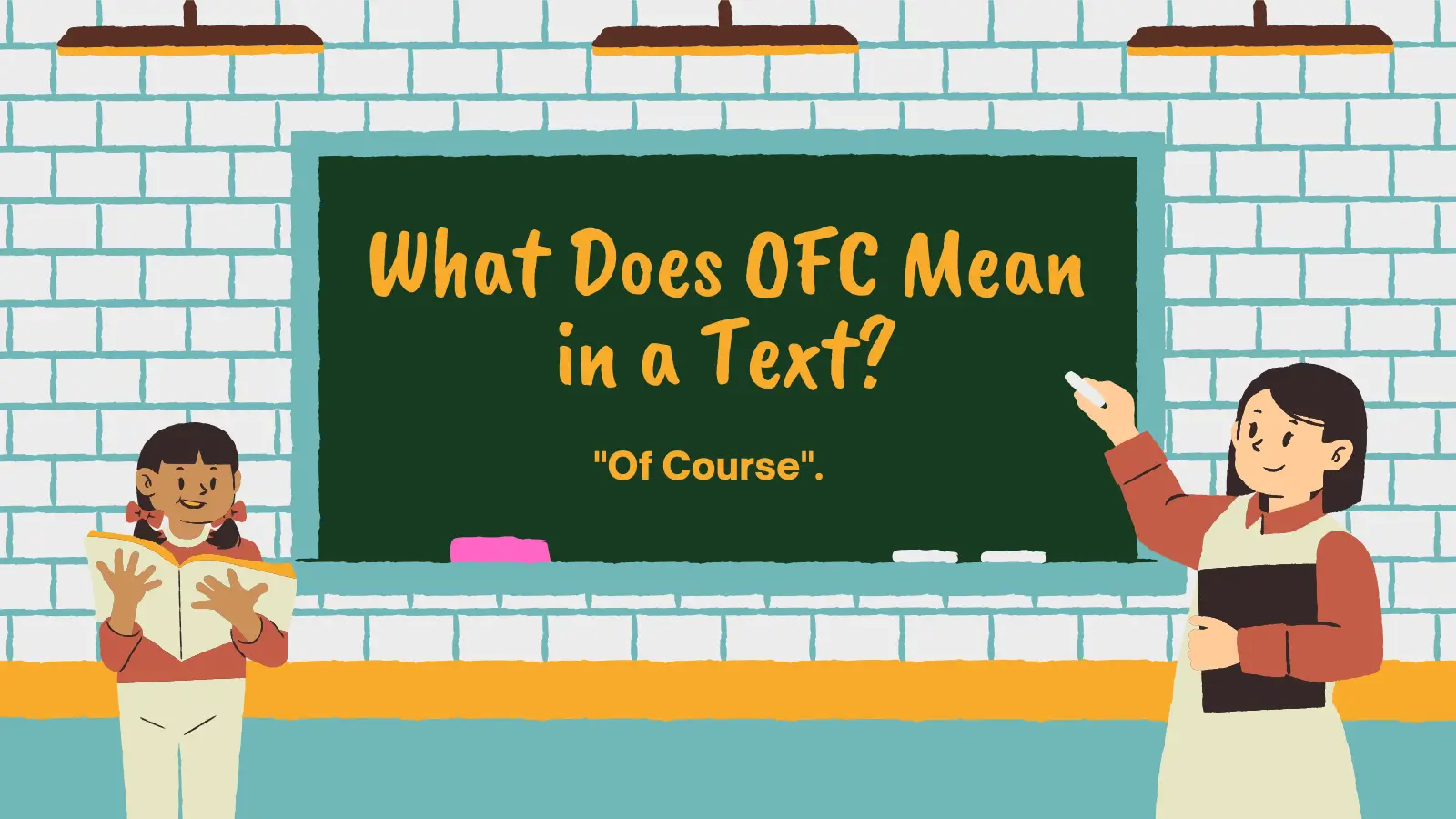
“OFC” is texting shorthand for “of course.” It’s used to confirm something enthusiastically or to state that an answer is obvious. In fandom and fan-fiction spaces, “OFC” can also mean “original female character,” a made-up character not from the source material.
This interpretation covers where the abbreviation comes from, how people actually use it, and the handful of situations where it means something else entirely.
The Main Meaning: “Of Course”
In nearly every text conversation, “ofc” means exactly what it looks like: “of course.” Someone asks a question, and the reply confirms the answer is a given, almost too obvious to need saying.
A few common examples:
- “Can you help me move this weekend?” > “ofc, what time?”
- “Are you still coming tonight?” > “ofc, wouldn’t miss it”
- “Do you like her?” > “ofc I do”
The tone can range from warm and reassuring to a little blunt, depending on punctuation and context. “Ofc :)” reads as friendly, while a flat “ofc.” on its own can come across as slightly annoyed or dismissive.
Why People Type “OFC” Instead of “Of Course”
Shortening common phrases is just part of how texting works. Typing “of course” takes a few extra taps, and when a conversation is moving fast, three letters get the same point across without slowing anyone down.
It functions the same way as other everyday abbreviations like “brb” for “be right back” or “idk” for “I don’t know.”
None of these save huge amounts of time individually, but across dozens of messages a day, the habit sticks.
The Awkward Secondary Meaning: An Implied Curse Word
Here’s where things get a little more layered. Some people use “ofc” as a cleaner stand-in for “of f***ing course,” using the middle letter to carry an implied swear word rather than spelling it out.
This usage tends to show up when someone is expressing mild frustration, sarcasm, or exaggerated certainty, rather than a plain, polite confirmation.
There’s ongoing disagreement among casual language communities about how common this version really is compared to the clean “of course” meaning, and most people default to the non-profane reading unless the surrounding message clearly signals otherwise.
Because both meanings exist, reading the tone of the full conversation matters more than the abbreviation itself. A cheerful “ofc, I got you!” reads completely differently from a curt “ofc.” dropped into an argument.
“OFC” in Fandom and Fan Fiction: A Completely Different Meaning
Outside of everyday agreement, “OFC” has a distinct, well-established meaning in fan-fiction and fandom communities: “original female character.” This refers to a female character created by a fan that doesn’t exist in the original book, show, or movie the fan fiction is based on.
You’ll see this usage in comments or descriptions like:
- “This story pairs the main character with an OFC instead of a canon love interest.”
- “I love writing OFCs because I get full creative control over their backstory.”
This meaning has nothing to do with agreement or confirmation, so context clarifies things quickly. If the conversation is about a story, character, or fandom, “OFC” almost certainly means “original female character.” If it’s a reply to a question, it means “of course.”
OFC vs. Similar Texting Abbreviations
A few other short agreement words get mixed up with “ofc.” Here’s how they differ:
| Abbreviation | Meaning | Typical Feel |
| OFC | Of course | Confident, definite agreement |
| OBV | Obviously | Casual, sometimes sarcastic |
| YW | You’re welcome | Polite response to thanks |
| FS | For sure | Relaxed, easygoing agreement |
They all express agreement, but “ofc” leans toward certainty (“this was never in question”), while “obv” leans a bit more sarcastic, and “fs” feels more laid-back and low-key.
Is It Okay to Use “OFC” in Professional Messages?
“OFC” is casual internet and texting slang, so it’s best kept out of formal emails, client communication, or messages to a boss you don’t know well.
In relaxed workplace chats with close coworkers, it can be fine, but “of course” or “absolutely” reads more polished in anything official.
FAQs:
What does OFC mean in a text message?
It almost always means “of course,” used to confirm something enthusiastically or state that an answer is obvious. Context and tone determine whether it reads as warm or a bit curt.
Does OFC always mean “of course”?
In most everyday texting, yes. The exceptions are fandom spaces, where it can mean “original female character,” and occasional casual use as a cleaner stand-in for a stronger phrase implying “of course.”
Is OFC rude to use?
Not inherently. It’s a normal, common response among friends and on social media. Tone, punctuation, and context shape whether it feels friendly or dismissive more than the abbreviation itself.
Is OFC the same as OBV?
They’re similar but not identical. “OFC” leans toward confident agreement, while “OBV” (short for “obviously”) often carries a slightly sarcastic or more casual edge.
Can OFC be used in a professional email?
It’s best avoided in formal or professional communication. Spelling out “of course” comes across as more polished and appropriate for work-related messages.
Where did OFC come from?
Like most texting abbreviations, it developed as a shorthand to save time and effort while typing on phones and in fast-moving online conversations. There’s no single documented origin point or date for when it first appeared.
Conclusion:
“OFC” is one of the most common shorthand replies in texting, and in the vast majority of conversations, it simply means “of course.”
It’s a quick, confident way to confirm something without spelling out the full phrase, though tone and punctuation shape whether it feels warm or a little blunt.
Two smaller meanings are worth knowing: an occasional use as a stand-in for a stronger phrase, and its unrelated meaning of “original female character” in fan-fiction and fandom spaces.
In nearly every case, the surrounding conversation makes the intended meaning obvious within a message or two. Once the different uses click, “ofc” stops being ambiguous and becomes just another fast, familiar piece of everyday texting shorthand.
Read More Posts:
- How People Use ISH in Daily Conversations (2026)
- CV Meaning in Jobs and Careers
- Examples of LB in Conversations