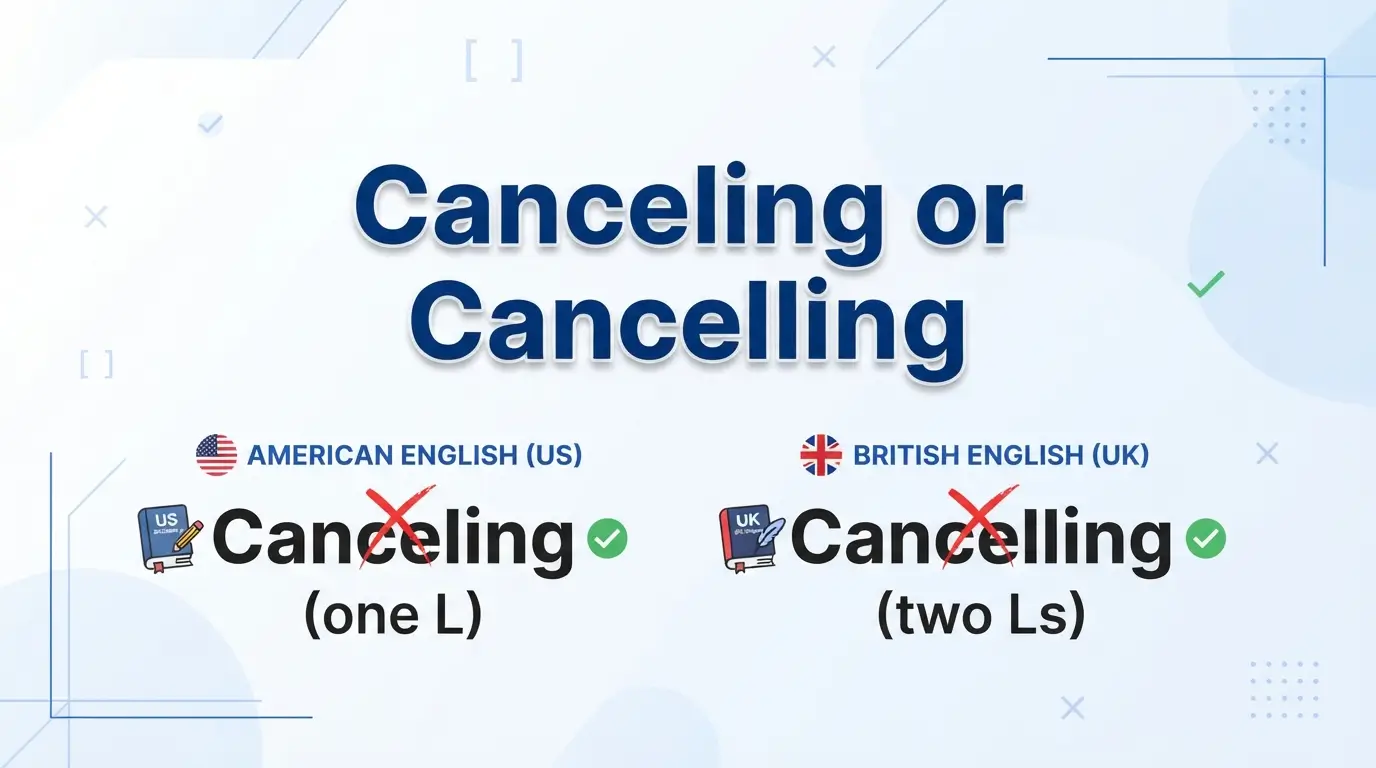
Have you ever typed “canceling” and wondered if you should write “cancelling” instead? You are not alone. This spelling difference often causes confusion in emails, schoolwork, business writing, websites, and social media posts. Both forms are correct, but the right choice depends mainly on the type of English you are using.
“Canceling” is the standard spelling in American English, while “cancelling” is the standard spelling in British English and many other varieties of English. The difference comes from different spelling rules used on each side of the Atlantic.
This guide explains canceling or cancelling, where the two spellings came from, when to use each form, and common mistakes to avoid. You will also see simple examples from everyday writing and a comparison table. By the end, you will know which spelling is best for your audience and how to use it correctly in professional writing.
Canceling or Cancelling – Quick Answer
Both canceling and cancelling are correct.
The main difference is regional:
- Canceling = American English
- Cancelling = British English
- Cancelling is also common in British based varieties such as Australian and Canadian English.
Examples
American English:
We are canceling the meeting tomorrow.
British English:
We are cancelling the meeting tomorrow.
The meaning is exactly the same.
The same difference appears with related words:
| American English | British English |
| canceling | cancelling |
| canceled | cancelled |
| canceler | canceller |
However, cancel itself is spelled the same in both varieties.
The Origin of Canceling or Cancelling
The word cancel comes from Latin cancellare, meaning to cross out or make something invalid. It later entered English through French and developed into the modern word cancel.
Over time, English speakers created different spelling conventions. British English generally kept the doubled l when adding endings such as ing and ed to words ending in a stressed final consonant pattern.
American English developed simpler spelling conventions in many cases.
This difference became especially noticeable through American dictionaries and spelling reforms associated with writers such as Noah Webster. Webster supported simpler and more consistent American spellings.
That is why American English often uses:
cancel → canceled → canceling
British English commonly uses:
cancel → cancelled → cancelling
The pronunciation does not change because of the extra l.
The spelling difference is mainly a matter of regional English style.
British English vs American English Spelling
The biggest difference is the number of l letters.
American English normally uses one l:
- canceling
- canceled
British English normally uses two l letters:
- cancelling
- cancelled
Comparison Table
| Form | American English | British English |
| Base verb | cancel | cancel |
| Present participle | canceling | cancelling |
| Past tense | canceled | cancelled |
| Past participle | canceled | cancelled |
| Person who cancels | canceler | canceller |
Why does American English use one L?
American spelling often removes the extra consonant when adding endings to words such as cancel.
So:
cancel + ing = canceling
and:
cancel + ed = canceled
British English usually keeps the doubled consonant:
cancel + ing = cancelling
cancel + ed = cancelled
This does not mean one form is grammatically better than the other. They follow different spelling conventions.
Which Spelling Should You Use?
The best spelling depends on your audience.
If you write for Americans
Use canceling and canceled.
Example:
The airline is canceling several flights today.
This spelling is standard in American English.
If you write for British audiences
Use cancelling and cancelled.
Example:
The airline is cancelling several flights today.
If you write for Commonwealth audiences
Cancelling is generally the safer choice in British based varieties of English.
This includes many contexts in:
- United Kingdom
- Australia
- New Zealand
- South Africa
English usage can vary by country, so following the style guide used by your organization is best.
If you write for a global audience
Choose one spelling system and use it consistently.
For example, if your website mainly targets the United States, use:
canceling
If your website mainly targets the United Kingdom, use:
cancelling
Consistency is more important than mixing both forms randomly.
Common Mistakes with Canceling or Cancelling
Mistake 1: Mixing American and British spelling
Incorrect style:
The company is cancelling the event, but the ticket was canceled.
This mixes British cancelling with American canceled.
A consistent British version would be:
The company is cancelling the event, but the ticket was cancelled.
A consistent American version would be:
The company is canceling the event, but the ticket was canceled.
Mistake 2: Thinking “cancelling” is always wrong
It is not wrong.
Cancelling is standard British English.
Mistake 3: Thinking “canceling” is a spelling error
It is not.
Canceling is standard American English.
Mistake 4: Changing the base word
The correct base word is:
cancel
Not:
cancelled
The extra l appears when certain endings are added in British English.
Mistake 5: Using both forms on one website
A website aimed at American readers should normally use canceling consistently.
A British focused website should normally use cancelling consistently.
Canceling or Cancelling in Everyday Examples
The word appears in many everyday situations.
In Emails
American English:
We are canceling today’s meeting because of the weather.
British English:
We are cancelling today’s meeting because of the weather.
In Business Writing
American English:
Your subscription was canceled successfully.
British English:
Your subscription was cancelled successfully.
In News Writing
American style:
The airline is canceling several flights because of severe weather.
British style:
The airline is cancelling several flights because of severe weather.
On Social Media
American:
I’m canceling my plans for tonight.
British:
I’m cancelling my plans for tonight.
In Formal Writing
American:
The organization is canceling the event due to safety concerns.
British:
The organisation is cancelling the event due to safety concerns.
Notice that British English may also use other different spellings, such as organisation, while American English uses organization.
Canceling or Cancelling – Google Trends & Usage Data
Search interest for canceling and cancelling can vary by country because people usually search using the spelling they see in their local form of English.
In the United States, canceling is the expected American spelling.
In the United Kingdom and other countries that generally follow British spelling conventions, cancelling is more common.
Google Trends can be useful for understanding regional search behavior. However, search interest is not the same as grammatical correctness. A spelling may receive more searches simply because a country has a larger population or because people are checking an unfamiliar spelling.
For SEO, this means you should consider your target audience, not simply choose the spelling with the highest worldwide search volume.
If your website targets American readers, use canceling naturally. If it targets British readers, use cancelling naturally.
Comparison of Variations
| Variation | Main usage | Example |
| canceling | American English | Canceling the order |
| cancelling | British English | Cancelling the order |
| canceled | American English | The order was canceled |
| cancelled | British English | The order was cancelled |
| cancel | Both | Please cancel the order |
FAQs About Canceling or Cancelling
Is canceling or cancelling correct?
Both are correct. Canceling is the standard American English spelling, while cancelling is standard British English.
Is cancelling British or American?
Cancelling is mainly associated with British English. It is also used in several other varieties that follow British spelling conventions.
Is canceling American English?
Yes. Canceling is the standard American English spelling.
Why does cancelling have two Ls?
British English commonly doubles the l when forming words such as cancelling and cancelled.
Why does American English use canceling?
American English generally uses the single l forms canceling and canceled.
Is “canceled” or “cancelled” correct?
Both are correct. Canceled is standard American English, while cancelled is standard British English.
Which spelling should I use in an essay?
Follow the English variety required by your school, university, employer, or publication. If no style is specified, choose one variety and use it consistently.
Conclusion
Canceling and cancelling are both correct spellings. The main difference is the variety of English being used. American English normally uses canceling and canceled, while British English normally uses cancelling and cancelled.
Neither spelling changes the meaning or pronunciation of the word. The important thing is to match your spelling to your audience and remain consistent throughout your writing. If you are writing for readers in the United States, choose canceling. If you are writing for readers in the United Kingdom or another British English environment, choose cancelling.
For websites, professional documents, emails, and academic work, consistency matters. Once you choose American or British English, keep the same spelling style throughout the document. This simple approach will help your writing look clear, polished, and professional.
Discover more Post
- Here Here or Hear Hear: Examples and Usage Guide
- Busses or Buses: Grammar Guide 2026
- Your Welcome vs You’re Welcome: Easy Explanation

Emily Dickinson is one of America’s most influential poets, recognized for her unique style and thought-provoking poetry. Through GrammerNests.com, she contributes valuable perspectives on language, creativity, and the beauty of written expression.








1 thought on “Canceling or Cancelling: Which Spelling Is Correct?”