If you have ever received a message that simply says “SM”, you may have stopped and wondered what it means. Texting abbreviations are everywhere today.
People use them on social media, messaging apps, online games, and even in work chats to save time and type faster.
The meaning of SM depends on the conversation. In most cases, it stands for “so much.” For example, someone might text, “Thanks SM!” instead of writing, “Thanks so much!” However, SM can also have other meanings depending on the platform and context.
Understanding abbreviations like SM helps you avoid confusion and respond correctly.
If you’re chatting with friends, scrolling through TikTok, posting on Instagram, playing online games, or reading comments on X (Twitter), knowing what SM means makes online communication easier.
That’s discussion you’ll learn every common meaning of SM, where it’s used, how to reply, and when you should avoid using it.
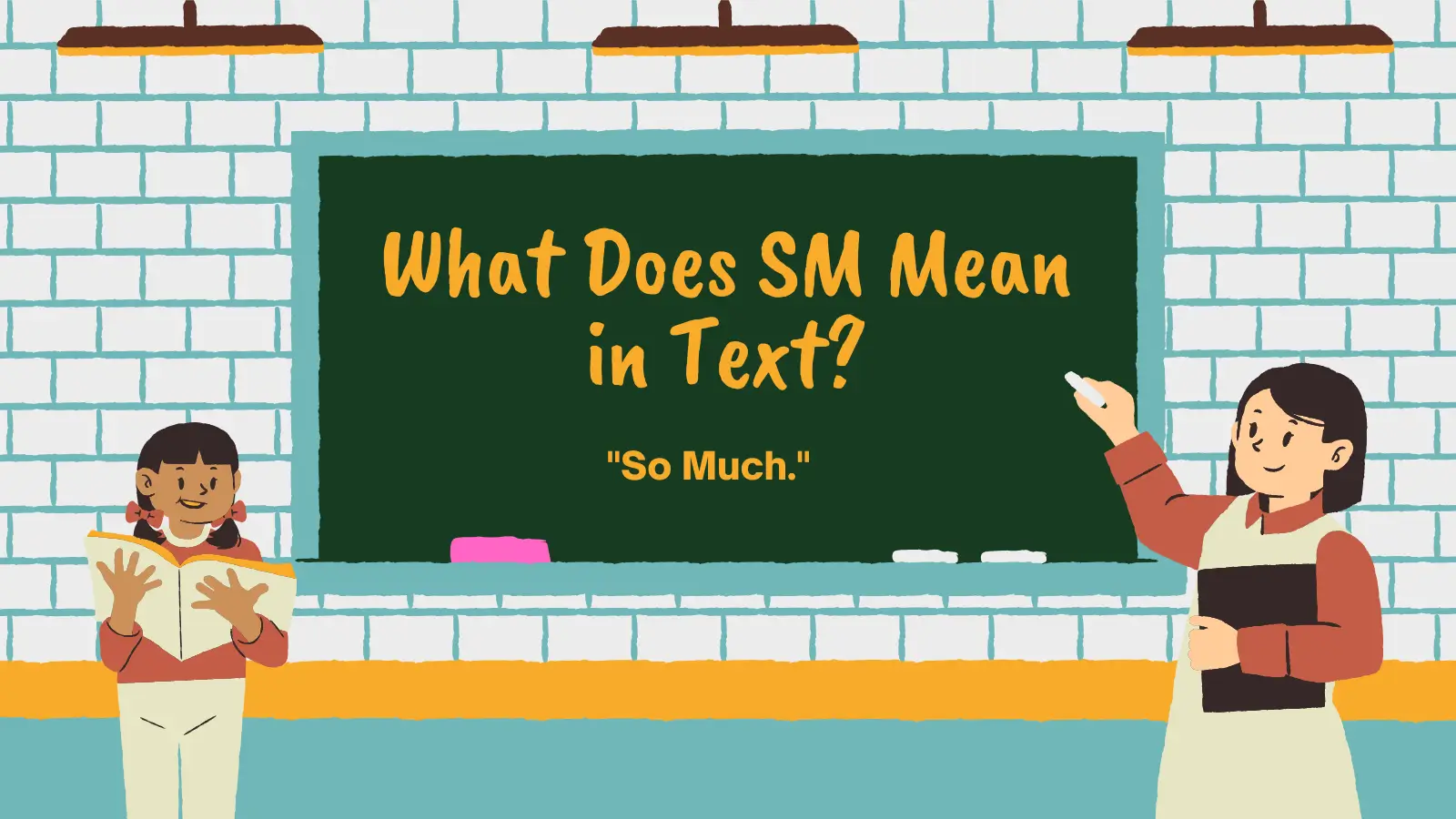
What Does SM Mean in Text?
The most common meaning of SM in texting is “So Much.” It is a quick way to express strong feelings, appreciation, excitement, or emotion.
Common Meaning
SM = So Much
People use it because it is short and saves time while typing.
Examples
Friend: “Thanks SM for helping me today.”
You: “You’re welcome!”
Friend: “I miss you SM.”
You: “I miss you too.”
Person A: “I love this movie, SM.”
Person B: “Me too. I’ve watched it three times.”
Other Meanings of SM
Depending on the conversation, SM can also mean:
- Social Media
- Send Me
- Small
- Service Mark (business)
- Sad Music (music communities)
- SM (Sad Mood) in some online chats
Always read the full conversation before deciding which meaning fits.
Background & History
Text abbreviations became popular in the late 1990s and early 2000s. Back then, text messages had character limits, and people wanted to type quickly.
Instead of writing long phrases, users created short forms like:
- LOL
- BRB
- OMG
- IDK
- SM
Over time, smartphones, WhatsApp, Snapchat, Instagram, TikTok, Discord, and gaming chats made abbreviations even more common.
Originally, SM was mostly used to mean “so much.” Later, different online communities gave it additional meanings based on their needs.
For example:
- Business professionals often use SM for Service Mark.
- Gamers may use it differently depending on the game.
- Social media creators sometimes use SM as short for Social Media.
Today, the meaning depends almost entirely on context.
Usage in Various Contexts
Text Messages
This is the most common use.
Example
Emma: “Thanks SM for the birthday gift.”
Olivia: “I’m glad you liked it.”
Social Media
Creators often use SM to mean Social Media.
Example:
“I’m taking a break from SM.”
Meaning:
“I’m taking a break from social media.”
Gaming
Players may write:
“SM your username.”
Meaning:
“Send me your username.”
Casual Conversation
Jake: “I appreciate you, SM.”
Alex: “That means a lot.”
Work Conversations
Sometimes employees say:
“Our SM team posted the update.”
Here, SM refers to the Social Media team.
Common Misconceptions & Clarifications
Many people assume SM always has one meaning, but that’s not true.
Misconception 1st
SM always means So Much.
Reality:
It depends on the conversation.
Misconception 2nd
SM is inappropriate.
Reality:
The abbreviation itself is not offensive.
Misconception 3rd
Everyone uses SM the same way.
Reality:
Different groups use it differently.
Examples:
- Teenagers > So Much.
- Businesses > Service Mark.
- Marketing > Social Media.
- Friends > Send Me.
Reading the entire message helps you understand the intended meaning.
Similar Terms & Alternatives
Here are common alternatives.
| Abbreviation | Meaning | Example |
| TYSM | Thank You So Much | TYSM for your help |
| TYSM | Thanks So Much | Tysm! |
| LYSM | Love You So Much | LYSM |
| SOOO | So | I miss you sooo much |
| Thx | Thanks | Thx! |
| Appreciate it | Thank you | Appreciate it! |
These expressions carry similar emotions but serve different purposes.
How to Respond to SM
Your reply depends on the conversation.
Casual Response
Friend: “Thanks SM.”
You: “No problem!”
Funny Response
Friend: “I love pizza SM.”
You: “Pizza loves you too.”
Friendly Response
Friend: “Miss you, SM.”
You: “Can’t wait to see you.”
Professional Response
If someone says:
“Thanks so much.”
Reply:
“You’re very welcome.”
or
“Happy to help.”
Privacy-Conscious Response
If someone writes:
“SM your phone number.”
Only share personal information if you trust the person.
Regional or Cultural Differences
SM is popular in English-speaking countries like:
- United States
- Canada
- United Kingdom
- Australia
However, internet users worldwide also use it because social media spreads slang quickly.
Some countries prefer different abbreviations.
For example:
- Spanish speakers often use local texting shortcuts.
- Korean users have their own chat abbreviations.
- Japanese messaging apps use different internet slang.
Even though the abbreviation is English, many non-native English speakers recognize SM because of TikTok, Instagram, YouTube, and gaming communities.
Comparison with Similar Terms
| Term | Meaning | Best Used For |
| SM | So Much | General texting |
| TYSM | Thank You So Much | Gratitude |
| LYSM | Love You So Much | Affection |
| OMG | Oh My God | Surprise |
| TBH | To Be Honest | Honest opinions |
| IDK | I Don’t Know | Uncertainty |
| IMO | In My Opinion | Sharing opinions |
The biggest difference is that SM usually adds emphasis rather than replacing an entire sentence.
Usage in Online Communities & Dating Apps
Tinder
Someone may say:
“I like your smile SM.”
This simply means they like your smile very much.
A friendly response:
“Thank you!”
People comment:
“Love this outfit SM!”
TikTok
Comments often include:
“This made me laugh SM.”
Discord
Gamers may write:
“SM the invite.”
Meaning:
“Send me the invite.”
X (Twitter)
Users may post:
“I miss summer SM.”
The meaning remains “so much.”
Always consider the conversation before replying.
Hidden or Offensive Meanings
The abbreviation SM is generally safe.
However, there are some less common meanings.
Depending on the community, SM may refer to:
- Social Media
- Service Mark
- Sad Music
- Send Me
- Small
Some niche communities may use SM for other private meanings.
Because abbreviations can have multiple interpretations, context always matters.
If you are unsure, simply ask:
“What do you mean by SM?”
That avoids misunderstandings.
Suitability for Professional Communication
Using SM in professional emails is usually not recommended.
Instead of writing:
“Thanks SM.”
Write:
- Thank you very much.
- Thank you for your assistance.
- I appreciate your help.
- Many thanks.
- Thank you kindly.
However, in casual workplace chats like Slack or Microsoft Teams, using SM may be acceptable if everyone communicates informally.
For official documents, reports, and client emails, always use complete words.
FAQs:
What does SM usually mean in text?
It most commonly means “So Much.”
Is SM the same as TYSM?
No. SM means So Much, while TYSM means Thank You So Much.
Can SM mean Social Media?
Yes. In marketing and business discussions, SM often stands for Social Media.
Is SM rude?
No. It is a normal texting abbreviation.
Should I use SM in work emails?
No. Write the complete phrase instead for professional communication.
Why does SM have different meanings?
Many abbreviations develop multiple meanings over time, and context determines which one is intended.
How do I know which meaning is correct?
Read the surrounding conversation. The topic usually makes the intended meaning clear.
Conclusion:
The abbreviation SM is a simple but flexible part of modern online communication. Most of the time, it means “so much,” helping people express gratitude, affection, or excitement in fewer characters.
In other situations, it can refer to social media, send me, service mark, or other niche meanings depending on the platform and context. The key to understanding SM is paying attention to the conversation around it.
While it’s perfectly acceptable in casual texts, social media posts, and gaming chats, it’s usually better to avoid it in formal emails or professional documents.
By learning the different meanings and knowing when to use them, you’ll be able to text more confidently, understand online conversations faster, and avoid common misunderstandings.
Read More Posts:
- Complete Guide to WYF Meaning in Text (2026)
- FWS Text Meaning with Real Examples 2026
- Examples of YKW in Text Messages 2026

Emily Dickinson is one of America’s most influential poets, recognized for her unique style and thought-provoking poetry. Through GrammerNests.com, she contributes valuable perspectives on language, creativity, and the beauty of written expression.