If you spend time texting friends, chatting on social media, playing online games, or browsing internet forums, you have probably seen abbreviations that seem confusing at first.
One such abbreviation is WTD. While it may look simple, many people are unsure what it means when it appears in a message.
In today’s digital world, short forms and acronyms are everywhere. People use them to type faster and make conversations more efficient.
Common examples include LOL, BRB, IMO, and IDK. WTD belongs to the same group of internet abbreviations and is commonly used in text messages, social media posts, gaming chats, and online discussions.
Understanding what WTD means is important because its meaning can change depending on the situation.
If you misunderstand the abbreviation, you may become confused about the conversation. Knowing how and when people use WTD can help you communicate more effectively online.
This guide explains the meaning of WTD, its history, common uses, alternative meanings, professional suitability, and much more.
By the end, you’ll know exactly what WTD means and how to respond when someone uses it.
Definition & Meaning
The most common meaning of WTD in text messaging is:
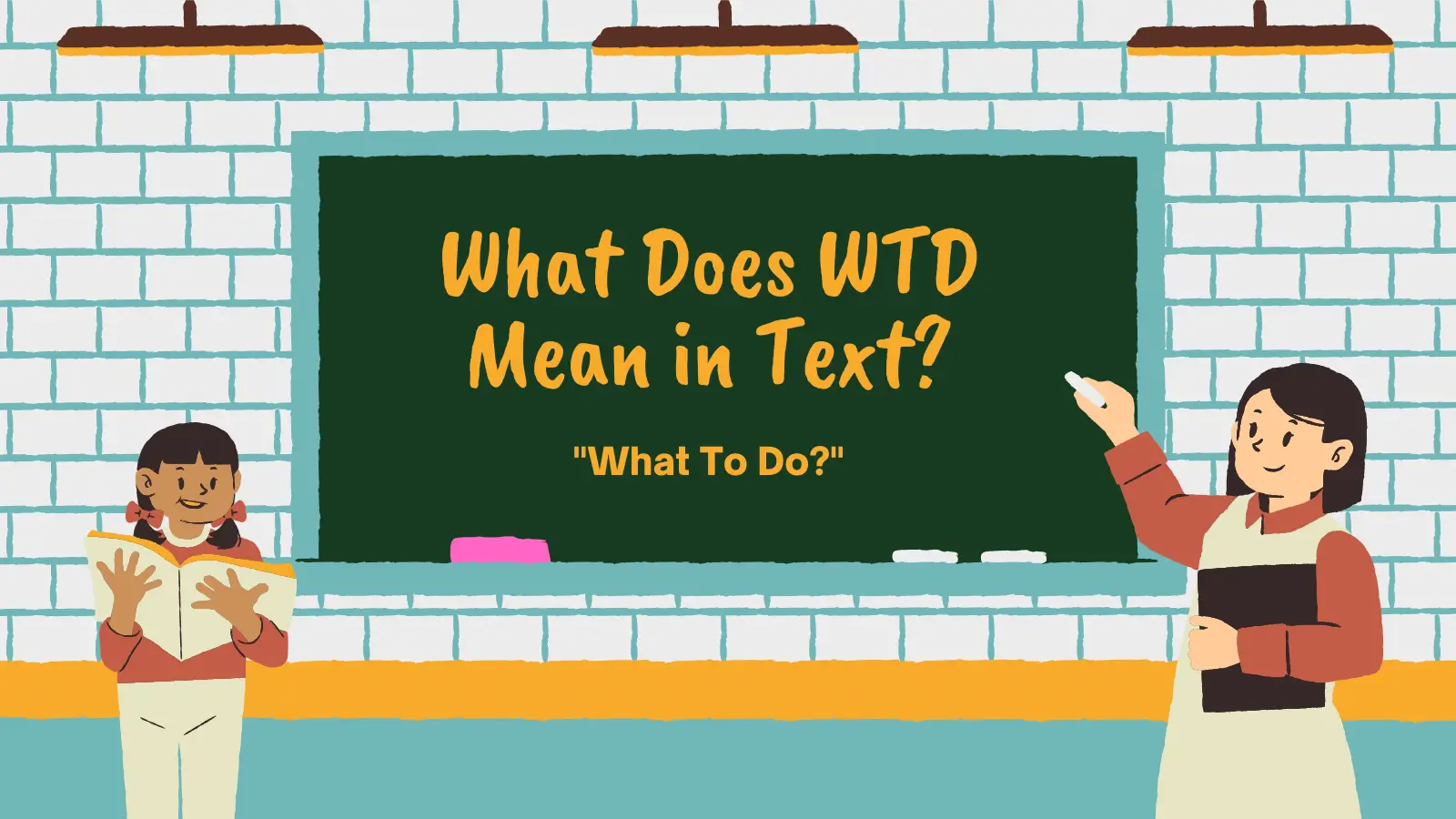
WTD = “What To Do?”
People use this abbreviation when they are looking for advice, suggestions, or ideas about what action they should take next.
Instead of typing the full question, “What should I do?” users often shorten it to WTD. This saves time and keeps conversations quick and informal.
Basic Example
Jake: “The concert got canceled.”
Emma: “Oh no. WTD now?”
In this example, Emma is asking what they should do next since their original plan is no longer possible.
Other Possible Meanings
Although “What To Do” is the most common meaning, WTD can sometimes represent other phrases, including:
- What’s The Deal
- Want To Date
- Work To Do
- Weekend To Date
- What’s The Difference
The intended meaning depends entirely on context.
Examples of Different Meanings
What To Do
Alex: “My laptop stopped working.”
Ryan: “WTD?”
Meaning: What should you do?
What’s The Deal
Sarah: “Everyone keeps talking about that new update.”
Lily: “WTD with it?”
Meaning: What’s the deal with it?
Work To Do
Manager: “Can you finish the report today?”
Employee: “Still have a lot of WTD.”
Meaning: Work to do.
Why Is WTD Popular?
People use WTD because:
- It saves time.
- It is easy to type.
- It works well on mobile devices.
- It feels casual and conversational.
- It is widely understood among internet users.
Like many acronyms, WTD helps people communicate quickly without typing long sentences.
Background & History
The history of WTD is closely connected to the growth of online communication.
During the late 1990s and early 2000s, internet users began creating abbreviations to make typing faster.
Many people were using dial-up internet, chat rooms, and early mobile phones with limited texting features.
Typing full sentences took more effort than it does today. As a result, users shortened common phrases into acronyms.
Popular services at the time included:
- AOL Instant Messenger (AIM)
- MSN Messenger
- Yahoo Messenger
- Internet Relay Chat (IRC)
- SMS text messaging
These platforms encouraged shorter communication styles.
As internet culture expanded, people developed hundreds of abbreviations. Some became extremely popular, such as:
- LOL (Laugh Out Loud)
- BRB (Be Right Back)
- OMG (Oh My God)
- IDK (I Don’t Know)
WTD emerged as another useful shorthand expression.
Unlike abbreviations with a single meaning, WTD remained flexible. Different communities used it in different ways. Some used it to mean “What To Do,” while others used it to mean “What’s The Deal.”
As smartphones became common, abbreviations continued spreading through:
- Twitter/X
- Snapchat
- Discord
- Reddit
- Telegram
Today, WTD remains a recognized internet slang term. While it is not as famous as LOL or OMG, it still appears regularly in online conversations.
Usage in Various Contexts
WTD can be used in many situations. Understanding these contexts helps you interpret the meaning correctly.
Text Messaging
This is the most common place to see WTD.
Friend 1: “The restaurant is closed.”
Friend 2: “WTD now?”
Meaning: What should we do now?
Social Media
People often use WTD when discussing unexpected events.
Post: “Missed my flight by five minutes.”
Comment: “WTD after that?”
Gaming
Online gamers frequently use short abbreviations during matches.
Player 1: “The boss defeated half the team.”
Player 2: “WTD?”
Meaning: What is our next strategy?
Group Chats
Friends may use WTD while planning activities.
Chris: “The movie starts too late.”
Mike: “WTD instead?”
School Conversations
Students may ask classmates for help.
Student: “I forgot the homework instructions.”
Friend: “WTD?”
Workplace Chats
In internal messaging systems, WTD can occasionally mean “Work To Do.”
Coworker: “Are you free this afternoon?”
Employee: “Not really. Lots of WTD.”
The context determines the meaning.
Common Misconceptions & Clarifications
Because WTD has multiple meanings, misunderstandings sometimes happen.
Misconception: WTD Always Means “What To Do”
This is the most common meaning, but it is not the only one.
In business settings, WTD may mean “Work To Do.”
In some conversations, it may mean “What’s The Deal.”
Misconception: WTD Is a Formal Acronym
WTD is generally informal.
Most people use it in casual conversations rather than official documents.
Misconception: Everyone Understands WTD
Not everyone is familiar with internet slang.
Older users or people who rarely use online abbreviations may not recognize it.
Misconception: WTD Is Offensive
WTD is usually harmless.
Unlike some internet abbreviations, it does not contain offensive language.
Misconception: WTD Has Only One Correct Response
People can respond in many ways depending on the situation.
Clarification Example
Person A: “WTD?”
Person B: “Do you mean what’s the plan or what’s the deal?”
Asking for clarification is perfectly acceptable when the meaning is unclear.
Similar Terms & Alternatives
Several internet abbreviations serve similar purposes.
| Term | Meaning | Common Use |
| WTD | What To Do | Seeking advice |
| WYD | What You Doing | Asking current activity |
| IDK | I Don’t Know | Expressing uncertainty |
| HBU | How About You | Returning a question |
| WTH | What The Heck | Showing confusion |
| LMK | Let Me Know | Requesting information |
Common Alternatives
Instead of WTD, people may write:
- What should I do?
- Any ideas?
- What’s the plan?
- What now?
- Got any suggestions?
- What do you recommend?
Example
Short Version: WTD?
Long Version: What should I do next?
Both communicate the same idea.
The longer version is often clearer, especially in professional communication.
How to Respond to This Term
The best response depends on the situation.
Casual Response
Friend: “WTD?”
You: “Let’s order pizza.”
Helpful Response
Friend: “WTD after the meeting?”
You: “Maybe finish the report and then review tomorrow’s schedule.”
Funny Response
Friend: “WTD?”
You: “Move to a tropical island and start a coconut business.”
Professional Response
Coworker: “WTD regarding this issue?”
You: “I recommend contacting the support team first.”
Encouraging Response
Friend: “WTD now?”
You: “Don’t worry. We’ll figure something out.”
Privacy-Conscious Response
Person: “WTD tonight?”
You: “I haven’t decided yet, but thanks for asking.”
The key is matching your response to the tone of the conversation.
Regional or Cultural Differences
WTD is mainly used in English-speaking online communities.
United States
The abbreviation is commonly understood among younger internet users.
Canada
Usage is similar to the United States.
United Kingdom
Some users recognize WTD, although other slang expressions may be more common.
Australia
Internet users may encounter WTD in social media and gaming conversations.
Non-English Speaking Countries
People who regularly consume English-language content often understand WTD.
However, local abbreviations are usually more common in everyday communication.
Cultural Influence
The internet allows slang to spread quickly across countries.
Gaming communities, social media platforms, and streaming services expose users to abbreviations from around the world.
As a result, WTD is understood in many places even if it is not used frequently.
Comparison with Similar Terms
Many abbreviations look similar but serve different purposes.
| Acronym | Full Meaning | Purpose |
| WTD | What To Do | Seeking advice |
| WYD | What You Doing | Asking about activities |
| WTH | What The Heck | Expressing surprise |
| IDK | I Don’t Know | Showing uncertainty |
| IMO | In My Opinion | Sharing a viewpoint |
| BRB | Be Right Back | Leaving temporarily |
| LMK | Let Me Know | Requesting information |
Key Differences
WTD vs WYD
WTD: Asks for guidance.
WYD: Asks what someone is currently doing.
WTD vs IDK
WTD: Seeks answers.
IDK: Admits uncertainty.
WTD vs WTH
WTD: Looks for solutions.
WTH: Expresses confusion or surprise.
Understanding these differences prevents misunderstandings during conversations.
Usage in Online Communities & Dating Apps
WTD appears regularly across internet platforms.
Dating Apps
Users often discuss plans and activities.
Person A: “We’re both free this weekend.”
Person B: “WTD?”
Meaning: What should we do together?
Tinder
People use WTD when planning dates or activities.
Bumble
The abbreviation may appear when discussing weekend plans.
Hinge
Users may ask WTD after matching and beginning a conversation.
Twitter/X
Users react to trending topics.
User: “My account got locked.”
Comment: “WTD now?”
Discord
Gaming communities use WTD frequently.
Player: “We’re running out of supplies.”
Teammate: “WTD?”
People seeking advice often use WTD.
Post: “My landlord raised the rent.”
Comment: “WTD next?”
Tips for Responding
- Read the entire conversation.
- Consider the topic.
- Match the tone.
- Avoid making assumptions.
- Ask questions if needed.
Hidden or Offensive Meanings
Most internet users consider WTD completely harmless.
However, abbreviations sometimes develop alternative meanings within specific communities.
Common Hidden Meanings
- Work To Do
- What’s The Deal
- Want To Date
- Weekend To Date
Is WTD Offensive?
Generally, no.
WTD is not considered:
- Vulgar
- Offensive
- Profane
- Inappropriate
Why Context Matters
Context changes interpretation.
Example
Friend: “WTD tonight?”
Meaning: What should we do?
Example
Employee: “Still have WTD.”
Meaning: Work to do.
The abbreviation itself is neutral. The surrounding conversation determines its meaning.
Suitability for Professional Communication
WTD is best suited for casual communication.
In professional environments, clarity is usually more important than brevity.
Why It May Not Be Appropriate
Not everyone understands internet slang.
Some people may misinterpret the abbreviation.
Professional communication should minimize confusion.
Less Professional Example
“We still have WTD before launch.”
More Professional Example
“We still have work to complete before launch.”
Better Professional Alternatives
Instead of WTD, consider:
- What action should we take?
- What are the next steps?
- How should we proceed?
- What do you recommend?
- What work remains?
When It Is Acceptable
WTD may be acceptable in:
- Informal team chats.
- Internal messaging systems
- Friendly coworker conversations.
However, it should generally be avoided in:
- Client emails
- Business proposals
- Official reports
- Professional presentations
Using complete phrases helps ensure everyone understands the message.
FAQs:
What does WTD mean in texting?
WTD most commonly means “What To Do?” and is used when someone wants advice or suggestions.
Is WTD commonly used on social media?
Yes. It appears on platforms such as Instagram, Twitter/X, Snapchat, Discord, Reddit, and Facebook.
Can WTD have more than one meaning?
Yes. It may mean “What To Do,” “What’s The Deal,” “Work To Do,” or “Want To Date” depending on context.
Is WTD rude or offensive?
No. WTD is generally considered harmless and appropriate for casual conversations.
What is the difference between WTD and WYD?
WTD asks what action should be taken, while WYD asks what someone is currently doing.
Should I use WTD in business emails?
No. Writing the full phrase is usually more professional and easier to understand.
How can I tell which meaning is intended?
Look at the surrounding messages and the overall topic of the conversation. Context usually makes the meaning clear.
Conclusion:
WTD is a useful internet abbreviation that most often means “What To Do?” People use it when asking for advice, recommendations, or ideas about what action to take next.
Over time, the term has become part of everyday digital communication and can be found in text messages, social media conversations, gaming chats, online forums, and even some workplace messaging platforms.
Although “What To Do” is its most common meaning, WTD can also stand for phrases such as “What’s The Deal,” “Work To Do,” and “Want To Date.”
Because of these multiple meanings, understanding the surrounding context is important.
Fortunately, WTD is generally friendly, harmless, and easy to understand once you know its common uses.
If you encounter it in a casual chat, an online game, or a social media discussion, you’ll now be able to recognize its meaning and respond confidently.

Emily Dickinson is one of America’s most influential poets, recognized for her unique style and thought-provoking poetry. Through GrammerNests.com, she contributes valuable perspectives on language, creativity, and the beauty of written expression.